Last-Mile Delivery Best Practices: How Business Central Teams Overcome Integration Challenges
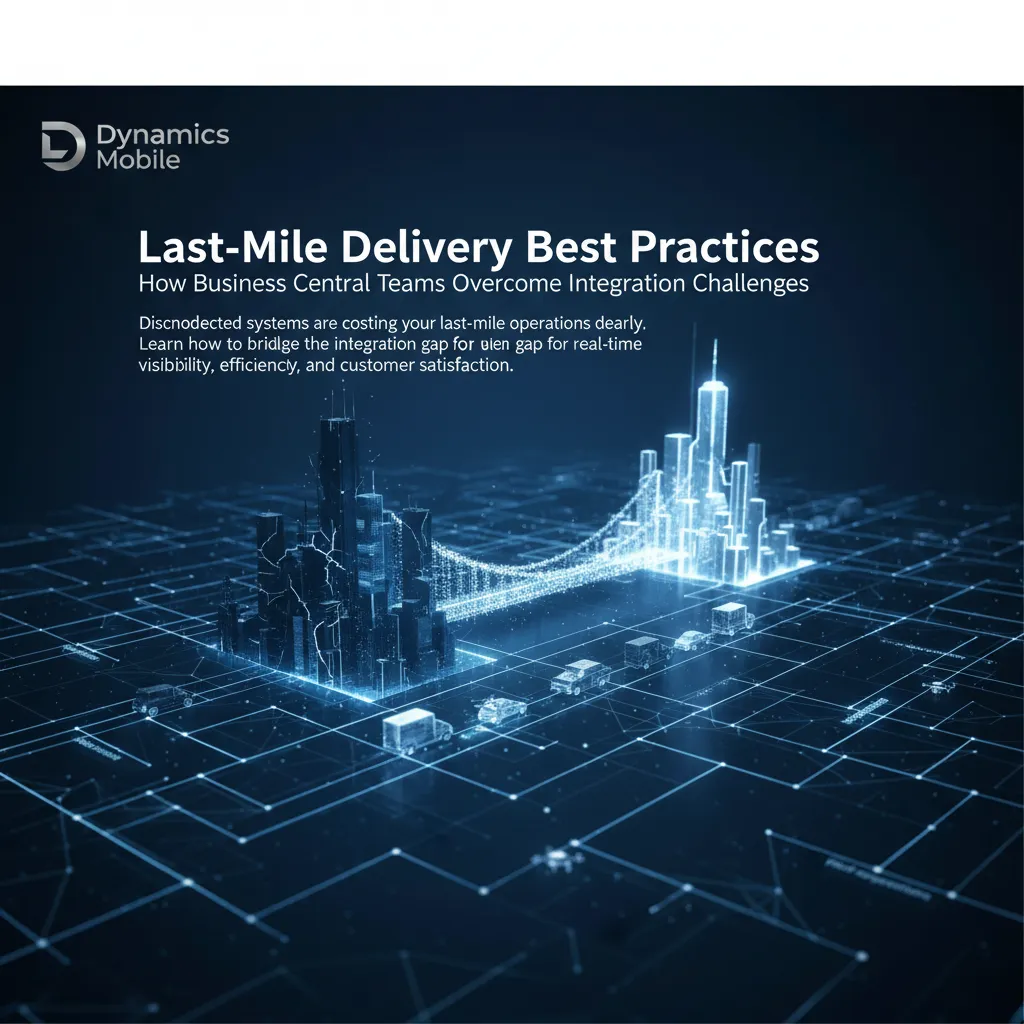
In today's hyper-connected world, the last mile is often the most complex and costly segment of the supply chain. Customers expect speed, accuracy, and transparency, yet many enterprises struggle to deliver due to a fundamental issue: disconnected systems. The fragmented landscape of last-mile logistics—from warehouse management and transportation planning to mobile field operations and customer portals—creates data silos, manual handoffs, and a severe lack of real-time visibility. This isn't just an IT problem; it directly impacts operational efficiency, profitability, and ultimately, customer loyalty.
The Last-Mile Integration Gap: Understanding Core Challenges
The journey from warehouse to customer's door is fraught with potential pitfalls when systems operate in isolation. Identifying these common pain points is the first step toward building a truly integrated last-mile ecosystem.
-
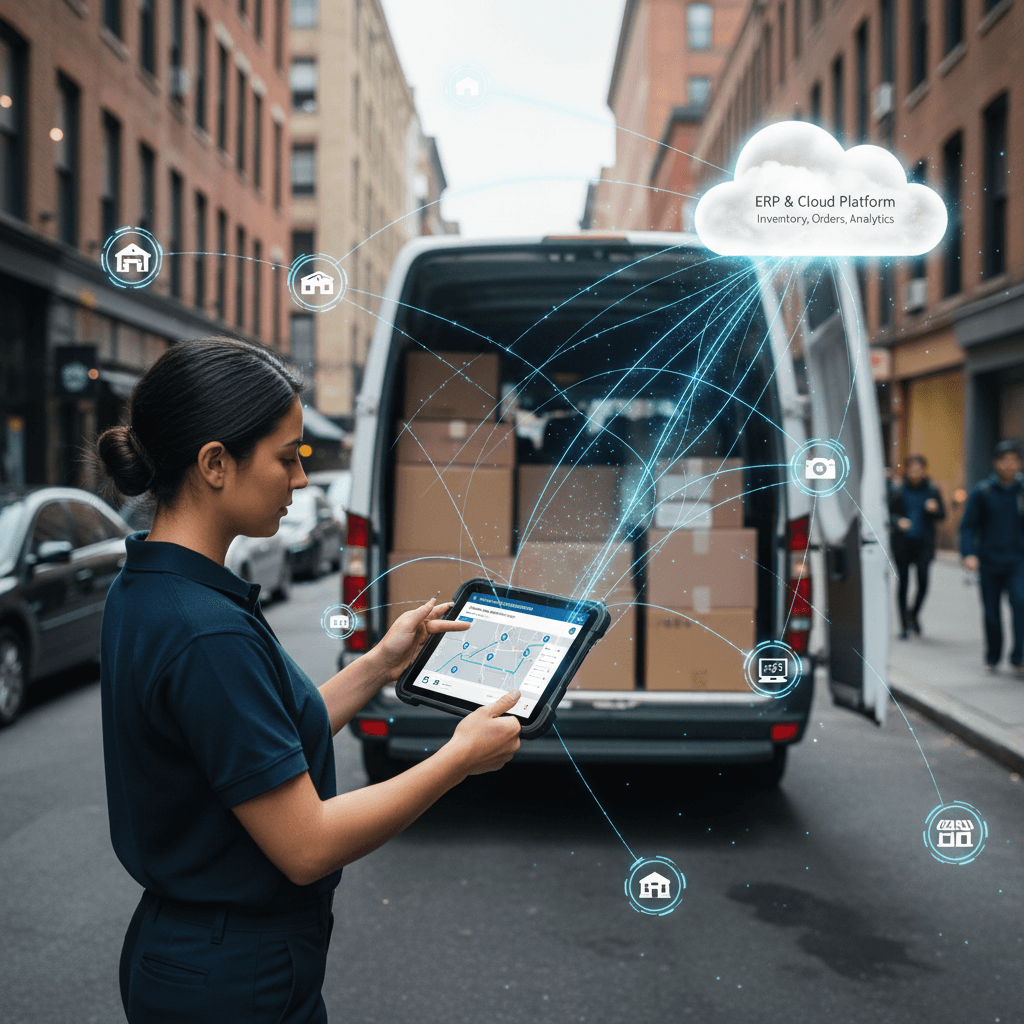
The Impact of Data Silos: Imagine a DSD driver completing a delivery, but the central ERP or accounting system isn't immediately updated. This leads to delays in invoicing, inaccurate inventory counts, and a lack of real-time cash-on-delivery reconciliation. Similarly, a field service technician might arrive at a site without full access to the customer's service history or available parts inventory because the CRM, WMS, and mobile dispatch systems don't communicate seamlessly. This absence of a unified data view cripples real-time visibility, hampers informed decision-making, and significantly reduces operational agility.
-
Manual Data Transfer and Fragmented Workflows: Many organizations still rely on manual data entry or batch uploads between disparate systems. A warehouse team might pick an order, but the manifest data has to be manually re-entered into a separate transportation management system (TMS) or a driver's mobile device. This process is not only time-consuming but a breeding ground for errors, leading to misrouted deliveries, incorrect order fulfillments, and frustrated staff.
-
The Direct Link to Compromised Customer Satisfaction: In an era where Amazon has set the bar, customers expect precise delivery windows, real-time tracking, and immediate proof of delivery. When systems are disconnected, fulfilling these expectations becomes incredibly difficult. A customer service representative might lack the real-time status of a package, leading to an inability to provide accurate updates, increasing call volumes, and eroding trust. Missed SLAs, incorrect deliveries, and opaque communication are direct consequences of poor last-mile integration.
Strategic Principles for Building an Integrated Last-Mile Ecosystem
Overcoming these challenges requires a strategic shift—moving beyond point solutions to a holistic, integrated approach. These principles form the bedrock of a truly connected last-mile operation.
-
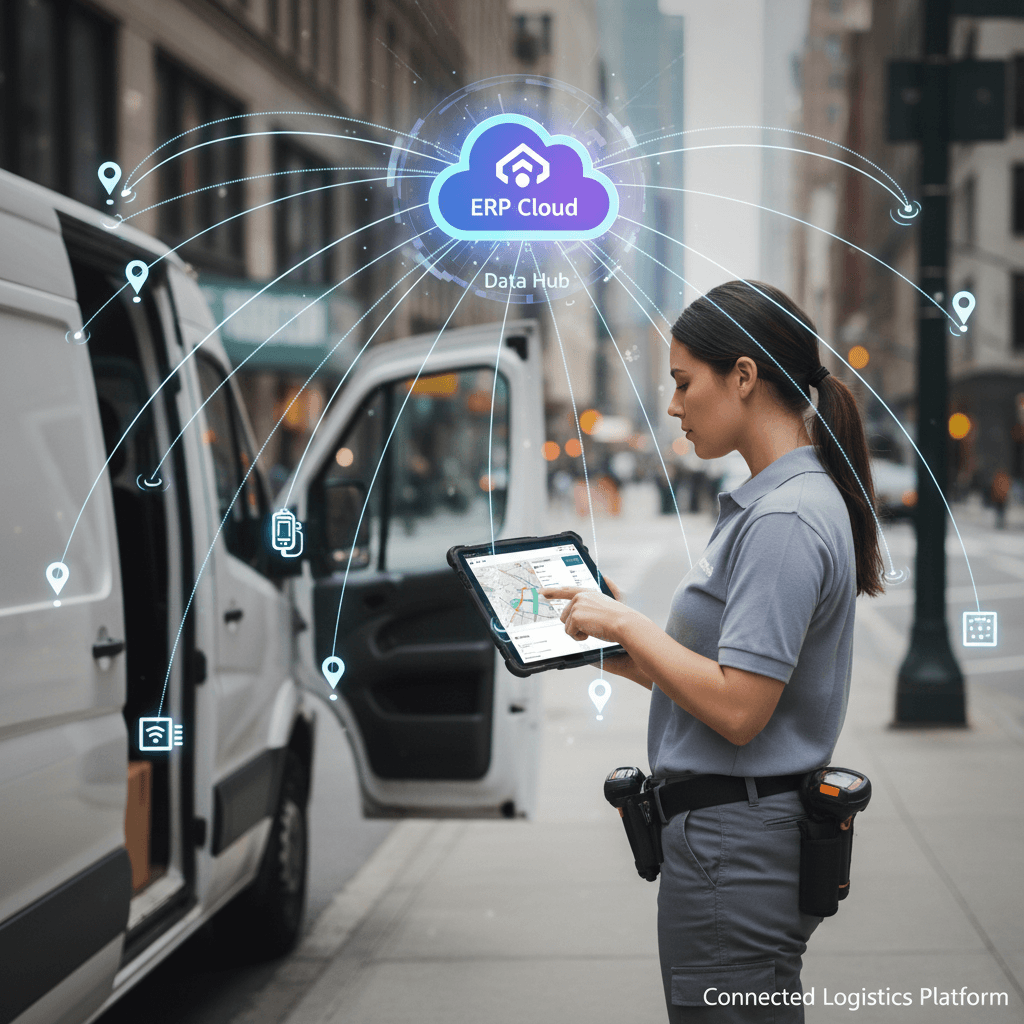
Prioritizing a Unified Data Foundation: At the core of seamless integration is the establishment of a single source of truth for all last-mile data. This means ensuring that your Warehouse Management System (WMS), Transportation Management System (TMS), Customer Relationship Management (CRM), and mobile field applications all feed into and draw from a consistent, centralized data model, often anchored in your Enterprise Resource Planning (ERP) system like Microsoft Dynamics 365. This eliminates data inconsistencies and provides a comprehensive view across all touchpoints.
-
Embracing API-First and Modular Architectures: Future-proofing your logistics requires moving away from rigid, monolithic systems. An API-first approach, where every system component exposes its functionalities through well-defined APIs, enables flexible, scalable integration. This modularity allows you to easily add, update, or replace individual components without disrupting the entire ecosystem, fostering agility and adaptability.
-
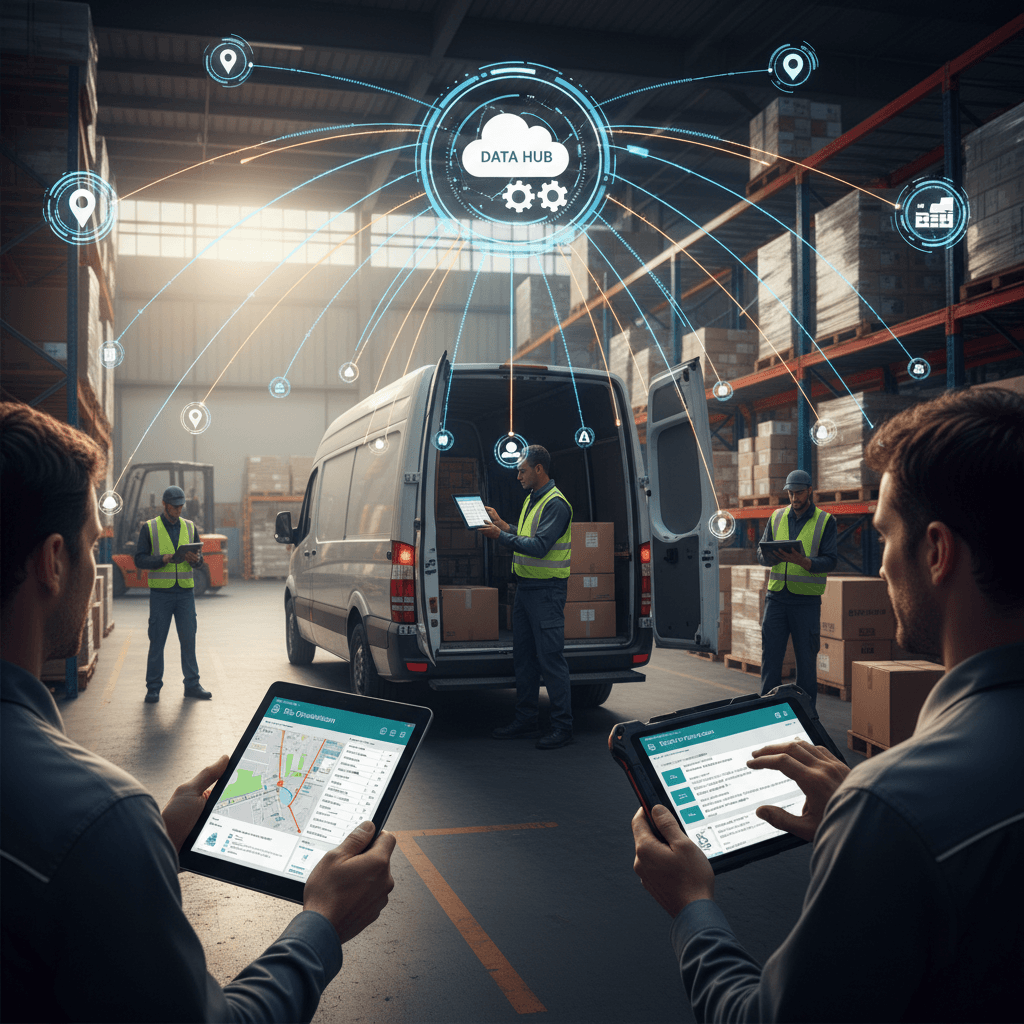
Focusing on Real-Time Communication and Automated Data Exchange: The modern last mile demands instant information flow. Implementing event-driven architectures and automated data synchronization between systems ensures that dispatchers have real-time visibility into driver locations and delivery statuses, field sales teams access up-to-the-minute inventory, and customers receive immediate delivery notifications. This reduces manual intervention and accelerates decision-making.
-
Aligning Technology Integration Strategies with Operational Workflows and Business Goals: Integration shouldn't be for integration's sake. Each connection point must be meticulously planned to support specific operational workflows and contribute directly to overarching business objectives, whether that's reducing fuel costs through optimized routing, improving first-attempt delivery rates, or enhancing customer satisfaction through proactive communication.
Best Practices for Implementing Seamless Last-Mile Integrations
With strategic principles in place, the next step is practical implementation. These best practices guide organizations through the complex journey of integrating their last-mile operations effectively.
-
Conducting a Comprehensive Integration Audit: Before any new technology is introduced, thoroughly map your existing landscape. Document all current systems (ERP, WMS, TMS, CRM, mobile apps for DSD, field service, or sales), identify data flows, pinpoint manual processes, and uncover critical integration gaps. Engage key stakeholders from operations, IT, and customer service to ensure all pain points and requirements are captured.
-
Adopting a Phased, Value-Driven Implementation Strategy: Rather than attempting a 'big bang' integration, opt for a phased approach. Start with high-impact, relatively low-complexity integrations that can demonstrate early ROI. For example, integrating mobile proof-of-delivery with your invoicing system can quickly reduce administrative overhead and accelerate cash flow, building momentum for subsequent phases.
-
Selecting Integration-Ready Technology Partners: Choose technology partners whose platforms are designed for seamless integration within enterprise ecosystems. Look for robust APIs, pre-built connectors, and a track record of successful deployments with systems like Microsoft Dynamics 365. A platform like Dynamics Mobile, built natively on Dynamics 365, exemplifies this by providing inherent connectivity for field sales, DSD, field service, and warehouse management, eliminating many common integration hurdles from the outset.
-
Ensuring Robust Data Security, Compliance, and Governance: As you integrate systems and centralize data, the importance of security and compliance escalates. Implement strong data encryption, access controls, and adhere to relevant industry regulations (e.g., GDPR, HIPAA if applicable). Establish clear data governance policies to maintain data quality, consistency, and integrity across the entire integrated environment.
"The true power of an integrated last-mile platform lies not just in connecting systems, but in transforming disparate data points into actionable intelligence that drives efficiency and elevates the customer experience."
Quantifying the Impact: Measuring ROI from Integrated Logistics
The investment in integrating last-mile operations yields tangible and significant returns. Measuring these impacts is crucial for demonstrating success and justifying ongoing optimization.
-
Metrics for Evaluating Reduced Operational Costs: Track improvements in fuel consumption through optimized routing, reductions in administrative overhead due to automated data entry, and decreased labor costs from more efficient workflows. For example, a DSD operation might see a 15% reduction in route completion times, directly impacting fuel and driver wages.
-
Tracking Improvements in Delivery Timelines, First-Attempt Success Rates, and Route Optimization: Monitor key performance indicators (KPIs) such as on-time delivery rates, the percentage of deliveries completed on the first attempt, and the accuracy of route optimization algorithms. Integrated systems provide the data needed to continually refine routes and schedules, leading to fewer missed deliveries and happier customers.
-
Assessing Enhanced Customer Satisfaction, Reduced Complaints, and Increased Retention: Leverage customer feedback mechanisms (e.g., NPS scores, online reviews) and track the reduction in customer service inquiries related to delivery issues. Proactive communication and reliable service, enabled by integrated systems, build loyalty and foster repeat business.
-
Highlighting the Scalability and Agility Gained for Future Growth and Market Responsiveness: Beyond immediate cost savings, quantify the strategic advantage of an agile, integrated system. This includes the ability to rapidly onboard new products or services, expand into new geographical areas, or quickly adapt to sudden market changes or disruptions without major IT overhauls.
The challenges of last-mile logistics are undeniable, but the path to overcoming them lies in strategic, thoughtful integration. By breaking down data silos, automating workflows, and leveraging a unified data foundation, enterprises can transform their last-mile operations from a cost center into a powerful competitive differentiator. The future of efficient, customer-centric delivery is integrated, real-time, and built on a foundation of seamless connectivity.
Explore how an integrated platform built on Microsoft Dynamics 365 can unify your last-mile operations, transforming challenges into competitive advantages.
Last-Mile Delivery — FAQ
- What is last-mile delivery?
- Last-mile delivery is the final stage of the supply chain — the movement of goods from a distribution hub or warehouse to the end customer's door. It is typically the most expensive and operationally complex part of the delivery process, accounting for 40–53% of total shipping costs according to industry studies.
- Why is last-mile delivery so expensive?
- Last-mile delivery is expensive because it involves many individual stops (high cost per drop), urban traffic complexity, customer time-window requirements, failed delivery attempts, and returns handling. Each failed delivery attempt adds significant cost — typically £8–15 per failed drop in the UK.
- How does Business Central help with last-mile delivery?
- Dynamics Mobile Fleet Control adds last-mile delivery execution capabilities to Business Central — route optimisation from BC orders, live driver tracking, electronic proof of delivery (ePOD), automated customer ETA notifications, and failed delivery handling. All data stays in BC without a separate TMS or last-mile platform.
- What is the difference between last-mile delivery and final-mile delivery?
- Last-mile delivery and final-mile delivery are used interchangeably to describe the same thing — the final leg of the logistics journey from a local hub to the end destination. Both terms are correct; "last-mile" is more commonly used in logistics literature, while "final-mile" appears more in the context of utilities and infrastructure.