6 Essential Strategies for Seamless Warehouse and Field Sales Integration
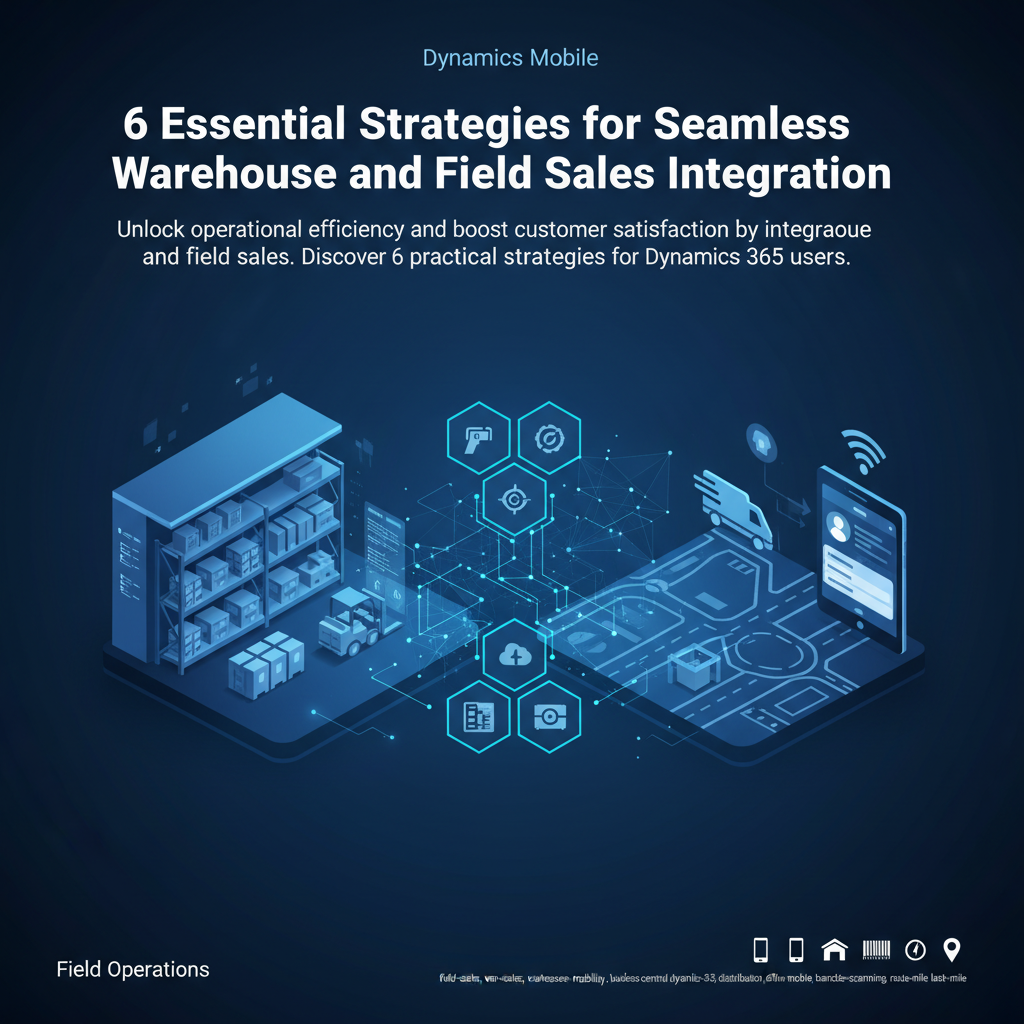
In the fast-paced world of distribution, wholesalers, and logistics, a disconnect between field sales and warehouse operations can lead to significant friction. Missed sales opportunities, inaccurate orders, delayed deliveries, and frustrated customers are common symptoms. The challenge isn't just about optimizing each function in isolation; it's about making them work together as a cohesive unit. For companies leveraging Microsoft Dynamics 365 Business Central or Finance & Operations, the path to seamless integration is not only possible but essential for competitive advantage.
1. Real-time Inventory Visibility for Field Teams
One of the most persistent pain points in distribution is the information gap between what a sales representative promises and what the warehouse actually has available. Sales teams operating with outdated inventory data risk selling out-of-stock items, leading to backorders, customer disappointment, and potential lost revenue. Conversely, the warehouse might hold stock that field sales could aggressively move if they knew its availability.
Practical Application: Dynamic Stock Checks
Imagine a field sales or van sales representative at a customer site. They're discussing an order, and the customer asks about a specific product. Instead of calling the warehouse or guessing, the rep pulls out their mobile device, instantly checks the live inventory from Dynamics 365 Business Central or Finance & Operations, and confirms availability and estimated delivery. This isn't just about seeing numbers; it's about confidently closing sales.
- Actionable Tip: Implement mobile sales solutions that provide direct, real-time access to your ERP's inventory data. This empowers your field teams to make accurate commitments and avoid stock-outs.
Real-time inventory isn't just about visibility; it's about enabling informed sales decisions at the point of interaction, preventing costly errors, and enhancing customer trust.
2. Streamlined Order-to-Fulfillment Workflow
The journey from a customer placing an order to that order being picked, packed, and shipped can be fraught with inefficiencies. Manual order entry, transcription errors, and delays in transmitting orders from the field to the warehouse directly impact delivery times and operational costs.
Practical Application: Automated Order Flow
Consider a DSD driver or a field sales agent taking an order on their mobile device. Once confirmed, this order isn't manually re-entered back at the office. Instead, it flows directly into Dynamics 365, instantly appearing in the warehouse management module. This immediate processing can trigger a pick list generation, allocate stock, and schedule the order for dispatch, all without human intervention in the middle. This reduces errors, accelerates order processing, and ensures faster fulfillment.
- Actionable Tip: Leverage mobile order entry solutions that integrate directly with your Dynamics 365 ERP. This eliminates manual re-keying, reduces errors, and significantly shortens the order-to-fulfillment cycle. Solutions like Dynamics Mobile are designed to push orders seamlessly into your D365 environment, streamlining this critical workflow.
3. Unified Customer and Delivery Preference Data
Customer satisfaction often hinges on meeting specific delivery expectations. When sales teams are unaware of a customer's unique delivery requirements (e.g., specific loading dock, preferred delivery window, gate codes, or contact person), or when the warehouse lacks these crucial notes, it can lead to delays, redeliveries, and a diminished customer experience.
Practical Application: Centralized Customer Profiles
Imagine a logistics manager scheduling routes, or a DSD driver making a delivery. Both can access a comprehensive customer profile from their respective systems (e.g., mobile device in the field, or Dynamics 365 in the office). This profile includes not only billing and product history but also critical delivery instructions, specific contact details, and even preferred placement within the store. This ensures that every interaction, from sales pitch to final delivery, is tailored and efficient.
- Actionable Tip: Ensure your Dynamics 365 ERP acts as the single source of truth for customer master data. Implement processes and mobile tools that allow field teams to view and, where appropriate, update specific delivery notes and customer preferences, ensuring this critical information is available across the entire supply chain.
4. Optimized Route Planning and Load Management
Inefficient route planning and poorly managed truck loading directly impact fuel costs, delivery times, and overall operational capacity. A common challenge arises when sales orders are finalized without direct consideration for logistics capabilities and optimal routing, leading to last-minute adjustments and suboptimal loads.
Practical Application: Sales-Driven Logistics Planning
By integrating field sales and van sales order data directly with your logistics planning, you can move from reactive to proactive. As orders are captured throughout the day, they are aggregated and fed into a route optimization engine. This engine, drawing on vehicle capacity, delivery windows, and traffic data, can then generate the most efficient routes for the next day. The warehouse team can then use these optimized routes to sequence picking and loading, ensuring trucks are packed efficiently for their specific routes.
- Actionable Tip: Connect your mobile order capture and sales planning with robust route optimization and load planning tools. This integration allows for dynamic route adjustments based on real demand and ensures that warehouse operations are perfectly aligned with delivery schedules. Dynamics Mobile's capabilities can help aggregate and structure this order data for seamless integration with route optimization software.
5. Seamless Returns and Credit Management
The returns process can often be a cumbersome, manual bottleneck, leading to delays in customer credits, inventory discrepancies, and administrative overhead. When field teams lack the tools to manage returns efficiently on-site, it creates a fragmented process that impacts both customer satisfaction and financial accuracy.
Practical Application: Mobile-Enabled Returns Processing
Imagine a field representative or DSD driver encountering damaged goods or processing a customer return during a visit. Instead of simply noting it down on paper, they can use their mobile device to initiate the return. They can scan the item, capture photos of damage, specify the return reason, and instantly create a return order in Dynamics 365. This action can immediately update inventory, initiate a credit memo, and alert the warehouse to expect the incoming goods, streamlining the entire reverse logistics process.
- Actionable Tip: Empower your field teams with mobile applications that facilitate on-site returns processing. This reduces paperwork, accelerates credit processing, improves inventory accuracy, and provides immediate visibility into return logistics for both sales and warehouse teams.
6. Collaborative Performance Analytics
Siloed data is a common impediment to holistic operational improvement. Sales teams often track their metrics, and warehouse teams theirs, but rarely do these insights merge to reveal the true impact of cross-functional efforts or expose system-wide bottlenecks. This makes it difficult to identify areas for improvement that span both field and warehouse operations.
Practical Application: Integrated Dashboards
By integrating data from field sales activities, order fulfillment, inventory movements, and delivery logistics within Dynamics 365 or through tools like Power BI, organizations can create comprehensive dashboards. A logistics manager might see how a new field sales promotion impacts warehouse picking volumes and dispatch efficiency. A sales manager could analyze delivery success rates and on-time performance by sales region, identifying areas where logistical support could be improved to boost sales. This unified view fosters accountability and collaboration across departments.
- Actionable Tip: Develop integrated reporting and analytics within Dynamics 365 or using Power BI that combine sales, inventory, and logistics metrics. Track KPIs such as order accuracy from the field, pick-pack-ship times, delivery success rates, and return processing efficiency.
Breaking down data silos reveals the true cost and opportunity within your supply chain, transforming data into actionable insights for continuous improvement.
Achieving seamless integration between warehouse and field sales operations is no longer a luxury but a strategic imperative for distributors, wholesalers, and logistics companies. By implementing these practical strategies, leveraging your Microsoft Dynamics 365 platform, and empowering your mobile workforce with the right tools, you can unlock significant operational efficiencies, reduce costs, and dramatically enhance customer satisfaction. The goal is to create a unified, responsive supply chain where information flows freely, and every team member contributes to a shared objective of excellence.
Ready to transform your mobile workforce and integrate your operations? Book a demo at dynamicsmobile.com to see how Dynamics Mobile can empower your field sales, DSD, and logistics teams.