Automating Van Sales Route Planning with Dynamics 365: A Practical Guide
For distribution companies relying on direct store delivery (DSD) or van sales, the daily challenge of efficiently reaching customers, managing on-van inventory, and processing transactions can be a major drain on resources. Manual route planning, reactive adjustments, and disjointed systems often lead to higher operational costs, missed sales opportunities, and frustrated field teams. Modernizing this critical workflow is not just about efficiency; it's about maintaining a competitive edge and ensuring profitability.
Operational Context: Van Sales in Modern Distribution
Van sales, often synonymous with Direct Store Delivery (DSD) or route accounting, is a cornerstone of operations for many Fast-Moving Consumer Goods (FMCG), food and beverage, and wholesale distribution companies. It involves field representatives driving pre-loaded vehicles to customer locations—retail stores, restaurants, or other businesses—to sell products directly from their vehicle's stock, deliver pre-ordered goods, collect payments, and often manage promotional displays.
A typical day for a van sales representative begins with loading their vehicle according to a planned inventory manifest. They then embark on a route, visiting multiple customers throughout the day. At each stop, they might check inventory levels, present new products, take orders for immediate delivery, process sales, collect cash or other payments, and issue invoices. The day concludes with reconciliation of sales, inventory, and cash back at the depot. This dynamic, high-volume environment demands precision and agility, as any inefficiency directly impacts profitability and customer satisfaction.
Common Problems: The Hurdles of Manual Van Sales Route Planning
Despite its critical role, van sales operations are frequently hampered by manual, inefficient processes, particularly in route planning:
- Inefficient Routes and Higher Costs: Manually planned routes often fail to account for real-time traffic, optimal sequencing, or vehicle capacity, leading to excessive fuel consumption, longer driving hours, and increased vehicle maintenance costs.
- Suboptimal Customer Visits: Without intelligent planning, reps may visit customers out of sequence, miss critical delivery windows, or spend too much time traveling between stops, reducing the number of potential customer interactions per day.
- Inaccurate On-Van Inventory Management: Managing stock on the vehicle manually is prone to errors, leading to situations where a rep either runs out of a popular item at a customer site (lost sales) or carries excessive, slow-moving inventory (dead stock, wasted space).
- Lack of Real-time Visibility: Managers often lack real-time insight into field activities, sales performance, current location of reps, or remaining inventory on vehicles, making it difficult to respond to issues or make informed decisions.
- Manual Data Entry Errors and Delays: Relying on paper forms for sales orders, delivery confirmations, and payment collection introduces opportunities for transcription errors and delays in data synchronization with the back-office ERP, such as Microsoft Dynamics 365 Business Central or Finance & Operations.
- Disconnected Systems: A significant challenge is the gap between field operations and the core ERP. Manual processes mean sales, inventory, and payment data from the field are not immediately available in Dynamics 365, impacting inventory accuracy, financial reporting, and customer service.
How the Digital Workflow Works: Automating Van Sales Routes with Dynamics 365 and Mobile Technology
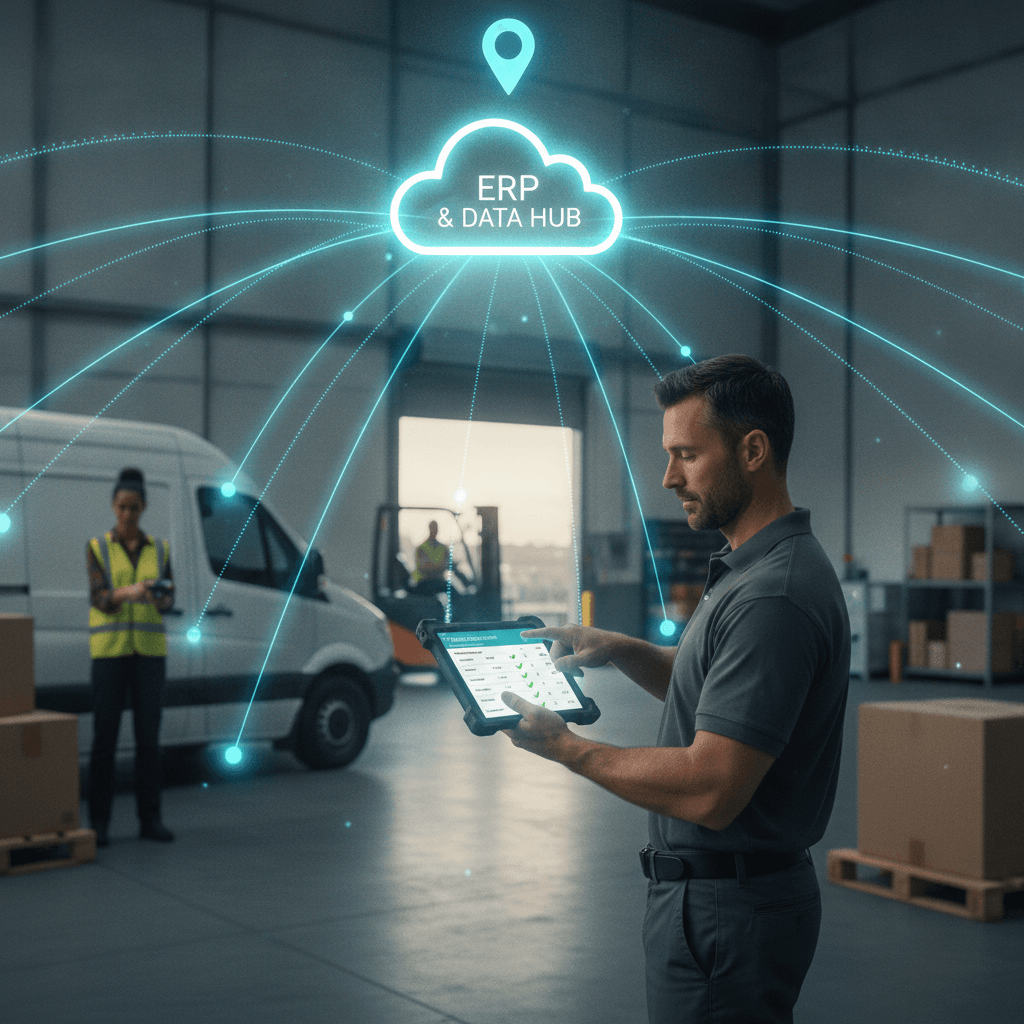
Integrating a mobile workforce management platform with your Dynamics 365 ERP transforms van sales route planning from a reactive, manual task into a proactive, optimized digital workflow.
Pre-Route Planning & Data Synchronization
The journey begins in your Dynamics 365 Business Central or Finance & Operations system. Critical data—customer master records (locations, service windows, historical purchasing data), product catalogs, current pricing, promotions, and available inventory—is automatically synchronized to the mobile workforce management platform. This ensures that all planning is based on accurate, up-to-date information.
Intelligent Route Optimization
This is where automation delivers significant value. Using a platform like Dynamics Mobile, operations managers can define parameters for route optimization:
- Customer Locations and Service Windows: The system maps all customer addresses and considers their preferred delivery or visit times.
- Vehicle Capacity: Input details like vehicle volume and weight limits to prevent overloading.
- Product Demand and Sales Priorities: Prioritize visits to high-value customers or those with specific promotional offers.
- Traffic Conditions: Leverage real-time and historical traffic data to predict the fastest routes.
- Field Team Availability: Assign routes based on rep schedules and skill sets.
With these inputs, the platform's optimization engine automatically generates the most efficient routes, providing turn-by-turn navigation, optimal sequencing of stops, and estimated arrival times for each customer. This process can be run daily, weekly, or on demand, adapting to changing business needs.
On-Route Execution with Mobile Devices
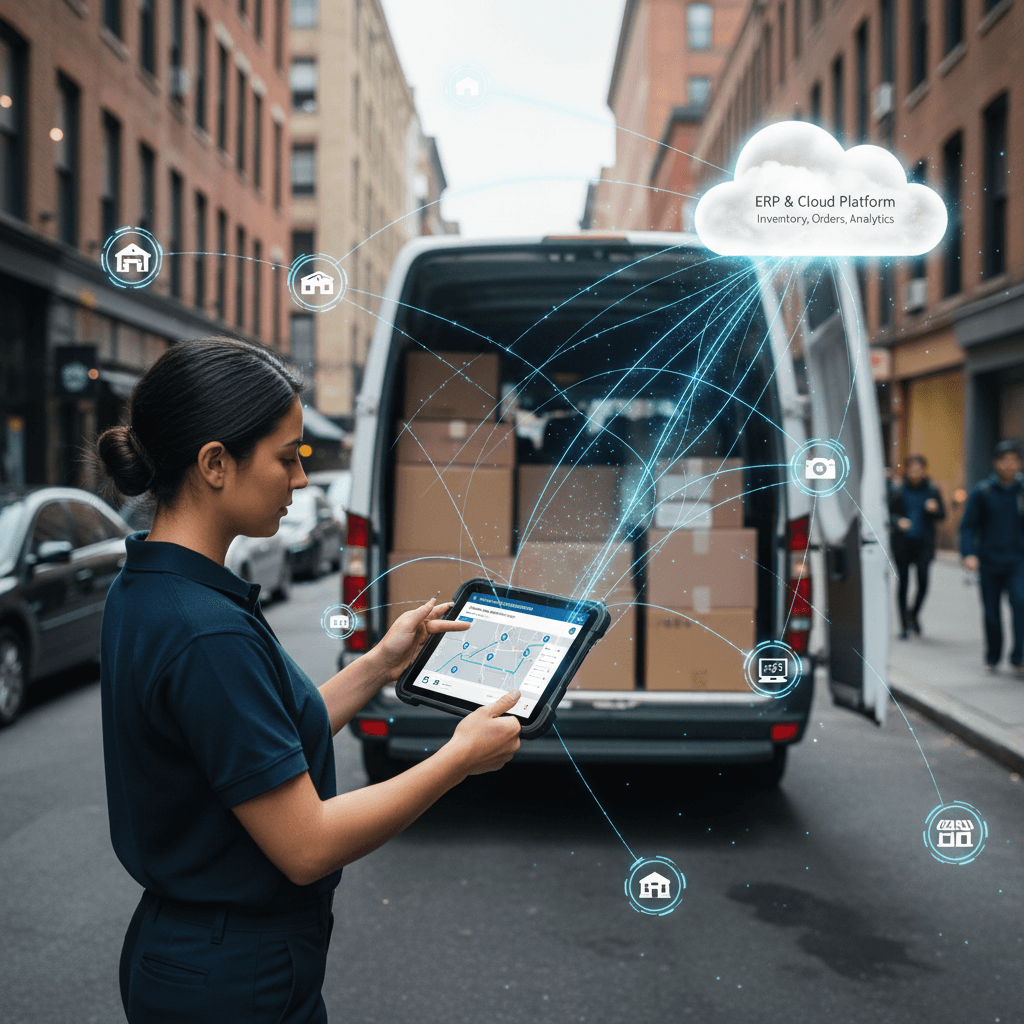
Once routes are optimized and published, field representatives access their assigned route plan directly on their mobile devices (Android or iOS) via a dedicated app. The app becomes their central hub for all field activities:
- Turn-by-Turn Navigation: Guides reps efficiently from one customer to the next.
- Customer Information Access: Provides instant access to customer history, outstanding balances, specific notes, and active promotions.
- On-Van Inventory Management: Reps can view real-time inventory levels on their truck, update stock during sales, and perform inventory adjustments.
- Mobile Sales Order Creation: Generate sales orders on the spot, apply discounts, capture customer signatures, and issue digital receipts.
- Payment Processing: Securely collect cash, check, or mobile payments, with immediate recording.
- Proof of Delivery (POD): Capture photos, signatures, and timestamps for delivery verification.
Real-time Updates & Back-Office Visibility
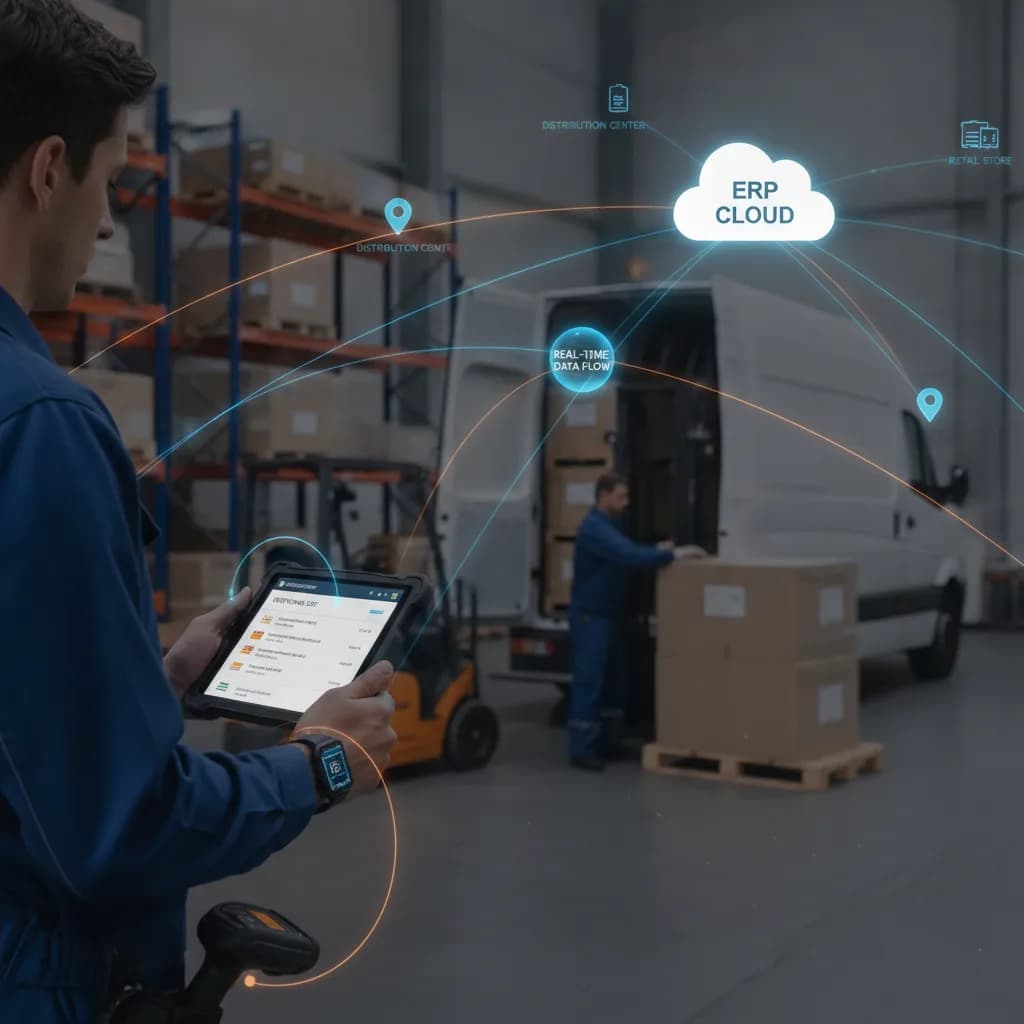
Every action taken by the field rep—a completed sale, a collected payment, an inventory adjustment, a delivery confirmation—is immediately synchronized back to Dynamics 365 Business Central or Finance & Operations. This real-time integration provides managers with:
- Live Tracking: Monitor rep locations and progress against their planned routes.
- Sales Performance Dashboards: View daily sales figures, order values, and product performance.
- Accurate Inventory: Maintain precise, up-to-the-minute records of on-van and warehouse inventory.
- Financial Visibility: Faster cash reconciliation and accurate accounts receivable updates.
Automated route planning and mobile execution bridge the gap between field operations and your Dynamics 365 ERP, transforming van sales into a data-driven, highly efficient process.
Example Scenario: A Day in the Life of an Optimized Van Sales Route
Consider a regional beverage distributor, 'Refresh Drinks Co.', using Dynamics 365 Business Central and Dynamics Mobile for their van sales operations. John, a van sales rep, starts his day:
- Pre-Route: The operations manager at Refresh Drinks Co. uses Dynamics Mobile's route optimization module. It pulls customer data, historical sales, and current promotions from Dynamics 365 Business Central. The system generates optimized routes for all reps, considering traffic, delivery windows for specific stores, and vehicle capacity for beverages. John's route is published to his mobile device.
- Loading & Departure: John uses his mobile device to view his optimized route and the recommended loading manifest. He quickly loads his van, confirming items with a quick scan.
- On the Road: John follows the turn-by-turn navigation on his mobile app. His first stop is 'Corner Grocer'. The app shows him relevant customer history, recent orders, and current promotions on new sparkling water lines.
- At the Customer: John checks the store's stock, suggests a new promotional display, and uses his mobile app to create a sales order for a mix of soft drinks and the new sparkling water. The app automatically applies the correct pricing and promotion pulled from Dynamics 365. The store manager signs for the order digitally on John's device.
- Payment & Inventory: John collects payment via a mobile card reader integrated with his app. The app instantly updates the on-van inventory, deducting the sold items and simultaneously sending the sales order and payment details back to Refresh Drinks Co.'s Dynamics 365 Business Central system.
- Real-time Visibility: Back at the office, the operations manager sees John's progress on a dashboard, confirming the sale at Corner Grocer, the updated inventory on John's van, and the collected payment. If a priority customer calls with an urgent request, the manager can see which rep is closest and adjust their route digitally.
- End of Day: John completes his route, all sales and payments recorded. His end-of-day reconciliation is swift and accurate because all data has already been synced with Dynamics 365.
Operational Benefits: Tangible Gains from Automated Route Planning
The transition to an automated van sales route planning system offers concrete, measurable improvements:
- Reduced Operational Costs: Optimized routes lead to significant savings in fuel consumption and vehicle maintenance. Less time spent on the road means lower labor costs per delivery or sale.
- Increased Sales and Productivity: Field reps can visit more customers per day, spending less time driving and more time selling or servicing. Reduced administrative time for reps further boosts productivity.
- Improved Inventory Accuracy: Real-time on-van inventory tracking minimizes stockouts and overstocking, reducing waste and ensuring reps have the right products for their customers.
- Enhanced Customer Satisfaction: Reliable delivery times, efficient service, and reps having immediate access to customer history contribute to a better customer experience.
- Better Managerial Visibility: Real-time dashboards and reporting provide managers with unparalleled insight into field activities, sales performance, and rep efficiency, enabling proactive decision-making.
- Faster Cash Flow: Quicker payment collection and immediate reconciliation mean cash flow improves, reducing days sales outstanding (DSO).
Conclusion: Modernizing Van Sales for Competitive Advantage
The days of manual, spreadsheet-driven van sales route planning are rapidly becoming obsolete. Organizations that embrace automation and integrate their field operations with their core ERP system, like Microsoft Dynamics 365 Business Central or Finance & Operations, are poised for significant operational efficiencies and strategic growth. By moving from reactive problem-solving to proactive, data-driven workflows, businesses can reduce costs, boost productivity, enhance customer satisfaction, and maintain a competitive edge in a dynamic marketplace.
Explore how integrated mobile solutions can streamline your van sales operations and connect your field teams directly with your Microsoft Dynamics 365 ERP.