5 Practical Ways AI in Warehouse Mobility Reduces Worker Mistakes
In the fast-paced world of warehouse operations, human error is an inevitable, yet costly, challenge. Mis-picks, mis-ships, incorrect putaways, and compliance breaches don't just lead to customer dissatisfaction; they incur significant expenses in returns, re-shipments, inventory adjustments, and lost productivity. While training and process improvements are vital, the sheer volume and speed of modern logistics often push human limits. This is where Artificial Intelligence, integrated directly into warehouse mobile workflows, offers a powerful, practical solution, transforming error prevention from reactive fixes to proactive guidance.
1. AI-Powered Predictive Picking & Putaway
One of the most impactful applications of AI in warehouse mobility is its ability to anticipate and prevent errors during picking and putaway. Instead of relying solely on static rules, AI leverages historical data to learn and predict.
Leverage Historical Data to Anticipate Errors
AI analyzes vast datasets, including past error rates for specific SKUs, common picking sequences, item velocity, and even individual worker performance. It can identify patterns, such as frequently confused items (e.g., similar-looking product variants, different pack sizes of the same item) or locations prone to misplacement. This predictive capability allows the system to flag potential issues before they become actual mistakes.
Optimal Routes and Cognitive Load Reduction
Beyond error prediction, AI optimizes picking and putaway routes in real-time. By considering current warehouse congestion, equipment availability, and order priority, AI suggests the most efficient path for a worker. This minimizes travel time but, crucially, also reduces cognitive load. Fewer decisions for the worker mean less mental fatigue and a lower chance of simple navigational or sequential errors.
Operational Insight: For a large distribution center handling thousands of SKUs daily, AI can learn that 'Product A-123 (Red)' is often confused with 'Product A-124 (Orange)' due to proximity and similar packaging. When a worker is assigned to pick A-123, their mobile device might proactively display a warning, an image of the correct item, or even require a secondary scan for verification.
Real-time Alerts on Mobile Devices
The true power lies in real-time intervention. As a worker approaches a pick or putaway location, their mobile device (running a platform like Dynamics Mobile) can provide immediate alerts. These aren't just generic warnings; they are context-aware, based on the AI's understanding of the specific task, item, and worker's historical patterns. For example, if a worker attempts to pick a quantity that deviates from the order, the system can instantly prompt a double-check, preventing an over- or under-pick before it's confirmed.
2. Intelligent Voice & Vision Guidance Systems
Moving beyond traditional barcode scanning, AI-driven voice and vision technologies offer hands-free, intuitive guidance that significantly reduces manual data entry errors and visual misidentification.
AI-Driven Voice Picking with Natural Language Processing
Implement AI-powered voice picking that goes beyond simple command recognition. With natural language processing (NLP), workers receive clear, concise instructions through headsets, allowing them to keep their hands free for handling products. This eliminates the need to look at a screen or manually input data, greatly reducing transcription errors and improving focus on the physical task. The system can even understand nuanced responses and confirm actions verbally.
Computer Vision for Item Verification
Utilize computer vision capabilities on mobile devices (e.g., integrated cameras on ruggedized tablets or smartphones). As a worker prepares to pick an item, the device can scan barcodes or even recognize item features (shape, color, branding) to verify they are selecting the correct product. This is particularly valuable in environments with high SKU density or similar-looking items, such as an FMCG warehouse where different flavors or packaging sizes need precise differentiation.
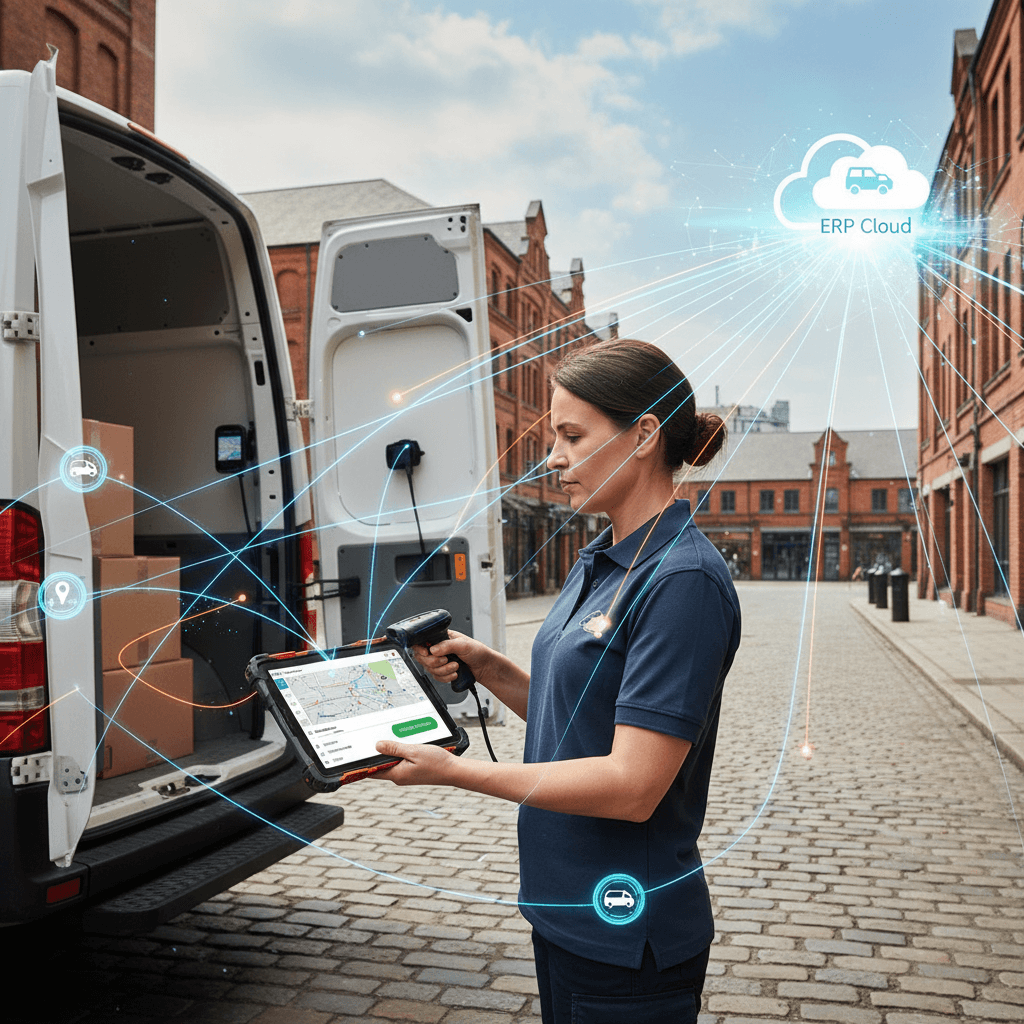
Practical Application: Imagine a DSD driver loading their van. Instead of just scanning a barcode, the mobile device's camera uses AI to visually confirm the correct product and quantity are being loaded, matching it against the route manifest. This proactive check ensures the right inventory is on board before the route even begins.
Minimize Visual Misidentification and Memory Reliance
By automating visual verification, AI minimizes the risk of human visual misidentification and reduces reliance on a worker's memory, especially during repetitive or high-volume tasks. This significantly boosts accuracy and reduces the mental strain on the workforce.
3. Real-time Anomaly Detection & Proactive Alerting
AI's ability to continuously monitor and analyze operational data in real-time allows for the detection of deviations from standard procedures, flagging potential errors or process breaches before they escalate.
Monitor Worker Actions for Deviations
AI continuously monitors various worker actions, such as scan sequences, movement patterns within the warehouse, time spent on specific tasks, and even idle times. It establishes baselines for standard operating procedures (SOPs) and identifies any significant deviations. For instance, if a worker skips a required scanning step or takes an unusually long or short time on a task, the AI registers this as an anomaly.
Identify Unusual Activity
This goes beyond simple rule-based checks. AI can detect subtle patterns that might indicate an impending error, a process breach, or even a safety concern. For example, consistently attempting to scan a non-existent location, or unusual movement patterns that suggest confusion or a deviation from the designated path, can be flagged. This capability is crucial for maintaining operational compliance and preventing errors stemming from procedural shortcuts or misunderstandings.
Trigger Immediate Alerts for Intervention
When an anomaly is detected, the AI system triggers immediate alerts. These can be sent directly to the worker's mobile device for self-correction or to a supervisor's dashboard for timely intervention. This proactive alerting mechanism allows for errors to be caught and corrected in the moment, preventing them from propagating further down the supply chain.
Operational Scenario: A warehouse worker, new to a specific aisle, might repeatedly attempt to pick from the wrong bin location. AI detects this pattern of repeated incorrect scans and immediately alerts the worker with a corrective message and highlights the correct bin on their mobile map, preventing multiple mis-picks and frustration.
4. Dynamic Task Optimization & Workflow Automation
AI can dynamically optimize task assignments and automate routine workflow elements, reducing decision fatigue and ensuring that the right worker is doing the right task at the right time.
AI-Driven Assignment of Tasks
Gone are the days of static task lists. AI dynamically assigns tasks based on a multitude of real-time factors: a worker's current location, their skill level or certifications (e.g., forklift license), equipment availability, and even real-time warehouse congestion. This ensures tasks are distributed optimally, minimizing travel time and maximizing efficiency, while also reducing the chance of a worker being assigned a task they are not best suited for, thereby lowering error rates.
Automate Routine Checks and Data Capture
Many warehouse errors stem from manual data entry or missed routine checks. AI can automate these processes. For example, instead of a worker manually recording a temperature reading from a cooler, a mobile device with integrated sensors can automatically capture and log the data, reducing human transcription errors and ensuring compliance (critical in cold chain logistics). Similarly, pre-start equipment checks can be guided and verified by AI, ensuring equipment is safe and operational.
Minimize Decision Fatigue and Stress
By providing clear, optimized workflows and automating routine decisions, AI significantly minimizes decision fatigue and stress for warehouse workers. When workers are less stressed and don't have to constantly make complex choices, they are less prone to making mistakes. This leads to improved accuracy, higher job satisfaction, and overall enhanced operational efficiency.
5. Proactive Quality Assurance with AI-Driven Verification
The final line of defense against errors leaving the warehouse is AI-driven quality assurance at critical outbound stages, ensuring that what's packed and loaded is exactly what was ordered.
AI Checks at Critical Stages
Implement AI-powered verification points at crucial stages such as packing, staging, and loading. Mobile devices, often equipped with integrated sensors or high-resolution cameras, become powerful quality control tools. A platform like Dynamics Mobile can orchestrate these checks, integrating seamlessly with your Dynamics 365 ERP to pull order details and record verification outcomes.
Image Recognition or Weight Verification
Utilize advanced AI capabilities for verification. Image recognition can compare the items in a packed box or on a pallet against the order manifest, confirming correct quantities and items. For example, a worker can take a photo of the packed order, and AI instantly verifies its contents. Similarly, weight verification, where the system knows the expected weight of an order, can flag discrepancies that indicate incorrect items or quantities.
Real-world Example: In a wholesale distribution center, as a pallet is being prepared for loading onto a delivery truck, the AI system prompts the worker to use their mobile device's camera to scan the pallet. AI analyzes the image, cross-referencing it with the order to confirm all items are present, correctly oriented, and undamaged, catching errors like a missing carton or a wrong product before the truck departs.
Catch Errors Before They Leave the Warehouse
The primary benefit here is catching errors before they leave your facility. This proactive approach significantly reduces costly returns, prevents customer dissatisfaction, and protects your brand's reputation. It transforms quality control from a post-mortem analysis into an in-the-moment assurance, saving time and resources downstream.
Integrating AI into warehouse mobility isn't about replacing human workers; it's about empowering them with intelligent tools that augment their capabilities, reduce their cognitive load, and proactively prevent mistakes. By leveraging predictive analytics, intelligent guidance, real-time anomaly detection, dynamic optimization, and advanced verification, warehouses can achieve unprecedented levels of accuracy and efficiency. This translates directly into tangible ROI through reduced operational costs, improved customer satisfaction, and a more productive, confident workforce.
Explore how Dynamics Mobile integrates AI capabilities with your existing Dynamics 365 ERP to empower your warehouse workforce, reduce errors, and drive operational excellence.