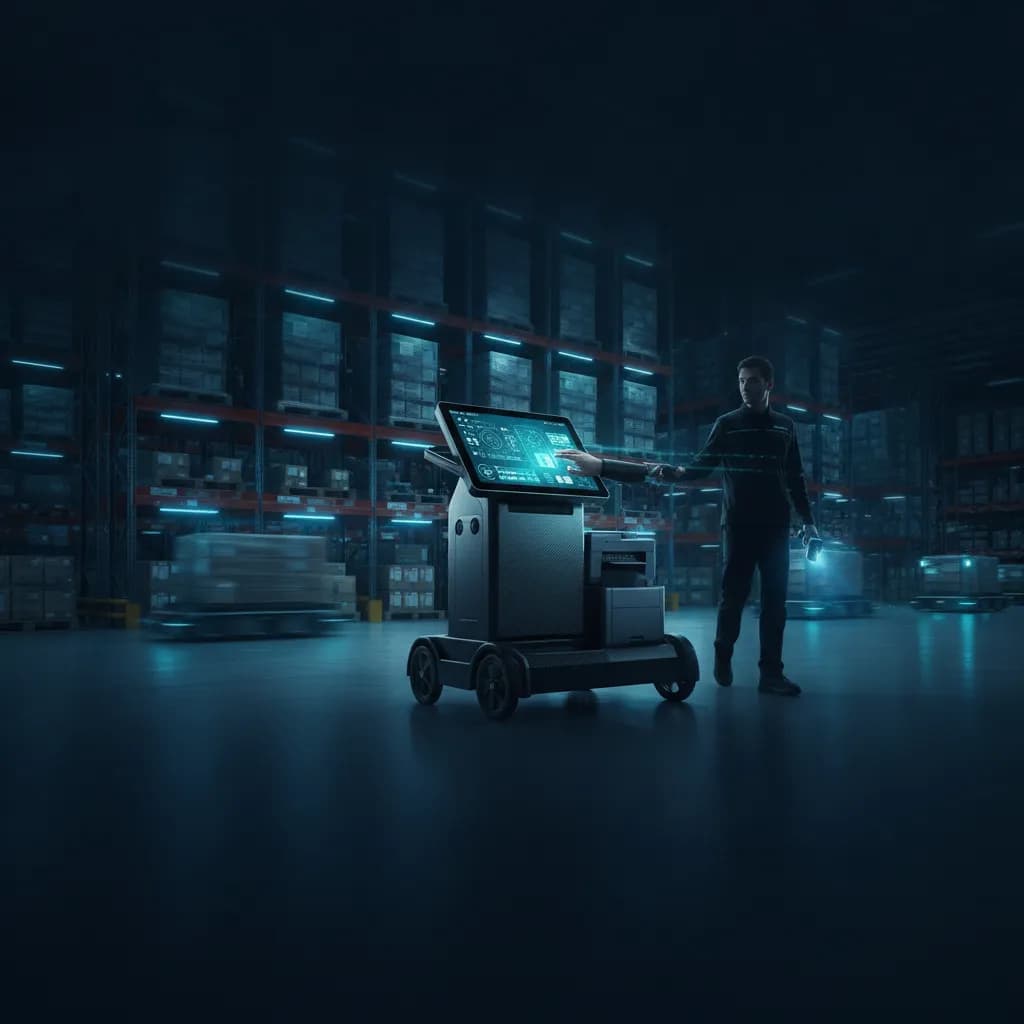
Streamlining Warehouse Picking: Dynamics 365 Best Practices

In today's fast-paced supply chain, inefficient warehouse picking can be a significant bottleneck, directly impacting customer satisfaction, delivery times, and ultimately, profitability. Manual processes, mis-picks, and lack of real-time visibility often lead to costly errors and operational delays, hindering an organization's ability to meet growing demands. Modernizing this critical operation is no longer an option but a strategic imperative for businesses aiming for sustained growth and efficiency.
Operational Context: The Critical Role of Warehouse Picking
Warehouse picking, the process of retrieving items from storage to fulfill customer orders, is at the heart of any distribution or retail operation. It's not merely about finding products; it's about doing so accurately, efficiently, and cost-effectively.
Common strategies include:
- Discrete Picking: One picker fulfills one order at a time. Simple but often less efficient for high volumes.
- Batch Picking: A picker collects items for multiple orders simultaneously, then sorts them.
- Zone Picking: The warehouse is divided into zones, and pickers are assigned to specific zones, passing orders to the next zone.
- Wave Picking: Orders are grouped into "waves" based on criteria like delivery route or shipping time, then processed in batches or zones.
The chosen strategy directly influences the speed and accuracy of order fulfillment. Delays or errors here cascade through the entire supply chain, affecting delivery schedules, customer relationships, and operational costs.
Common Challenges in Traditional Picking Operations
Despite its importance, warehouse picking often suffers from systemic issues in traditional environments:
- High Incidence of Picking Errors: Manual data entry and reliance on paper pick lists lead to mis-picks, incorrect quantities, and ultimately, customer dissatisfaction and costly returns.
- Slow Processing Times and Bottlenecks: Paper-based systems often result in pickers searching for items inefficiently, leading to wasted time, congestion in aisles, and delayed order dispatch.
- Inaccurate Inventory Counts: Discrepancies between physical stock and system records are common, causing stockouts, backorders, and a general lack of trust in inventory data.
- Lack of Real-time Visibility: Managers often have limited insight into picking progress, picker performance, or current stock levels, making it difficult to identify bottlenecks or make informed decisions.
- Inefficient Picker Routes: Without system guidance, pickers may follow suboptimal paths, increasing travel time and reducing overall productivity.
- Disconnected Systems: Many organizations still struggle with fragmented systems where picking data isn't seamlessly integrated with their ERP, leading to manual reconciliation and data lags.
The Digital Workflow: Optimizing Picking with Dynamics 365 and Mobile Technology
Optimizing warehouse picking involves leveraging mobile technology seamlessly integrated with a robust ERP system like Microsoft Dynamics 365 Business Central or Finance & Operations. Here's how a modernized workflow typically operates:
- Order Generation and Release: Customer orders are received and processed within Dynamics 365. Once validated and ready for fulfillment, they are released for picking. The system can consolidate orders, apply picking strategies (batch, wave), and determine optimal picking sequences.
- Task Assignment to Mobile Devices: Instead of paper lists, picking tasks are digitally transmitted from Dynamics 365 to rugged mobile devices (scanners, smartphones, tablets) carried by warehouse personnel. A specialized mobile application, such as Dynamics Mobile, facilitates this by presenting clear, step-by-step instructions.
- Guided Picking Paths: The mobile application provides optimized routes and sequences for pickers, minimizing travel time and maximizing efficiency. It directs them to the exact bin location for each item, often displaying a visual map or aisle number.
- Barcode Scanning for Verification: As items are picked, the warehouse worker scans the item's barcode and/or the bin location barcode. This instant verification confirms the correct item and quantity, drastically reducing picking errors. The mobile application prompts for confirmation and flags any discrepancies immediately.
- Real-time Inventory Updates: Each scan automatically updates the inventory records in Dynamics 365. This ensures that stock levels are accurate in real-time, providing immediate visibility for sales, planning, and other departments. If a discrepancy is found (e.g., item not found, quantity mismatch), the system can guide the picker through a resolution process.
- Integration with Packing and Shipping: Once all items for an order are picked and verified, the mobile device confirms task completion. This triggers the next step in Dynamics 365, such as generating packing slips, updating shipping manifests, or initiating the loading process.
A digitally optimized picking workflow transforms a manual, error-prone process into a guided, accurate, and highly efficient operation, directly feeding real-time data into your core ERP.
Scenario: A Distribution Company's Optimized Picking Journey
Consider "Global Distributors Inc.," a wholesale company that distributes a wide range of consumer goods to retail stores across a region. They operate with Microsoft Dynamics 365 Finance & Operations as their ERP.
Previously, Global Distributors struggled with pickers using printed lists, leading to frequent mis-shipments and delays. Now, when a batch of orders comes in, Dynamics 365 processes them and releases picking tasks. These tasks are immediately pushed to the Dynamics Mobile application on rugged handheld scanners used by their warehouse team.
A picker, Maria, receives her task list for a wave of orders. Her device guides her through the warehouse, indicating the most efficient path to pick items for multiple customer orders. As she arrives at a bin, she scans the bin location and then each item's barcode, confirming quantities. The system immediately validates her picks against the order. If she attempts to pick the wrong item or an incorrect quantity, the device alerts her instantly. All her actions – from item scans to task completion – update Dynamics 365 in real-time. This ensures that as soon as Maria finishes her picking wave, the inventory is accurate, and the orders are ready for the packing station, significantly reducing the time from order receipt to dispatch.
Tangible Operational Benefits of Optimized Picking
The transition to an optimized, digital warehouse picking process yields a range of measurable benefits:
Reduced Picking Errors
By enforcing barcode scanning for verification at each step, the system virtually eliminates mis-picks and quantity errors. This translates to fewer returns, reduced rework, and higher customer satisfaction.
Accelerated Order Fulfillment
Optimized picking routes, clear digital instructions, and real-time validation significantly reduce the time spent on each order. This speeds up the entire fulfillment cycle, enabling faster deliveries and improving responsiveness to customer demands.
Enhanced Inventory Accuracy
Real-time updates to Dynamics 365 after every scan ensure that inventory records are always current and precise. This eliminates discrepancies, improves forecasting, and prevents stockouts or overstocking.
Improved Managerial Visibility
Managers gain real-time dashboards and reports within Dynamics 365, showing picker performance, order progress, and inventory levels. This insight allows for proactive bottleneck identification, resource allocation adjustments, and performance monitoring.
Increased Picker Productivity
Guided workflows, minimized travel time, and instant access to information empower warehouse personnel to work more efficiently. Less time is spent searching or correcting errors, allowing them to process more orders per shift.
Lower Operational Costs
The cumulative effect of fewer errors, faster processing, and improved productivity leads to substantial cost savings. This includes reduced labor costs, lower return processing expenses, optimized inventory holding costs, and less wasted product.
Conclusion: Modernizing Warehouse Picking for Future Success
Modernizing warehouse picking is a fundamental step toward building a resilient and efficient supply chain. By embracing digital workflows integrated with powerful ERP systems like Microsoft Dynamics 365 Business Central or Finance & Operations, organizations can move beyond the limitations of traditional, manual processes. The integration of mobile technology provides the precision, speed, and real-time visibility necessary to meet today's demanding customer expectations.
This strategic shift not only resolves common operational pain points but also positions your business for sustained growth and competitive advantage. It's about transforming your warehouse from a cost center into a strategic asset that drives accuracy, speed, and profitability.
Explore how Dynamics Mobile can help your organization implement these warehouse picking optimization strategies, seamlessly integrating with your Dynamics 365 environment.