How do mobile picking stations improve warehouse efficiency?
If you have ever spent time on a busy warehouse floor, you know that time is quite literally money. Every step a worker takes to retrieve a pick list, grab a shipping label, or scan a barcode at a fixed terminal eats into your bottom line. In an era where e-commerce demands lightning-fast delivery times, relying on outdated fulfillment processes is a recipe for falling behind.
Enter a game-changing solution: mobile picking stations.
By bringing technology directly to the point of work, these dynamic setups are revolutionizing modern logistics. Instead of forcing workers to commute back and forth across a massive facility, facilities are now mobilizing their operations to meet the inventory where it sits.
In this comprehensive guide, we will explore exactly how these innovative solutions work, the technology that powers them, and the actionable ways they can dramatically boost your warehouse efficiency.

What Are Mobile Picking Stations?
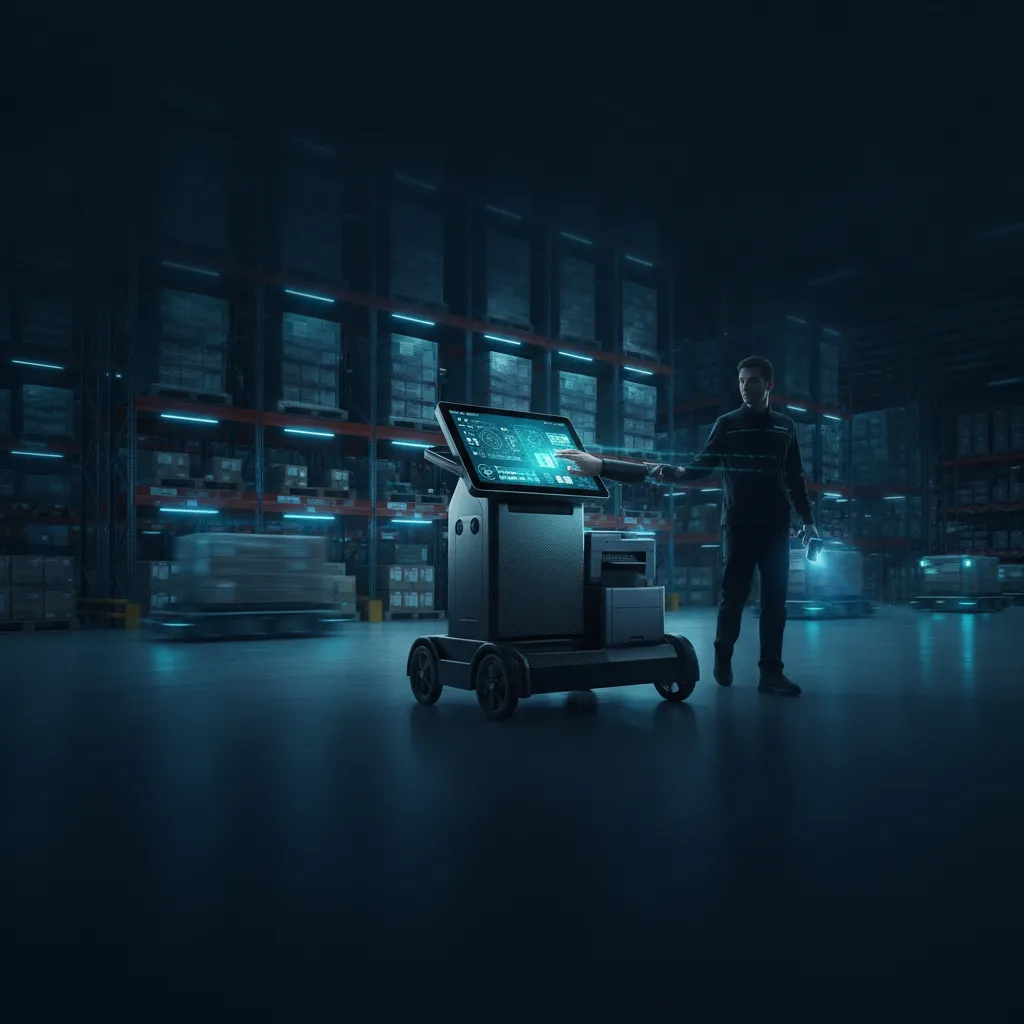
At their core, mobile picking stations are portable powered workstations for logistics. Imagine taking a traditional packing desk—complete with a computer monitor, barcode scanner, keyboard, and printer—and placing it on a rugged, battery-powered cart.
Historically, warehouses relied heavily on fixed infrastructure. When looking at stationary vs portable packing benches, the differences in workflow are stark. With a stationary bench, an employee must walk to an aisle, pick an item, carry it back to the desk, log the pick, print a label, and prepare the item for shipment. This creates a hub-and-spoke movement pattern that is incredibly inefficient.
A mobile station, however, travels with the worker down the aisles. The worker picks the item, scans it immediately, prints the label on the spot, and places it directly into the shipping container. This transforms a multi-step, multi-trip ordeal into a single, fluid motion.
The Hidden Cost of Walking: Eliminating Warehouse Travel Time
Studies consistently show that order pickers spend roughly 50% of their shifts just walking. That is non-value-added time that slows down fulfillment and drives up labor costs.
Eliminating warehouse travel time is arguably the single biggest advantage of mobilizing your workforce. When workers are no longer tethered to a static computer terminal, you instantly unlock more efficient picking methods, such as batch picking, wave picking, or cluster picking.
Actionable Tip: Conduct a "Spaghetti Diagram" Analysis
To truly understand the value of this technology, track a picker’s movements for one hour using a floor plan map. Draw a line for every route they take. The resulting "spaghetti diagram" will likely reveal a chaotic web of overlapping trips to and from the printer and computer terminal. Introducing mobile stations cuts these wasted trips entirely, creating a streamlined, linear workflow down the aisles.

The Anatomy of a High-Performance Mobile Station
Transforming a standard rolling cart into a powerhouse of productivity requires the right combination of industrial-grade hardware and smart software.
Built for the Industrial Environment
A standard office cart will not survive a week on a concrete warehouse floor. Premium mobile stations are built with robust materials and feature heavy-duty casters for industrial rolling tables. These specialized wheels absorb shock, glide smoothly over expansion joints, and lock securely in place when the worker is fulfilling an order.
Additionally, the physical layout of the cart matters. A high-quality industrial cart with integrated label printer mounts the hardware strategically to save space, keeping the workspace clutter-free while protecting sensitive equipment from bumps and collisions.
Powering the Cart
A mobile station is only as useful as its battery life. Historically, heavy lead-acid batteries weighed carts down and required overnight charging. Today, facilities rely on advanced lithium battery systems for rolling carts. These modern batteries are lightweight, charge rapidly, and provide consistent power output to multiple devices simultaneously.
For operations running 24/7, hot-swappable power supplies for mobile desks are an absolute necessity. Instead of plugging the entire cart into a wall when the battery runs low, a worker simply clicks out the depleted battery and slides in a fully charged one in less than ten seconds. This ensures zero downtime during shift changes.
Software and Connectivity Integration
Hardware is just the foundation; seamless software connectivity is what drives actual efficiency. Effective warehouse management system hardware integration ensures that the mobile cart communicates in real-time with your central servers via Wi-Fi or 5G.
This enables true mobile inventory management. Workers see inventory updates instantly, preventing stockouts and mis-picks. Furthermore, whether your team uses enterprise-grade ERPs or is managing picking stations in pandora shuffle mobile app, the flexibility of a mobile workstation means any software can be mounted and utilized right at the shelf edge.

Human-Centric Benefits: Ergonomics and Safety
Efficiency is not just about speed; it is also about the well-being of the workforce. High turnover and worker injury are massive hidden costs in the logistics industry.
When management prioritizes ergonomic considerations for manual order picking, employee morale and longevity improve. Mobile stations can be equipped with height-adjustable push-button columns. This allows a 6-foot-tall worker on the morning shift and a 5-foot-tall worker on the evening shift to use the exact same cart comfortably, preventing the back strain associated with hunching over poorly sized tables.
By drastically reducing the miles walked per shift, these carts play a massive role in reducing employee fatigue in distribution centers. A less fatigued worker is a safer worker, a more focused worker, and ultimately, a more productive worker.
Skyrocketing Productivity and Accuracy
Warehouse managers are constantly looking for the holy grail: increasing picks per hour with technology without sacrificing accuracy. Mobile stations deliver on both fronts.
Boosting Picks Per Hour
Because the technology is right beside the inventory, workers process orders sequentially without breaking their rhythm. As one of the most versatile warehouse automation tools available, mobile stations allow workers to scan items as soon as they pull them from the rack.
How to Improve Order Fulfillment Accuracy
Human error thrives in the gap between pulling an item and logging it. If a worker grabs five different items and walks across the warehouse to a stationary terminal to scan them, the risk of mixing up barcodes or placing the wrong item in the wrong box skyrockets.
Mobile stations close that gap. By scanning and printing labels at the point of pick, validation is instantaneous. If the wrong item is scanned, the system immediately alerts the worker before they leave the aisle, ensuring that the right product ends up in the right customer's hands.

Strategic Applications Across the Supply Chain
While order picking is the most obvious use case, the flexibility of these tools means they can improve efficiency in almost every corner of your facility.
Optimizing Receiving and Put-Away
Instead of unloading a truck, moving pallets to a staging area, and then walking to a stationary desk to log the receipt, workers can bring a mobile station directly to the loading dock. They can receive, label, and route inventory into the WMS the second it comes off the truck.
Streamlining Cross-Docking Operations
Optimizing cross-docking with portable tech is a major trend in modern logistics. In a cross-docking scenario, inbound products are immediately sorted for outbound shipping with zero storage time. By using mobile workstations at the dock doors, workers can instantly scan inbound freight, print the new shipping labels, and seamlessly move the goods to the outbound truck, removing staging delays entirely.
Enhancing Quality Control and Returns
Processing returns requires detailed inspection and data entry. A portable quality control station allows managers to perform inspections anywhere in the facility, keeping returned goods out of the main walking paths until they are processed and cleared for restocking.
Best Practices for Implementation
To get the most out of your mobile hardware, you need to rethink your floor plan. Implementing best practices for warehouse layout optimization ensures your new carts maneuver effortlessly.
Widen the Aisles: Ensure your aisles are wide enough for a mobile cart and a forklift or secondary cart to pass each other safely.
Optimize Wi-Fi Coverage: Mobile carts rely on continuous connectivity. Eliminate dead zones in your warehouse by installing signal repeaters, particularly in deep storage racks or near metal structural beams.
Establish Charging Hubs: Create dedicated, easily accessible zones for your hot-swappable battery chargers so workers can exchange batteries without deviating far from their picking zones.
Calculating the Value: ROI and Future-Proofing
Warehouse technology is an investment, but the financial justification for mobilizing your workstations is incredibly straightforward.
When evaluating the return on investment for automated picking tools, facility managers should look at three main metrics:
Labor Cost Savings: By reclaiming the hours lost to walking, facilities can often handle higher order volumes without needing to hire additional seasonal staff.
Error Reduction: The cost of a mis-pick—factoring in return shipping, restocking, and customer dissatisfaction—is notoriously high. Point-of-pick scanning virtually eliminates these costly errors.
Hardware Consolidation: Because one mobile cart can do the job of a stationary picking desk, a printing station, and a receiving terminal, you ultimately buy and maintain less hardware.
Most facilities that transition from stationary desks to mobile picking stations report a complete return on investment within six to nine months, making it one of the fastest ROI turnarounds in the logistics technology sector.

Conclusion
The modern warehouse is a high-speed, high-stakes environment where every second counts. Clinging to legacy processes and stationary workflows forces your team to work harder, not smarter.
Mobile picking stations fundamentally alter the logistics landscape. By effectively cutting out wasted travel time, providing robust continuous power, integrating seamlessly with your warehouse management software, and prioritizing worker ergonomics, these portable workstations represent a vital step forward.
Whether you are looking to boost your picks per hour, eliminate costly shipping errors, or simply create a safer, less fatiguing environment for your team, investing in mobile warehouse technology is a proven strategy. Empower your workforce by bringing the desk directly to the task, and watch your facility's productivity soar.