Streamlining Food Distribution: Mobile Order Entry for a Regional Wholesaler
In the competitive landscape of food distribution, efficiency is paramount. Manual processes for order capture often lead to a cascade of issues: delays, inaccuracies, frustrated sales teams, and ultimately, dissatisfied customers. For many distributors relying on traditional methods, these challenges aren't just minor inconveniences; they represent significant operational bottlenecks that impact profitability and growth.
Company Background
Our subject is a mid-sized regional food distributor, a cornerstone in its local economy, serving a diverse clientele that includes restaurants, institutional kitchens, schools, and local grocery stores. With approximately 150 employees and a fleet of around 40 delivery vehicles, the company manages a complex inventory spanning thousands of SKUs, from fresh produce and frozen goods to dry pantry staples and specialty items. For years, their operational backbone relied on established, often manual, methods for order capture and processing, a system that, while familiar, was increasingly showing its age in a fast-paced market.
Operational Challenge
The core of the distributor's operational hurdles stemmed from its antiquated order entry system. Sales representatives, whether in the field or taking calls, primarily relied on handwritten notes, phone calls, or even faxes to capture customer orders. These manual inputs were then funneled to a back-office team, who would spend significant hours transcribing them into the company's Microsoft Dynamics 365 Business Central ERP system. This multi-step, paper-based process introduced several critical challenges:
- Significant Delays: Orders often faced a lag of up to 24 hours between capture by a sales rep and final entry into the ERP, delaying warehouse picking and delivery scheduling.
- High Incidence of Errors: Manual transcription led to frequent data entry errors – incorrect quantities, wrong product codes, or misapplied pricing. These errors directly resulted in mis-shipments, costly returns, and a tangible dip in customer satisfaction.
- Lack of Real-time Visibility: Sales representatives in the field had limited or no real-time access to inventory levels. This often led to promising products that were out of stock, frustrating customers and requiring subsequent order adjustments.
- Inefficient Sales Workflows: Sales reps spent valuable time returning to the office to submit paper orders or call them in, time that could have been spent engaging with more customers or providing value-added services.
- Disconnected Systems: The critical disconnect between the field sales operations and the central Dynamics 365 Business Central ERP created an information gap, hindering accurate forecasting, real-time reporting, and agile decision-making.
Operational Transformation
Recognizing the unsustainable nature of these challenges, the distributor embarked on a strategic initiative to digitize its field operations, choosing Dynamics Mobile as the platform to power its transformation. The focus was on implementing a robust, integrated mobile order entry solution that would bridge the gap between their field teams and their existing Microsoft Dynamics 365 Business Central ERP.
The transformation involved:
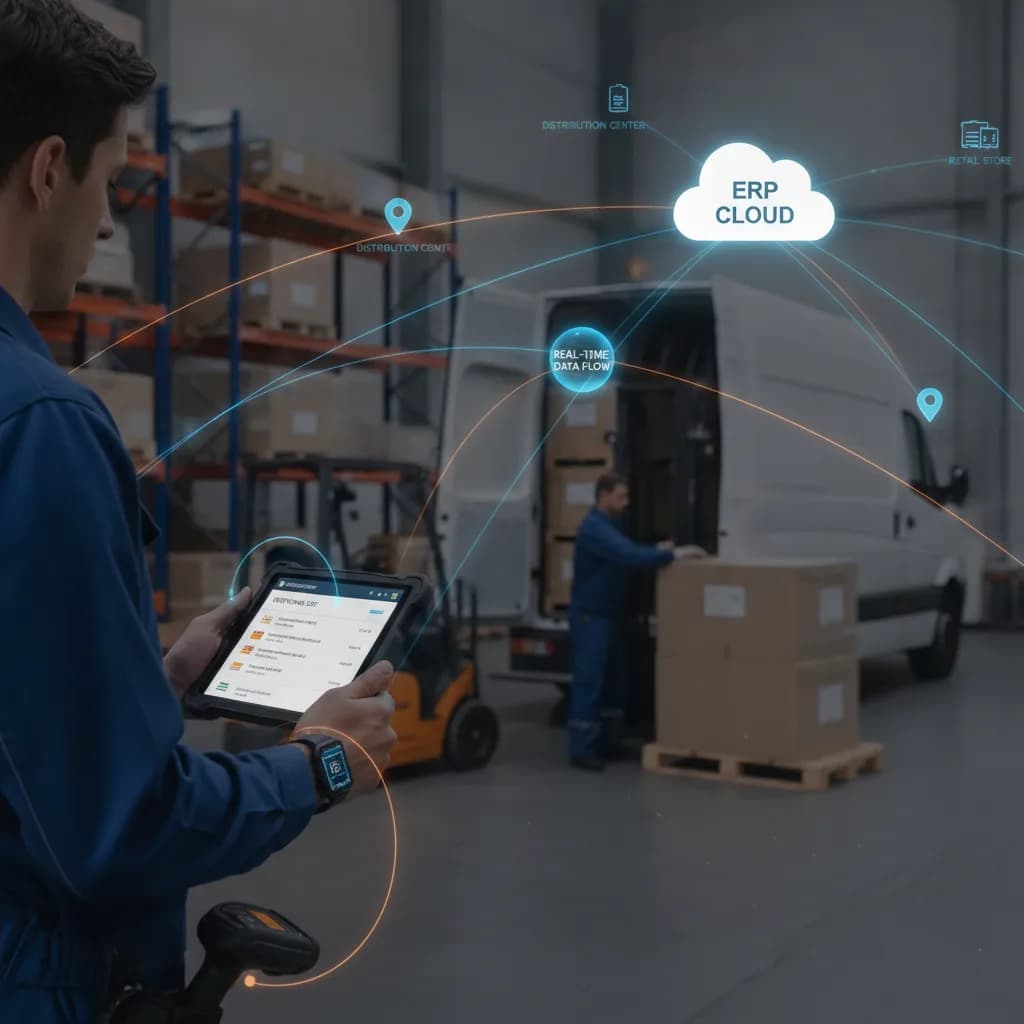
- Mobile Application Deployment: Sales representatives were equipped with rugged tablets and smartphones running the Dynamics Mobile application. This provided them with a powerful, intuitive tool to manage their daily activities directly from the customer's site.
- Real-time Order Capture: The mobile app enabled reps to capture orders on the spot. They had immediate access to a comprehensive, up-to-date product catalog, dynamic pricing rules, customer-specific contracts, and historical purchase data. This eliminated guesswork and ensured accurate order creation.
- Seamless ERP Integration: Dynamics Mobile was tightly integrated with the distributor's Microsoft Dynamics 365 Business Central system. This bi-directional synchronization meant that as soon as an order was finalized on the mobile device, it was transmitted to the ERP in near real-time. Conversely, inventory updates, new product listings, and customer account changes in D365 BC were instantly reflected on the mobile devices.
- Barcode Scanning for Accuracy: To further enhance accuracy and speed, reps could utilize integrated barcode scanning capabilities to add items to an order, minimizing manual data entry and reducing errors.
- Digital Order Confirmation: Customers could digitally sign off on orders directly on the mobile device, providing immediate confirmation and a clear audit trail.
- Robust Offline Capabilities: Understanding that connectivity can be inconsistent in various locations, Dynamics Mobile provided robust offline functionality. Sales reps could continue to capture orders, access data, and perform their tasks even without an internet connection, with all data automatically synchronizing once connectivity was restored.
Implementation Approach
The distributor adopted a methodical, phased approach to implement the new mobile order entry system to ensure smooth adoption and minimize disruption:
- Pilot Rollout: The project began with a pilot program involving a select group of experienced sales representatives. Their feedback was crucial in refining the mobile application's workflow and user interface.
- Comprehensive Training: Following the pilot, extensive training sessions were conducted for all field teams. These sessions focused not just on how to use the new devices and software, but also on understanding the new, more efficient workflows and the benefits they brought.
- Collaborative Integration: A cross-functional team comprising the distributor's IT, Sales, and Operations departments worked closely with Dynamics Mobile specialists during the integration phase. This ensured that the solution seamlessly connected with their Microsoft Dynamics 365 Business Central ERP and met specific business requirements.
- Data Migration and Synchronization: Meticulous attention was paid to data migration and setting up real-time synchronization rules. This guaranteed that product masters, customer records, pricing, and inventory levels were consistently accurate across both Dynamics Mobile and D365 BC.
- Iterative Feedback Loop: Post-launch, an ongoing feedback mechanism was established. Regular check-ins with field teams and back-office staff allowed for continuous improvements and adjustments, ensuring the system evolved with operational needs.
Operational Results
The implementation of Dynamics Mobile for mobile order entry yielded significant and measurable improvements across the distributor's operations:
- Dramatic Reduction in Order Processing Time: The time from order capture to ERP entry was reduced from an average of 24 hours to mere minutes. This accelerated the entire order-to-delivery cycle, improving responsiveness to customer needs.
- Significant Decrease in Order Entry Errors: The shift from manual transcription to direct digital entry and barcode scanning led to an estimated 70-80% reduction in order entry errors, drastically cutting down on mis-shipments and returns.
- Improved Inventory Accuracy and Reduced Stockouts: Real-time synchronization with Dynamics 365 Business Central provided sales reps with accurate, up-to-the-minute inventory data, enabling them to make informed promises to customers and significantly reducing instances of ordering out-of-stock items.
- Enhanced Sales Representative Productivity: Freed from administrative tasks and office visits, sales representatives gained approximately 15-20% more customer-facing time per week. This allowed them to visit more accounts, focus on consultative selling, and strengthen customer relationships.
- Accelerated Order-to-Delivery Cycle: The overall cycle time from order placement to delivery was noticeably shortened, leading to higher customer satisfaction and improved customer retention rates.
- Reduced Administrative Overhead: Back-office staff previously dedicated to manual order entry could be reallocated to more value-added tasks such as demand planning, customer service, and sales analysis, optimizing resource utilization.
- Improved Visibility for Managers: Sales managers gained real-time visibility into field activities, order pipelines, and individual sales performance, enabling proactive management and more accurate sales forecasting.
Operational Takeaway
This regional food distributor's journey underscores a critical lesson for any enterprise in the distribution sector: digitalizing mobile order entry is not just an upgrade; it's a fundamental step toward achieving modern operational efficiency and sustained competitiveness. The seamless, real-time integration with a robust ERP like Microsoft Dynamics 365 Business Central or Finance & Operations is non-negotiable for unlocking the full potential of mobile solutions.
Empowering field teams with intuitive, connected mobile tools directly translates to improved data accuracy, heightened productivity, and ultimately, greater job satisfaction for your workforce. Furthermore, a structured, phased implementation approach, coupled with thorough user training and continuous feedback, is vital for ensuring successful technology adoption and maximizing ROI. Organizations should consider the broader strategic impact of such mobile transformation – not just on internal processes, but on customer satisfaction, operational agility, and their overall market position.
Explore how Dynamics Mobile can empower your distribution operations with seamless mobile order entry, integrated with your Microsoft Dynamics 365 Business Central or Finance & Operations ERP.