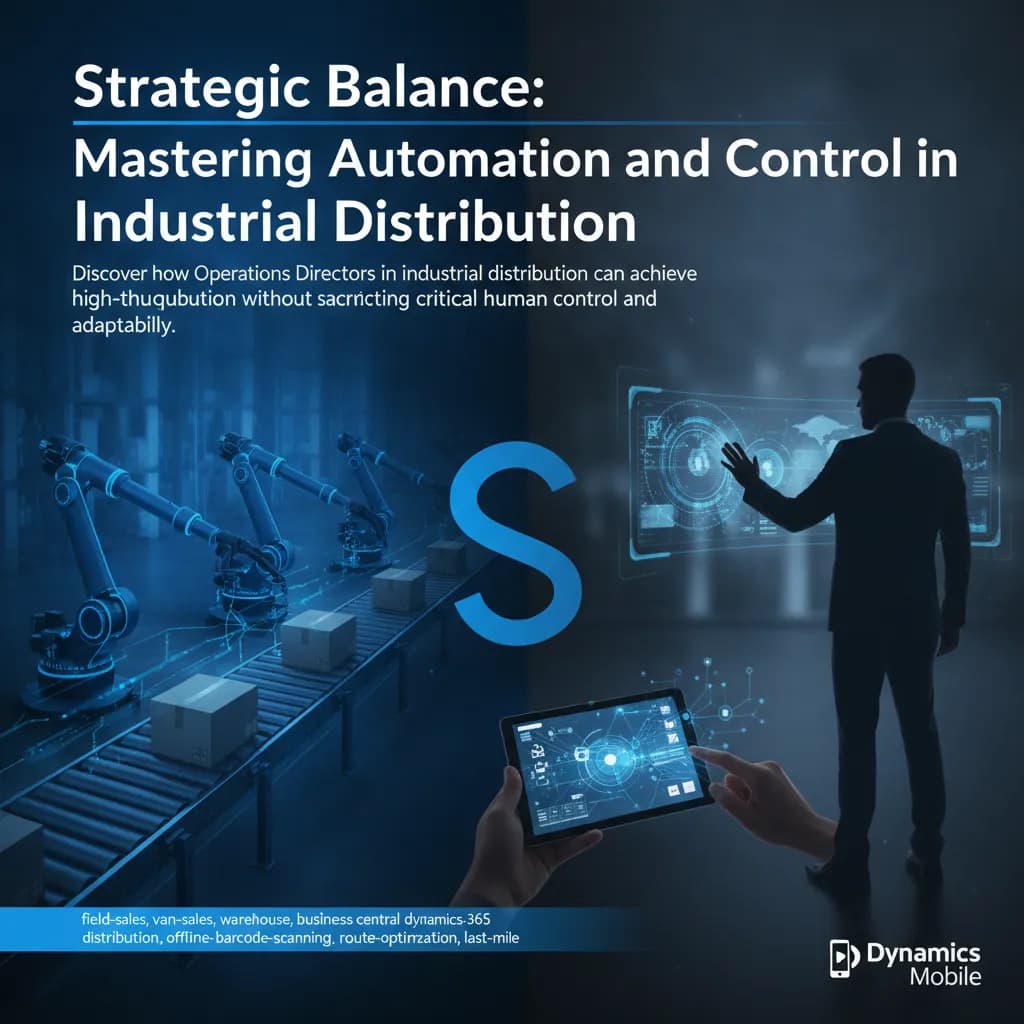
6 Strategic Imperatives for Automating Your Mobile Distribution Operations
In today's fast-paced distribution landscape, many enterprises have embraced mobile technology for their field teams – from digital forms for sales orders to tablets for proof of delivery. Yet, despite these advancements, a persistent feeling of inefficiency often remains. The promise of real-time data and streamlined operations often falls short, bogged down by disconnected systems, manual interventions, and reactive decision-making. The challenge isn't just about equipping your workforce with mobile devices; it's about leveraging that mobility to drive profound operational automation, transforming how your business operates and competes.
1. From Digital Forms to Intelligent Workflows: A Mindset Shift
The first imperative is a fundamental shift in perspective: recognize that 'mobile' is a powerful tool, but 'automation' is the comprehensive strategy for true process optimization. Many organizations initially approach mobile simply by digitizing existing paper forms. While this offers some immediate benefits, it often misses the larger opportunity to re-engineer workflows entirely, eliminating unnecessary steps, reducing errors, and accelerating processes.
- Move beyond mere digitization: Instead of just converting a paper delivery manifest into a digital one, consider how the act of confirming delivery can automatically trigger inventory adjustments, customer invoicing, and even reorder prompts.
- Focus on data flow and triggers: Understand not just where data is captured, but how it flows through your ecosystem and triggers subsequent actions. An order captured by a field sales rep on their mobile device should instantly initiate a series of automated steps – inventory allocation, warehouse picking lists, and route scheduling – without manual intervention.
“True automation in distribution isn't about doing old things digitally; it’s about reimagining processes to be inherently smarter and more efficient.”
2. Unifying Data Across the Distribution Ecosystem
Disconnected systems are the silent killer of efficiency. For automation to thrive, you must break down the silos that typically exist between mobile applications, your Enterprise Resource Planning (ERP), Warehouse Management System (WMS), Customer Relationship Management (CRM), and fleet management systems. This fragmentation leads to duplicate data entry, inconsistencies, and delayed decision-making.
- Establish a single source of truth: Create a centralized repository for critical data – inventory levels, customer orders, field activity logs, and fleet status. This ensures everyone in the organization, from the DSD driver to the logistics manager, is working with the same, accurate information.
- Enable real-time data synchronization: Implement solutions that provide immediate updates across all integrated systems. When a field service technician completes a repair, that status should instantly update the customer's CRM record, trigger parts reordering in the WMS, and update the ERP for billing, ensuring accuracy and consistency across the entire supply chain.
3. Leveraging Real-time Insights for Proactive Operational Control
The shift from reactive reporting to proactive, data-driven interventions is crucial for competitive advantage. Automation empowers managers to move beyond analyzing historical data to making informed decisions in the moment, and even predicting future needs.
- Transition to proactive interventions: Utilize live data streams for dynamic route optimization, allowing logistics managers to adjust DSD routes in real-time based on traffic conditions, unexpected delays, or urgent customer requests.
- Embrace predictive analytics: Beyond real-time, leverage data to anticipate needs, such as predictive maintenance for fleet vehicles or forecasting demand for specific products based on field sales trends.
- Empower managers with real-time dashboards: Provide managers with intuitive dashboards that highlight exceptions, performance trends, and opportunities as they happen, enabling immediate issue resolution and continuous optimization of field operations.
4. Optimizing Field Workflows with Guided Automation
Automation isn't just for the back office; it fundamentally reshapes how work is done in the field. By embedding automation directly into mobile workflows, you can significantly reduce manual steps, minimize human error, and ensure compliance with operational procedures.
- Redesign processes for embedded automation: For tasks like order fulfillment in DSD, asset inspection in field service, or proof of delivery, mobile applications can guide personnel step-by-step, ensuring all required data is captured correctly and processes are followed consistently.
- Automate routine administrative tasks: Free up your field personnel from tedious paperwork and data entry. Tasks such as expense reporting, time tracking, and even compliance checks can be automated through intelligent mobile forms and background processes, allowing teams to focus on higher-value customer engagement and problem-solving.
5. Building on a Scalable, Integrated Technology Foundation
The success of automation hinges on the underlying technology platform. Choosing a robust, flexible, and integrated solution is not merely a technical decision; it's a strategic investment in your future operational capabilities.
- Choose a platform that integrates seamlessly: Opt for solutions that are built to integrate with your core enterprise systems, particularly your ERP like Microsoft Dynamics 365 or Business Central. This ensures data consistency and avoids creating new silos.
- Ensure scalability and adaptability: Your chosen platform must be able to scale effortlessly to accommodate business growth, new product lines, expanding mobile workforces, and evolving operational demands.
- Future-proof your operations: Select a platform capable of incorporating emerging technologies. A modern solution will be ready to leverage innovations like the Internet of Things (IoT) for asset tracking, Artificial Intelligence (AI) for predictive insights, and Machine Learning (ML) for optimized decision-making, ensuring your operations remain cutting-edge. A platform like Dynamics Mobile, built on Microsoft Dynamics 365/BC, inherently provides this level of integration and future-readiness, leveraging the robust Microsoft ecosystem.
6. Empowering the Mobile Workforce with Intelligent Tools
Ultimately, automation should empower, not replace, your mobile workforce. Providing field teams with intuitive, intelligent mobile applications transforms their daily tasks, enhances decision-making, and improves overall job satisfaction.
- Provide intuitive, intelligent applications: Equip field sales reps with instant access to customer history, personalized product catalogs, and guided selling prompts. Empower DSD drivers with optimized routes, real-time inventory visibility, and automated cash reconciliation tools.
- Enhance decision-making in the field: Allow field service technicians to access comprehensive knowledge bases, previous service records, and remote expert support directly from their mobile device, enabling faster and more accurate problem resolution.
- Boost productivity and job satisfaction: By streamlining tasks, reducing administrative burden, and providing immediate access to critical information, intelligent mobile tools reduce training overhead, minimize frustration, and significantly boost the productivity and engagement of your mobile workforce.
Moving from basic mobile enablement to full operational automation is not just an upgrade; it's a strategic imperative for any enterprise looking to gain a competitive edge in distribution. It requires a holistic approach that connects people, processes, and technology, leveraging data to drive continuous improvement and proactive control.
Ready to transform your distribution operations from mobile-enabled to fully automated? Discover how Dynamics Mobile, built on Microsoft Dynamics 365/BC, can provide the integrated, scalable platform your enterprise needs to achieve these strategic imperatives.