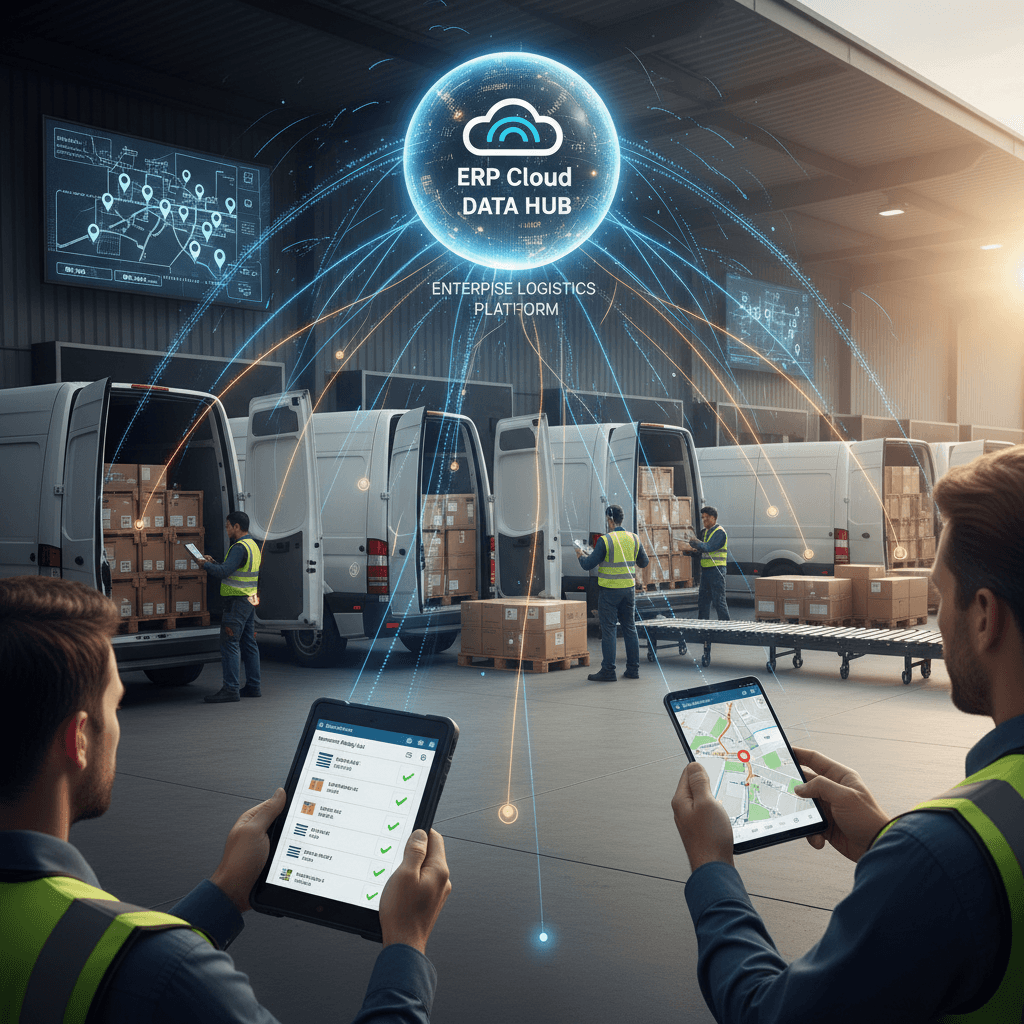
Automated Van Sales Route Planning: Best Practices for Dynamics 365

In the fast-paced world of direct store delivery (DSD) and van sales, efficiency is paramount. Field sales representatives are not just selling products; they are managing inventory, processing orders, collecting payments, and ensuring timely deliveries, all while navigating dynamic routes. The challenge lies in optimizing these complex daily operations to minimize costs, maximize sales, and keep customers satisfied. Manual route planning and disconnected systems often lead to wasted time, fuel, and missed opportunities, directly impacting profitability and operational agility.
Operational Context: The Landscape of Van Sales
Van sales, often synonymous with DSD or route accounting, involves sales representatives driving a stocked vehicle directly to customer locations – typically retail stores, restaurants, or other businesses. The model emphasizes on-the-spot sales, order fulfillment from vehicle inventory, and immediate delivery. This operational approach is critical for industries dealing with perishable goods, impulse purchases, or those requiring frequent, small-batch deliveries to maintain shelf presence.
Efficient route planning is the backbone of successful van sales. It dictates how many customers a rep can visit in a day, the speed of delivery, fuel consumption, and ultimately, customer satisfaction. However, the operational reality is complex, involving:
- Dynamic Inventory Management: Balancing stock levels on the van to meet varied customer demands without overstocking or running out.
- Varied Customer Needs: Catering to different order sizes, delivery windows, and product preferences across a diverse customer base.
- Market Fluctuations: Adapting to promotions, new product launches, and competitive pressures.
- Logistical Challenges: Dealing with traffic, road closures, and unexpected delays.
Common Problems in Manual Van Sales Route Planning
Reliance on manual processes or basic tools for van sales route planning introduces a host of operational inefficiencies and risks:
- Inefficient Routes: Manually planned routes often fail to account for optimal sequencing, real-time traffic, or vehicle capacity, leading to excessive fuel consumption, increased driver time, and fewer customer visits per day.
- Lack of Real-time Inventory Visibility: Without instant updates, reps may arrive at a customer site only to find their van lacks the required stock, leading to lost sales or customer dissatisfaction. Conversely, overstocking ties up capital.
- Manual Order Processing Errors and Delays: Paper-based orders or fragmented digital systems are prone to data entry errors, delays in processing, and administrative burdens back at the office.
- Difficulty Adapting to Changes: Manual systems struggle to incorporate last-minute customer requests, urgent orders, or unforeseen road conditions, resulting in rigid schedules and missed opportunities.
- Limited Management Visibility: Managers lack real-time insight into field activities, route adherence, sales performance, and on-van inventory, hindering proactive decision-making and performance optimization.
- Disconnected Systems: Critical data residing in the ERP system (e.g., Microsoft Dynamics 365 Business Central or Finance & Operations) often doesn't seamlessly integrate with field operations, creating data silos and requiring redundant data entry.
How Digital Van Sales Route Planning Works with Dynamics 365
Modernizing van sales operations involves a digital workflow that integrates mobile technology with your core ERP system, such as Microsoft Dynamics 365 Business Central or Finance & Operations. This creates a cohesive, efficient, and data-driven process:
-
Data Integration with Dynamics 365
The process begins by seamlessly pulling essential data from your Dynamics 365 ERP. This includes customer profiles, historical purchase data, pricing agreements, promotions, credit limits, and real-time warehouse inventory levels. This consolidated data forms the foundation for intelligent planning.
-
Order & Visit Planning
The system consolidates all relevant information for the day's routes: pre-sales orders, scheduled customer visits, potential new leads, and even historical sales data to predict demand. This comprehensive view allows for more informed route generation.
-
Automated Route Optimization
Advanced algorithms process the collected data to generate optimal routes. This optimization considers multiple factors simultaneously:
- Geographical proximity and logical sequencing of stops.
- Real-time traffic conditions and historical traffic patterns.
- Customer-specific delivery time windows and service level agreements.
- Vehicle capacity (weight and volume) and driver skills or certifications.
- Cost parameters (fuel, labor).
-
Mobile Execution with Field Solutions
Once routes are optimized, field representatives are equipped with mobile devices (smartphones or tablets) running a dedicated mobile application. A robust mobile platform, such as Dynamics Mobile, provides reps with:
- Their optimized daily route, often with turn-by-turn navigation.
- Access to comprehensive customer information, including purchase history and outstanding balances.
- Real-time inventory manifest for their van.
-
On-Site Operations
At each customer stop, the mobile application facilitates a range of critical activities:
- Mobile Order Taking: Sales reps can quickly enter new orders, apply promotions, and check product availability.
- Inventory Management: On-van inventory is updated in real-time as sales are made, preventing stockouts or discrepancies.
- Invoicing and Payment Collection: Generate invoices on the spot and process various payment types (cash, card, mobile payments).
- Proof of Delivery (POD): Capture customer signatures, photos, or geo-stamps for undeniable proof of service.
-
Real-time Synchronization
All field activities – sales orders, inventory adjustments, payments, and delivery confirmations – are instantly synchronized back to Microsoft Dynamics 365. This eliminates manual data entry, reduces errors, and ensures that the ERP system always reflects the most current operational status.
-
Analytics & Reporting
Managers gain access to dashboards and reports that provide real-time insights into route adherence, sales performance by rep or route, delivery metrics, and on-van inventory movements. This data empowers informed decision-making and continuous improvement.
Example Scenario: A Day with Automated Van Sales
Consider a DSD company distributing beverages. Historically, route managers spent hours manually plotting routes, often leading to inefficient loops and missed delivery windows.
With an automated van sales solution integrated with Dynamics 365, the operational day transforms:
Morning Prep: The van sales driver, Alex, starts his day. His mobile device, powered by a solution like Dynamics Mobile, displays an optimized route for the day, pre-calculated by the system based on pre-orders, customer visit schedules, and real-time traffic predictions. His van's inventory manifest, pulled directly from Dynamics 365, is pre-loaded onto his device, confirming he has the necessary stock for his route.
On the Road: Alex navigates efficiently using the integrated GPS. At 'Corner Market,' he uses his mobile app to quickly check the store's order history, suggest new promotions, and confirm stock availability on his van. He takes a new order, processes the payment via the app, and prints a receipt. The app immediately updates his van's inventory and sends the sales transaction back to Dynamics 365.
Dynamic Adjustments: Mid-route, Alex receives an urgent call from 'The Daily Grind Cafe' needing an emergency restock. The system, aware of Alex's current location and remaining inventory, proactively suggests a slight detour to accommodate this new, high-priority stop, dynamically re-optimizing his remaining route to minimize impact on other deliveries.
End of Day: Alex completes his route. All sales data, collected payments, and inventory adjustments are already synced to Dynamics 365. He simply parks the van, and his day's work is reconciled, ready for the next day's operations without any manual paperwork.
Operational Benefits of Automation
Implementing automated van sales route planning and mobile field solutions yields tangible operational improvements:
-
Reduced Operational Costs
Significant savings on fuel consumption due to shorter, more efficient routes. Reduced vehicle wear and tear and optimized driver labor hours contribute to overall cost reduction.
-
Increased Sales & Productivity
Field reps can complete more customer stops per day by eliminating inefficient driving. Reduced administrative burden allows them to focus more on selling and customer engagement, directly leading to increased revenue.
-
Improved Inventory Accuracy
Real-time visibility into on-van and warehouse stock levels minimizes discrepancies, reduces instances of stockouts or overstocking, and improves overall order fulfillment rates. This is crucial for managing perishable goods.
-
Enhanced Customer Satisfaction
Customers benefit from more reliable delivery times, accurate order processing, and personalized service based on up-to-date customer data. This builds trust and loyalty.
-
Better Management Visibility
Managers gain real-time tracking of field teams, performance dashboards, and data-driven insights into route adherence, sales trends, and delivery metrics. This enables proactive decision-making and performance coaching.
-
Seamless Dynamics 365 Integration
A unified platform for all sales, inventory, and financial data eliminates data silos, ensures data consistency, and streamlines reporting and business processes across the organization.
Conclusion: Modernizing Van Sales for Competitive Advantage
The traditional approach to van sales is no longer sufficient in today's competitive landscape. The integration of automated route planning with mobile technology represents a fundamental shift from reactive, manual processes to proactive, data-driven field management. By leveraging the power of solutions that seamlessly connect with Microsoft Dynamics 365, organizations can achieve unparalleled operational efficiency, reduce costs, boost sales productivity, and significantly enhance customer satisfaction.
Modernizing your van sales operations is not just about adopting new technology; it's about transforming your entire field sales workflow to build a more agile, responsive, and profitable business. The strategic importance of integrating robust mobile solutions with your core ERP system is clear for achieving operational excellence and securing a competitive edge.
Explore how Dynamics Mobile can empower your van sales operations with seamless integration to Microsoft Dynamics 365, delivering optimized routes and real-time field insights.