Modern WES Architecture: Best Practices for Agile Distribution Centers
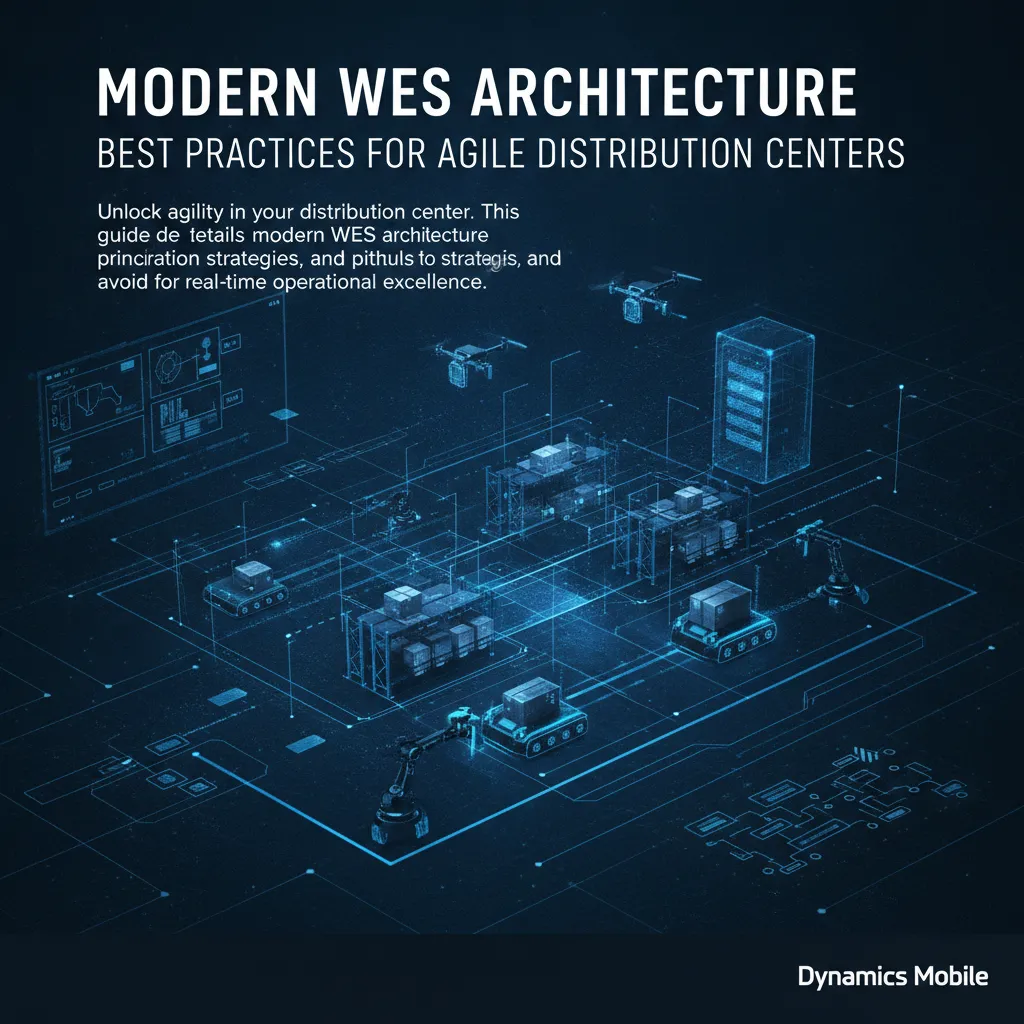
In today's hyper-competitive supply chain, distribution centers are no longer just storage facilities; they are intricate operational hubs demanding real-time responsiveness and precision. For many organizations, the traditional Warehouse Management System (WMS), while excellent for planning and inventory control, often struggles to deliver the granular, moment-to-moment orchestration required to maximize efficiency in highly automated or dynamic environments. This gap between planning and execution is where a modern Warehouse Execution System (WES) architecture becomes not just beneficial, but essential.
Beyond WMS: The Mandate for a Modern WES Architecture
To truly understand the role of a WES, it's crucial to distinguish it from its elder sibling, the WMS. While a Warehouse Management System (WMS) focuses on managing inventory, optimizing storage, and directing high-level tasks (e.g., "pick this order"), a Warehouse Execution System (WES) dives deeper into the real-time orchestration and optimization of those tasks. It's the brain that decides the 'how' and 'when' for every piece of equipment and every human action on the floor.
Traditional WMS often falls short in highly automated or dynamic environments because its primary strength lies in strategic planning and inventory accounting, not in the millisecond-by-millisecond task sequencing and resource balancing needed for sophisticated automation or rapidly changing demand patterns.
The strategic imperative for agility and responsiveness in modern distribution centers is undeniable. Consumer expectations for faster delivery, combined with labor shortages and the rise of robotics, demand systems that can adapt instantly. A WES bridges the operational gap between ERP planning (like order fulfillment in Dynamics 365 Finance & Operations) and the actual shop floor execution, ensuring that resources – human and automated – are utilized optimally to meet service level agreements.
Core Architectural Principles for a Resilient WES
Building a WES that can withstand the demands of modern distribution requires adherence to several key architectural principles:
-
Modularity and Microservices
Design your WES with a modular, microservices-based approach. This allows for independent development, deployment, and scaling of specific functionalities (e.g., a picking module, a putaway module, an AS/RS interface). This flexibility means you can upgrade or adapt parts of the system without disrupting the entire operation, crucial for continuous improvement and minimizing downtime.
-
API-First Integration
An API-first strategy is non-negotiable. Your WES must be built to enable seamless, real-time data flow with a multitude of systems: your ERP (e.g., Microsoft Dynamics 365), your WMS, various automation systems (conveyors, AS/RS, robotics), and critically, mobile devices used by your workforce. Robust APIs ensure data consistency and enable rapid integration of new technologies.
-
Data Integrity and Real-time Visibility
Implement strong data governance and synchronization mechanisms. Strategies for consistent data across systems are paramount. A modern WES must provide immediate operational insights through real-time dashboards and reporting, allowing supervisors to make informed decisions on the fly and respond to bottlenecks before they escalate. This ensures that inventory counts, order statuses, and task completions are always accurate, both on the floor and in your ERP.
-
Cloud-Native Considerations
Leveraging cloud-native principles offers significant advantages: elasticity to handle peak demands, inherent resilience through distributed architectures, and access to managed services that reduce IT overhead. A cloud-based WES can scale with your business without massive upfront infrastructure investments, providing a cost-effective and robust foundation.
-
Mobile-First Design
The WES must be inherently mobile-first. This isn't just about having an app; it's about ensuring that WES capabilities extend effectively and intuitively to handheld devices (Android and iOS) and the mobile workforce. Tasks like picking, packing, putaway, cycle counting, and inventory adjustments need to be executed flawlessly in the hands of your staff, often in challenging warehouse environments. This is where platforms like Dynamics Mobile excel, providing robust, offline-first mobile applications that connect directly to your WES and ERP.
Integrating WES with the Broader Operational Ecosystem
A WES doesn't operate in a vacuum; its power comes from its ability to integrate deeply with the entire supply chain:
-
ERP Connectivity
Synchronizing master data (items, vendors, customers), incoming orders, and outbound inventory with core business systems like Dynamics 365 Finance & Operations or Business Central is foundational. The WES receives order details from the ERP and sends back real-time updates on fulfillment status, inventory adjustments, and shipping confirmations, maintaining a single source of truth.
-
Automation Layer Integration
This is where the WES truly shines. It connects directly with various material handling equipment – conveyors, Automated Storage and Retrieval Systems (AS/RS), robotics, sortation systems – providing the precise instructions for each piece of equipment, optimizing their movements, and balancing workloads across the automated fleet.
-
Mobile Workforce Enablement
Extending WES tasks to Android/iOS devices for warehouse mobility is critical. Whether it's guiding a picker through the most efficient route, confirming a putaway with a scan, or managing a cross-dock operation, mobile solutions like Dynamics Mobile empower your staff with the right information at the right time, reducing errors and boosting productivity.
-
Last-Mile Logistics Synergy
Accurate and timely order fulfillment data from the WES directly feeds into last-mile logistics systems. This includes delivery execution platforms and route optimization software, ensuring that prepared orders are correctly staged for dispatch, reducing loading times, and improving delivery accuracy for DSD or field sales routes.
-
Field Operations Feedback Loop
The WES also impacts and is informed by field operations. For instance, inventory visibility provided by the WES can guide decisions for van sales (DSD) replenishment, or ensure that critical spare parts are available for field service technicians. Conversely, returns from DSD routes or field service parts consumption can feed back into the WES for inventory adjustments and future demand planning.
Achieving Operational Excellence Through WES Implementation
Successful WES implementation goes beyond technology; it requires a holistic approach:
-
Data Strategy and Governance
Establish clear data ownership, quality standards, and data flow diagrams. A robust data strategy ensures that the WES operates on reliable information and that its outputs are trusted across the organization.
-
User Experience (UX) for Operational Efficiency
Design intuitive interfaces for warehouse staff and supervisors. Complex systems with poor UX lead to errors, slow adoption, and reduced productivity. For mobile workers, this means clear instructions, minimal taps, and robust error handling.
-
Offline-First Capabilities
For mobile devices, ensuring continuous operations even with intermittent Wi-Fi or cellular connectivity is vital. An offline-first WES application, like those offered by Dynamics Mobile, allows workers to continue executing tasks, with data synchronizing automatically once connectivity is restored, preventing operational bottlenecks.
-
Leveraging AI/ML
Apply predictive analytics for demand forecasting, dynamic slotting, and task optimization. AI/ML can analyze historical data to predict surges, suggest optimal storage locations for fast-moving items, and dynamically assign tasks to balance workloads across human and automated resources, improving overall throughput.
-
Security and Compliance
Protect sensitive inventory and operational data through robust cybersecurity measures. Ensure operational adherence to industry standards and regulatory compliance, especially when dealing with regulated goods or specific handling requirements.
Common Pitfalls in WES Architecture and How to Avoid Them
Implementing a WES is complex, and certain missteps are common:
-
Underestimating Integration Complexity
The hidden costs and challenges of connecting disparate systems (ERP, WMS, multiple automation vendors, mobile platforms) are often overlooked. Plan for extensive testing and robust API management from the outset.
-
Neglecting Mobile User Experience
A powerful WES is only as good as its weakest link. If the mobile interface for your warehouse staff is clunky or unreliable, it will negatively impact productivity, increase errors, and lead to poor adoption. Prioritize intuitive design and field testing.
-
Scope Creep and Over-Customization
While a WES should be flexible, excessive customization can lead to maintenance nightmares and hinder future upgrades. Maintain a balance between unique operational needs and standard best practices. Challenge assumptions that every process needs bespoke code.
-
Lack of Data Governance
Without clear data ownership, quality standards, and validation rules, the WES can quickly become a source of inconsistencies, errors, and distrust in system outputs, undermining its value.
-
Ignoring Change Management
Technology adoption is ultimately about people. Failing to involve warehouse staff and supervisors early, provide adequate training, and communicate the benefits of the new system will lead to resistance and operational friction.
A modern WES architecture is a strategic investment that enables distribution centers to achieve unprecedented levels of agility, efficiency, and responsiveness. By adhering to core architectural principles, integrating seamlessly with the broader operational ecosystem, and avoiding common pitfalls, enterprises can transform their execution capabilities. The result is a more resilient, productive, and ultimately more profitable supply chain, ready to meet the challenges of tomorrow.
Discover how Dynamics Mobile extends your WES capabilities to the mobile workforce, ensuring seamless execution and real-time inventory visibility across your entire supply chain.