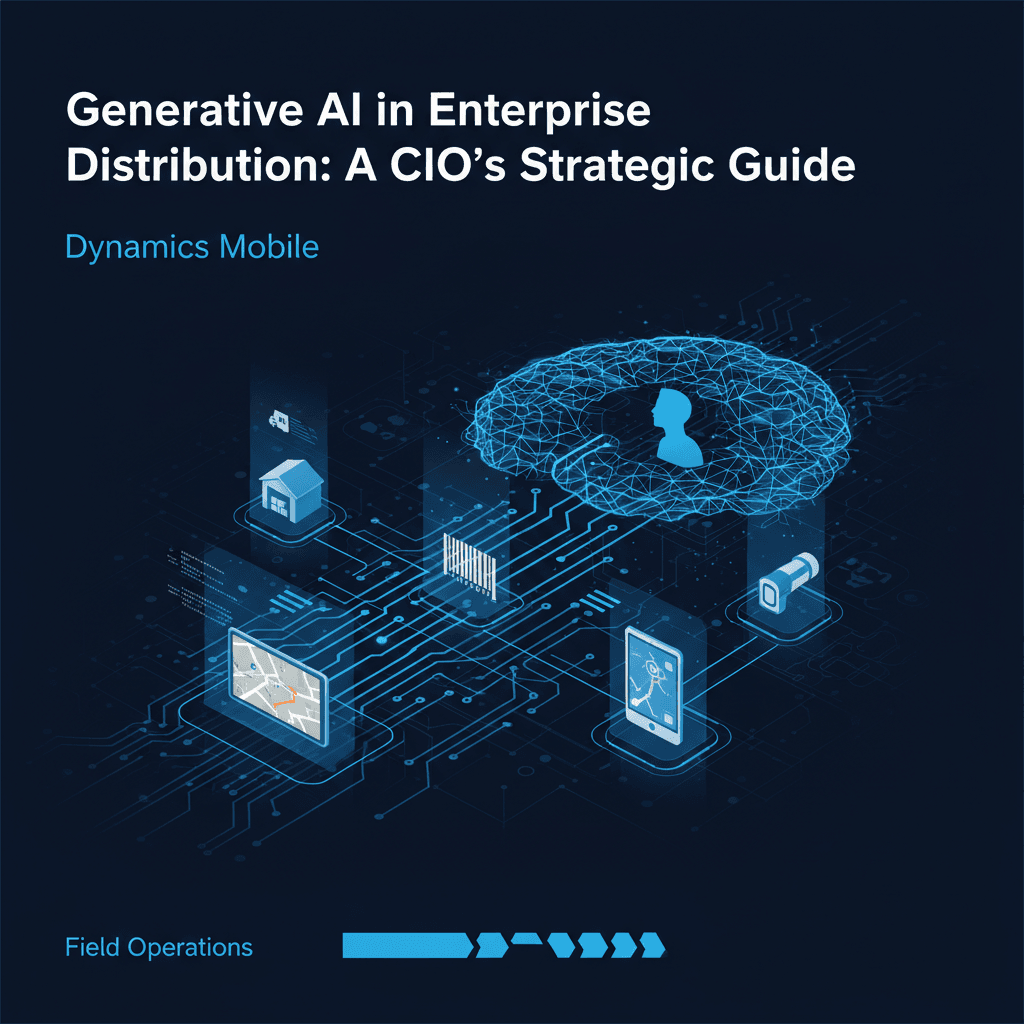
The AI-Powered Field: Optimizing Performance & ROI in 2026
The AI-Powered Field: Optimizing Performance & ROI in 2026
For enterprise leaders overseeing vast field operations, the pressure is constant: optimize routes, reduce costs, improve first-time fix rates, and delight customers, all while navigating unpredictable real-world conditions. The sheer volume of data, the complexity of scheduling, and the need for rapid, informed decisions often feel overwhelming. What if every field professional had an intelligent co-pilot, every route was dynamically perfect, and every asset predicted its own maintenance needs? In 2026, this isn't science fiction – it's the operational reality for organizations embracing AI.
AI in Field Operations: From Hype to Hyper-Efficiency in 2026
For years, Artificial Intelligence in field operations was largely a theoretical discussion, confined to innovation labs and academic papers. Today, in April 2026, we’ve moved decisively past the hype cycle. AI is no longer a futuristic concept but a tangible, indispensable tool delivering competitive advantage across diverse field environments, from DSD and route accounting to field service and warehouse management.
The shift is profound: AI is now about augmenting human capabilities and infusing every operational layer with intelligence at scale. It’s about leveraging vast datasets – historical performance, real-time conditions, customer interactions – to make decisions that were previously impossible in terms of speed and accuracy. This isn't about replacing people; it's about empowering them to achieve hyper-efficiency and unlock new levels of performance.
Predictive Intelligence: Proactive Problem Solving & Resource Allocation
One of AI’s most transformative contributions is its ability to predict, allowing organizations to shift from reactive problem-solving to proactive optimization.
Predictive Maintenance: Minimizing Downtime and Extending Asset Lifecycles
- Field Service: AI analyzes telemetry data from equipment (e.g., HVAC systems, industrial machinery, POS terminals) to predict component failure before it occurs. Instead of scheduled maintenance or emergency repairs, technicians are dispatched precisely when and where they are needed, with the right parts, dramatically reducing downtime and extending asset lifespan.
- Fleet Management: For DSD and logistics, AI monitors vehicle diagnostics, driver behavior, and route conditions to anticipate maintenance needs for trucks, preventing costly breakdowns and ensuring timely deliveries.
Dynamic Scheduling and Routing Optimization: AI Adapting to Real-Time Conditions
- DSD/Route Accounting: AI-powered algorithms continuously monitor traffic patterns, weather forecasts, unexpected road closures, and even customer availability. Routes for sales reps and delivery drivers are optimized in real-time, not just at the start of the day, ensuring maximum stops per route, reduced fuel consumption, and higher customer satisfaction. If a customer cancels last-minute, AI instantly re-optimizes the remaining route.
- Field Service: Urgent service requests are automatically slotted into the most efficient technician's schedule based on skill set, location, and existing commitments, minimizing travel time and improving response rates.
Inventory Management and Load Optimization: AI Predicting Demand
- Warehouse Management: AI analyzes historical sales data, seasonal trends, and even local events to predict demand for specific products, ensuring optimal stock levels. This minimizes carrying costs and prevents stockouts that could halt field operations.
- Field Service & DSD: AI recommends the precise parts or products a technician or driver needs for their day's assignments, optimizing truck loadouts. This reduces wasted space, prevents return trips for forgotten items, and ensures field teams have everything necessary for a first-time fix or successful delivery.
Empowering the Field Workforce: AI as a Co-Pilot
AI isn't just for back-office planning; it's a powerful tool directly assisting field personnel, transforming their daily tasks and decision-making.
Intelligent Assistants for Field Technicians
- Real-time Troubleshooting: Technicians on-site can use AI-powered mobile assistants to diagnose complex issues. By inputting symptoms or even using image recognition, the AI can provide step-by-step repair guides, access relevant schematics from a vast knowledge base, or suggest the most likely solutions, akin to having an expert peer constantly by their side.
- Knowledge Base Access: AI makes vast product manuals, service histories, and best practices instantly searchable and contextually relevant, reducing reliance on memory or time-consuming calls to support.
AI-Driven Recommendations for Field Sales and DSD
- Upsell/Cross-sell Opportunities: For field sales reps or DSD drivers, AI analyzes customer purchase history, demographics, and market trends to suggest personalized upsell or cross-sell opportunities during a visit, boosting revenue.
- Optimizing Delivery Sequences: Beyond routing, AI can recommend the optimal sequence of tasks at each stop – unloading, inventory check, sales pitch, payment – to maximize efficiency and customer engagement.
- Predicting Customer Needs: AI can flag customers who are likely to churn or those who might be interested in new product introductions, giving field teams a proactive edge.
Reducing Training Time and Improving First-Time Fix Rates
By providing immediate, context-aware support and decision guidance, AI significantly reduces the learning curve for new employees and enhances the capabilities of experienced ones. This directly translates into higher first-time fix rates in service and more successful deliveries/sales in DSD, improving both efficiency and customer satisfaction.
Transforming Operational Visibility & Strategic Planning
The true power of AI extends beyond individual tasks, offering unprecedented clarity into overall operations and informing high-level strategic decisions.
Synthesizing Vast Field Data into Actionable Insights
AI’s ability to process and analyze massive datasets from thousands of daily field activities – including geo-location, task completion times, customer feedback, inventory movements, and asset health – provides managers and executives with a holistic, real-time view of their operations. This goes far beyond traditional dashboards.
Identifying Performance Bottlenecks, Compliance Issues, and Safety Risks
“AI isn't just about making things faster; it's about making them smarter. It helps us see the invisible inefficiencies and risks before they impact our bottom line or our people.”
AI can spot subtle patterns indicating inefficiencies (e.g., consistent delays at a certain type of stop, underperforming routes), potential compliance breaches (e.g., deviations from standard operating procedures), or emerging safety concerns (e.g., risky driving behaviors or equipment anomalies) – all before they escalate into major problems.
Informing Strategic Decisions: Resource Allocation, Service Level Agreements, and Market Expansion
With AI-driven analytics, leaders can make data-backed strategic choices:
- Resource Allocation: Optimize technician or driver deployment based on predicted demand and workload.
- Service Level Agreements (SLAs): Accurately predict the feasibility and cost of meeting new SLAs.
- Market Expansion: Identify underserved areas or optimal locations for new distribution centers based on demand patterns and logistical efficiencies.
The Strategic Imperative: Why AI is Non-Negotiable for Field Operations
The question for enterprises in 2026 is no longer if AI will impact field operations, but how quickly they will adopt it. The gap between AI-enabled and traditional field operations is widening rapidly in terms of cost efficiency, service delivery, and customer satisfaction.
AI adoption is becoming a critical factor for market leadership and competitive differentiation. Businesses that leverage AI to optimize their field teams will be able to offer faster, more reliable, and more personalized services at a lower cost, leaving competitors struggling to keep up with outdated manual or semi-automated processes.
While the benefits are clear, successful AI implementation requires addressing challenges such as data readiness, ensuring data quality, and seamless integration with existing enterprise systems. Organizations must invest in platforms that are not only AI-capable but also designed for robust data capture and interoperability within their broader IT ecosystem.
As you plan your organization's AI strategy for field operations, consider platforms designed for seamless integration and real-world impact. Explore how Dynamics Mobile, built on Microsoft Dynamics 365, empowers intelligent field management.