Generative AI in Enterprise Distribution: A CIO's Strategic Guide
In today's complex enterprise distribution landscape, CIOs face relentless pressure to drive efficiency, enhance customer satisfaction, and build resilient supply chains. Traditional ERP systems provide the foundational data, but connecting that intelligence to real-world, dynamic field operations remains a significant hurdle. Now, with generative AI moving from theoretical concept to practical application, the question isn't if it will impact your operations, but how you will strategically harness its power to bridge the gap between your ERP core and the mobile workforce on the ground.
Generative AI in Enterprise Distribution: A CIO's Strategic Imperative
Generative AI, often associated with sophisticated content creation, extends far beyond marketing copy in the operational realm. For enterprise distribution, it signifies a paradigm shift in how we analyze data, anticipate needs, and automate decision-making across the entire value chain. It's about AI models that don't just predict, but *generate* solutions, recommendations, and even operational plans based on vast datasets.
For CIOs, this isn't merely a technological upgrade; it's a strategic imperative. The ability to leverage generative AI to transform raw ERP data into actionable intelligence for field sales, DSD, warehouse management, and logistics will be a key differentiator. Ignoring this wave risks falling behind competitors who are already exploring how AI can optimize routes, personalize customer interactions, and proactively manage inventory. The focus must shift from the theoretical potential of AI to realizing tangible business value and a clear return on investment (ROI) in operational contexts.
Unlocking Operational Efficiencies: Strategic Opportunities for Generative AI
The practical applications of generative AI in enterprise distribution are vast, offering significant opportunities for efficiency gains and competitive advantage:
-
Enhanced Field Sales & DSD
Imagine a field sales representative or DSD driver receiving AI-generated, personalized sales pitches tailored to a specific customer's purchase history, current stock levels, and even local market trends. Generative AI can dynamically recommend product bundles, suggest optimal quantities, and even adjust pricing in real-time based on competitor data and promotional cycles. For route accounting, AI can analyze past sales patterns to optimize order suggestions, reducing manual entry errors and improving order fulfillment accuracy.
-
Intelligent Warehouse Operations
Generative AI can revolutionize warehouse mobility by creating hyper-accurate predictive inventory models, minimizing stockouts and overstock situations. It can optimize picking paths in real-time, considering order priority, picker location, and warehouse layout. Furthermore, AI can automate aspects of documentation and compliance checks, generating reports or flagging discrepancies based on scanned data and operational rules.
-
Proactive Customer Engagement
For B2B customers, AI-powered self-service portals can provide instant, personalized answers to order status inquiries, product information, or common support questions, reducing the load on customer service teams. AI can also generate personalized communication, such as proactive delivery updates or tailored product recommendations, based on customer preferences and past interactions.
-
Supply Chain Resilience
Generative AI can perform real-time risk assessments by analyzing global news, weather patterns, supplier performance, and geopolitical events to identify potential disruptions. It can then generate automated contingency plans, suggesting alternative suppliers, re-routing shipments, or adjusting production schedules. This capability, coupled with hyper-accurate demand forecasting that accounts for complex variables, significantly enhances supply chain resilience.
Navigating the Realities: Limitations, Risks, and Ethical Considerations
While the opportunities are compelling, CIOs must approach generative AI with a clear understanding of its limitations and risks:
-
Data Quality & Hallucination
The adage “garbage in, garbage out” is particularly critical for generative AI. If operational data from your ERP or field systems is inconsistent, inaccurate, or incomplete, the AI model can “hallucinate” incorrect information, leading to disastrous operational decisions. For example, an AI generating a delivery route based on outdated address data will lead to inefficiencies and missed deliveries.
-
Security, Privacy, and Compliance
Generative AI often processes vast amounts of sensitive enterprise data, including customer details, sales figures, and route information. Protecting this data from breaches, ensuring privacy compliance (e.g., GDPR, CCPA), and adhering to industry-specific regulations is paramount. Robust data governance and security protocols are non-negotiable.
-
Integration Complexity
Bridging cutting-edge generative AI capabilities with existing ERP systems (like Microsoft Dynamics 365 Finance & Operations or Business Central) and legacy operational platforms can be complex. Seamless data flow, API development, and ensuring real-time synchronization are significant technical challenges that require careful planning.
-
Cost & Scalability
Beyond initial licensing, the true total cost of ownership (TCO) for generative AI includes significant investments in data preparation, specialized infrastructure (e.g., GPU computing), and ongoing model training and maintenance. Scaling AI solutions across diverse operational units and geographies also presents considerable challenges.
-
Ethical AI & Workforce Impact
Responsible deployment requires mitigating biases in training data that could lead to unfair or discriminatory outcomes (e.g., biased route assignments, skewed sales recommendations). CIOs must also manage the impact on human roles, focusing on upskilling the workforce rather than outright replacement, fostering collaboration between humans and AI.
The CIO's Playbook: A Strategic Roadmap for Generative AI Adoption
A phased, strategic approach is essential for successful generative AI adoption:
-
Phase 1: Pilot & Proof of Concept (PoC)
Identify high-impact, low-risk use cases for initial deployment. For example, a pilot project for AI-assisted dynamic pricing recommendations for a specific product line or optimized route suggestions for a single DSD territory. Focus on measurable outcomes and learn quickly.
-
Phase 2: Data Strategy & Governance
This is foundational. Develop a robust data strategy focused on cleansing, enriching, and consolidating operational data. Establish clear data governance policies for quality, accessibility, security, and ethical use across your ERP and mobile systems.
-
Phase 3: Integration & Scalability
Plan for seamless connection. How will AI-generated insights and actions be integrated back into your core ERP and mobile operational platforms? This requires robust API strategies and a clear architecture for data exchange.
-
Phase 4: Talent & Change Management
Invest in upskilling your existing teams. Foster AI literacy across departments, from field operations to IT. Develop change management strategies to ensure smooth adoption and address potential resistance to new AI-driven workflows.
-
Vendor Selection & Partnership
Evaluate specialized AI solutions and partners that possess deep understanding of enterprise distribution challenges and can demonstrate proven integration capabilities with platforms like Microsoft Dynamics 365.
Bridging Generative AI with Your ERP Core: The Operational Connection
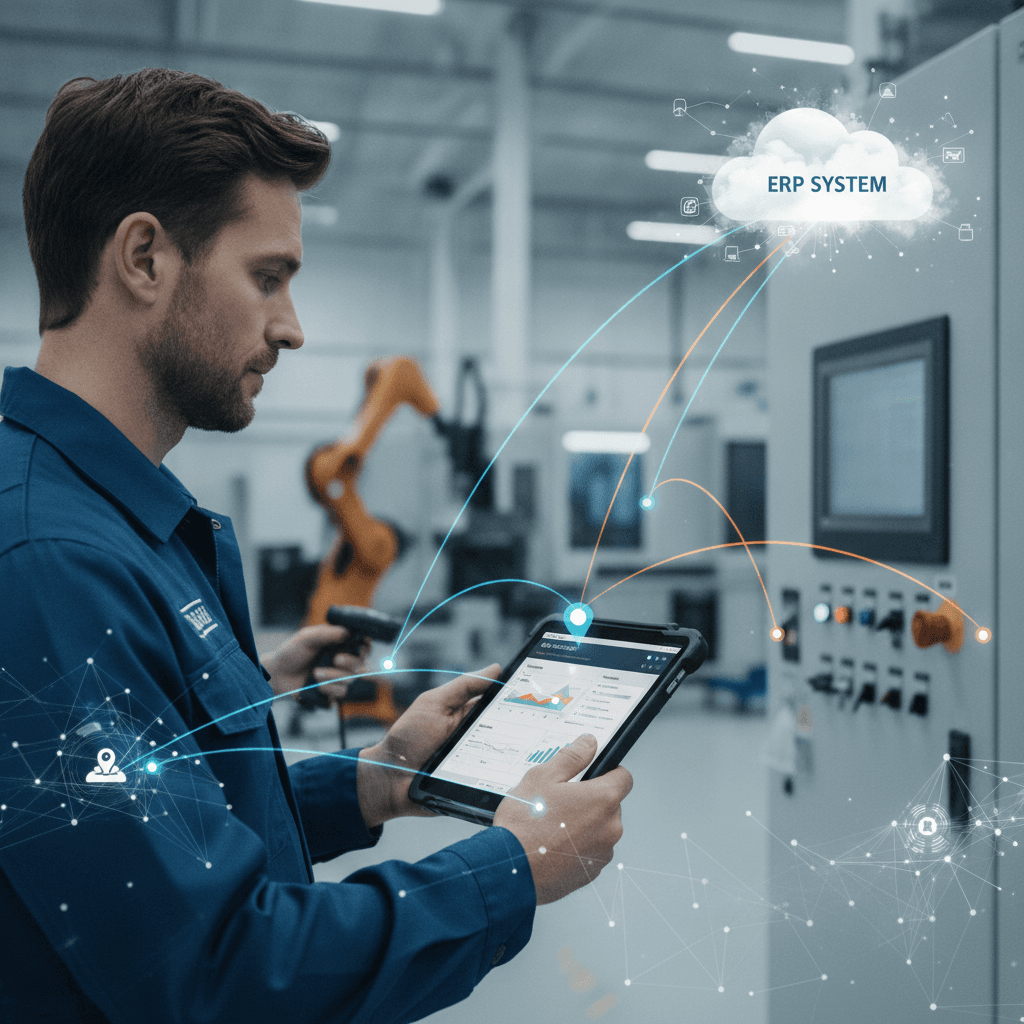
For generative AI to deliver real operational value, it cannot exist in a vacuum. It must be seamlessly integrated with your ERP system and, critically, with the tools your mobile workforce uses daily. This is where a robust mobile workforce management platform becomes the crucial link:
- Operational Backbone: Mobile workforce management platforms, like Dynamics Mobile, act as the conduit, taking the rich, structured data from your ERP (e.g., inventory levels, customer history, product catalogs, historical routes) and feeding it as context to generative AI models.
- Actionable Insights in the Field: The AI processes this data and generates actionable recommendations – be it an optimized route, a personalized sales pitch, or a predictive maintenance alert. These insights are then delivered directly to the field worker's mobile device (Android or iOS) via the mobile workforce management application.
- Real-time Feedback Loop: As field workers execute AI-driven tasks (e.g., following an AI-optimized route, selling an AI-recommended product bundle), the mobile platform captures their actions, completed orders, and new data. This real-time operational feedback is then fed back to both the ERP and the AI model, continuously refining and improving its intelligence.
- Offline-First Execution: A significant advantage for field operations is the ability to operate offline. AI-generated insights and recommendations, once delivered to the mobile device, must be available even in areas with no connectivity, ensuring uninterrupted, AI-assisted operations.
By effectively bridging your ERP's foundational data with generative AI through a powerful mobile workforce management platform, CIOs can transform theoretical AI potential into tangible, real-world operational execution and sustained competitive advantage.
Generative AI is not a distant future for enterprise distribution; it's a present opportunity and a strategic necessity. By understanding its potential, navigating its complexities, and building a robust operational backbone, CIOs can lead their organizations towards unprecedented levels of efficiency, resilience, and customer satisfaction.
To explore how a robust mobile workforce management platform can serve as the operational backbone for your generative AI initiatives, connecting your ERP to intelligent field execution, visit Dynamics Mobile.