Before AI Can Help Your Distribution Business, Your Operations Must Be Ready
Artificial Intelligence is becoming hard to ignore. Every boardroom, industry event, and software vendor now talks about AI. For wholesale distribution CEOs, the question is no longer whether AI will matter. It will.
The harder question is this:
Is your operation ready for AI to actually help?
Because in distribution, AI does not create value by magic. It needs something very practical first: clean operational data, consistent processes, and a clear view of what is really happening in the field, in the warehouse, on the route, and at the customer location.
Many companies start with an AI pilot and then wonder why the results are disappointing. The problem is often not the AI model. The problem is that the business is not yet structured enough for AI to learn from it.
For wholesale distribution leaders, the real preparation starts before the AI project. It starts with making the operation visible, measurable, and digitally controlled.
Why AI Matters for Wholesale Distribution
Wholesale distribution is a business of small margins, many moving parts, and constant pressure.
Demand changes. Customers expect faster service. Stock must be available, but not excessive. Drivers and salespeople make hundreds of small decisions every day. Warehouses must move quickly. Routes must be efficient. Managers need reliable information, not guesswork.
This is exactly where AI can help.
AI can support better demand forecasting, route planning, product recommendations, inventory optimization, delivery execution, and field performance analysis. It can help sales teams suggest the right products to the right customers. It can help delivery teams reduce wasted mileage. It can help managers detect operational patterns that are difficult to see manually.
But AI only becomes useful when it has reliable data from the real operation.
If customer visits are not recorded properly, if delivery exceptions are written differently by every driver, if warehouse movements are delayed or inaccurate, or if field teams work around the system, then AI has very little solid ground to stand on.
That is why AI adoption is not only a technology decision. It is an operational readiness challenge.
The CEO’s Role: Make AI a Business Initiative, Not an IT Experiment
AI should not begin as a vague innovation project. It should begin with a business question.
For example:
How can we reduce delivery cost per route?
How can we improve order value during customer visits?
How can we reduce stockouts?
How can we improve delivery accuracy?
How can we detect underperforming routes, territories, or customers earlier?
How can we make our field execution more predictable?
The CEO’s role is to connect AI to measurable business outcomes. Not “we need AI,” but “we need better decisions, better execution, and better visibility.”
That difference matters.
When AI is treated as an IT experiment, it often stays in a pilot stage. When it is connected to operational goals, it becomes part of business transformation.
Step 1: Check If Your Operation Is Digitally Visible
Before AI can optimize your business, your business must be visible.
This means looking honestly at how your daily operation is executed and recorded.
Are field sales visits captured consistently?
Are DSD deliveries, returns, payments, and invoices recorded digitally and correctly?
Are warehouse picking, loading, receiving, and stock movements visible in real time?
Are route plans, actual GPS movement, proof of delivery, and delivery exceptions connected?
Is the ERP receiving accurate and timely information from the field?
If the answer is “partially,” then that is the starting point.
AI needs operational evidence. It needs to understand what happened, where it happened, when it happened, who performed the action, and what the result was.
A wholesale distribution company that wants to use AI seriously must first build a strong digital operational foundation.
Step 2: Standardize the Processes That Create the Data
AI learns from patterns. But if every team, region, warehouse, or driver follows a different version of the process, the data becomes messy.
For example, one driver may mark a delivery as failed. Another may write “customer closed.” Another may skip the reason entirely. A manager may understand the difference, but AI will struggle to interpret it reliably.
This is why process standardization is so important.
Field sales, van sales, DSD, warehouse mobility, route accounting, delivery execution, returns, payments, and proof of delivery should follow clear and consistent digital workflows.
That does not mean removing flexibility from the business. It means making sure that the important operational events are captured in a structured way.
The goal is not bureaucracy. The goal is reliable operational memory.
Step 3: Audit Your Data Before You Trust AI With Decisions
Many CEOs assume they have more usable data than they actually do.
The ERP may contain financial and master data. The warehouse system may contain stock movements. Mobile apps may contain field activities. Vehicles may generate GPS or telematics data. Customer portals may show order behavior.
But the important question is not whether data exists.
The important question is whether the data is complete, connected, timely, and trustworthy.
A practical data audit should look at:
Customer and item master data quality
Historical sales and order data
Inventory accuracy across warehouses and vans
Route and visit history
Delivery performance and exceptions
Returns, rejections, and failed deliveries
Field sales activities and outcomes
Payment collection and invoice execution
Integration quality between mobile systems and ERP
This is often where the first big improvements appear. Before introducing advanced AI, companies discover that better data discipline alone improves management visibility and decision-making.
Step 4: Strengthen the Operational Edge
In wholesale distribution, much of the most valuable data is created outside the office.
It is created by sales reps visiting customers. By DSD drivers delivering goods. By warehouse workers picking and loading inventory. By field teams collecting payments, handling returns, taking photos, scanning barcodes, and confirming delivery.
This operational edge is where AI readiness is won or lost.
If field and warehouse teams still rely heavily on paper, spreadsheets, manual updates, or delayed reporting, then AI will always be working with incomplete information.
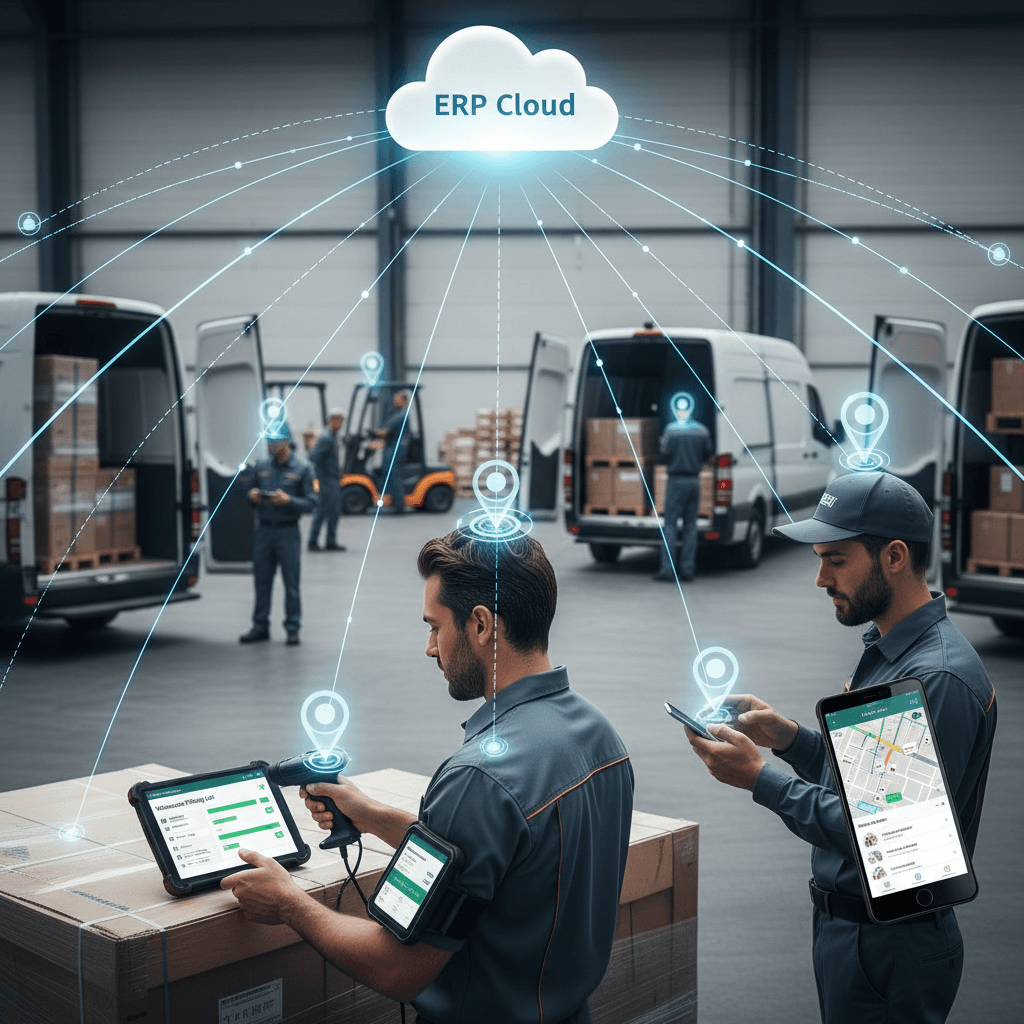
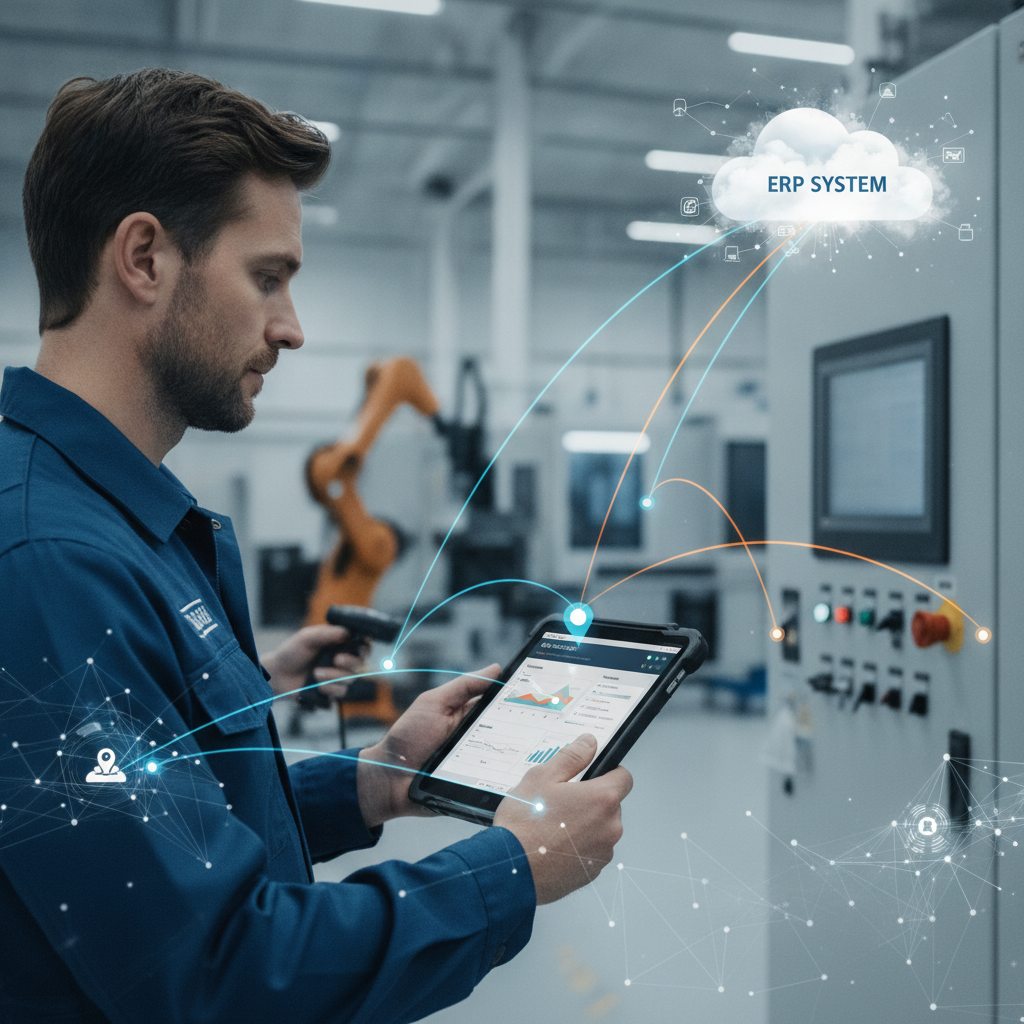
Modern mobile workforce platforms help close this gap. They turn daily operational activity into structured digital data. They connect the field with the ERP. They create a reliable flow of information between planning, execution, and analysis.
This is one of the most important foundations for future AI adoption.
Step 5: Start With Focused, Practical AI Use Cases
The best AI projects are not the most dramatic ones. They are usually the most focused ones.
Good starting points for wholesale distribution include:
AI-assisted product recommendations for field sales and DSD teams
Route optimization based on delivery windows, traffic, capacity, and customer priority
Demand forecasting for high-volume or volatile items
Inventory replenishment suggestions
Detection of unusual delivery patterns or recurring route problems
Warehouse picking optimization
Fleet maintenance predictions based on vehicle data
Customer risk or churn signals based on order behavior
The key is to choose use cases where the business problem is clear, the data is available, and the result can be measured.
For example, did route optimization reduce mileage? Did product recommendations increase average order value? Did better forecasting reduce stockouts? Did warehouse optimization reduce picking time?
AI adoption becomes much easier when early wins are visible and measurable.
Step 6: Bring People With You
AI adoption will fail if the people who run the operation do not trust it.
Drivers, sales reps, warehouse workers, dispatchers, and managers need to understand that AI is not there to replace their judgment. It is there to support better decisions.
A driver may know that a customer usually buys more before the weekend. A salesperson may know that a competitor is active in a certain territory. A warehouse manager may understand why a certain picking path works better in reality than on paper.
Good AI adoption respects this human knowledge. The goal is not to remove people from the process. The goal is to give them better tools, better recommendations, and better visibility.
The best results usually come when AI becomes an assistant inside the workflow, not a separate system outside the business.
Step 7: Close the Loop Between Insight and Execution
AI insights are only valuable if they lead to action.
A forecast should influence purchasing or replenishment.
A route recommendation should reach the dispatcher or driver.
A sales recommendation should appear during the customer visit.
A delivery risk should trigger a manager’s attention before the customer complains.
A warehouse optimization suggestion should affect how work is actually assigned.
This is why integration matters. AI should not live in dashboards only. It should connect back to ERP, mobile apps, warehouse processes, field execution, and management workflows.
For wholesale distribution companies, the future is not just “AI analytics.” The future is AI-supported execution.
The Real Foundation: Governed, Digital Operations
The companies that benefit most from AI will not simply be the companies that buy AI tools first.
They will be the companies that prepare their operations first.
They will have clear processes. Reliable data. Digital field execution. Real-time warehouse visibility. Strong ERP integration. Measurable KPIs. And teams that understand how to work with AI-assisted recommendations.
For CEOs, this is the practical path forward.
Do not start by asking, “Which AI tool should we buy?”
Start by asking:
Can we see our operation clearly?
Can we trust our data?
Are our processes consistent?
Can we measure execution?
Can we turn insight into action?
If the answer is yes, AI can become a serious competitive advantage.
If the answer is no, the first step is not AI implementation. The first step is operational readiness.
How Dynamics Mobile Helps
Dynamics Mobile helps wholesale distribution companies digitize and control their field, warehouse, delivery, and last-mile operations.
By connecting mobile field execution with Microsoft Dynamics 365 Business Central and Finance & Operations, Dynamics Mobile helps companies create the structured operational data needed for better visibility, stronger control, and future AI adoption.
AI works best when the business is ready for it.
And readiness starts with the way your operation runs every day.