Transport Management System vs Business Central Fleet Control: What Field Ops Teams Actually Need
What Is a Transport Management System (TMS)?
A transport management system (TMS) is software designed to plan, execute, and optimise the movement of goods. Classic TMS capabilities include freight planning, carrier selection and rate management, shipment tracking, proof of delivery, and transport cost reporting.
TMS software originated in large enterprises managing complex, multi-carrier freight networks — where negotiating carrier rates, managing freight documentation, and consolidating shipments across dozens of lanes justified dedicated software. Enterprise TMS platforms like SAP TM, Oracle TMS, and MercuryGate were built for exactly this level of complexity.
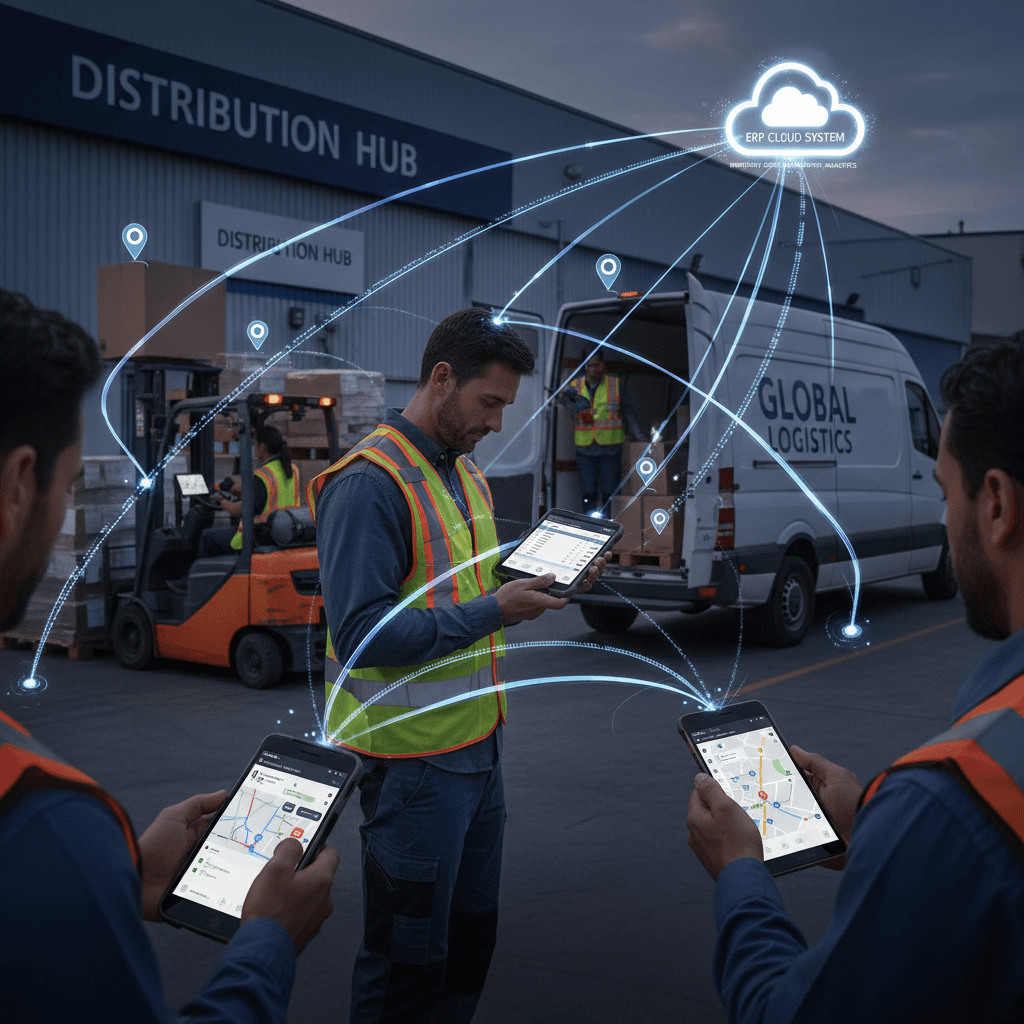
Over the past decade, the term "TMS" has been applied much more broadly — to any software that helps a company manage transport. This has created significant confusion for mid-market companies running Business Central who are evaluating "TMS software" when what they actually need is last-mile delivery management or fleet dispatch.
TMS Software vs. Fleet Management vs. Last-Mile Delivery: What's the Difference?
Category | Core Use Case | Typical Users |
|---|---|---|
Enterprise TMS | Multi-carrier freight planning, carrier rate management, freight audit | Large shippers, 3PLs managing complex carrier networks |
Fleet Management Software | Owned vehicle dispatch, GPS tracking, maintenance, driver management | Companies with owned delivery or service fleets |
Last-Mile Delivery Software | Route optimisation, ePOD, customer ETA notifications, urban delivery | Distributors, last-mile carriers, e-commerce fulfilment |
Business Central Fleet Control | All of the above for owned fleets — natively inside BC | BC users with owned delivery or service vehicles |
Most Business Central users evaluating TMS software are actually looking for fleet management or last-mile delivery capabilities — not multi-carrier freight management. This distinction matters because it determines which tool is actually right for the job.
The Problem With Standalone TMS for Business Central Users
A standalone TMS sits outside your ERP. This creates friction at every data boundary:
Order import: Delivery orders must be exported from BC into the TMS daily — manually or via scheduled API sync. Any order changes in BC after the sync create mismatches.
Inventory impact: Deliveries completed in the TMS don't automatically update BC stock. Manual reconciliation or a custom integration is required.
Invoicing: Delivery completion triggers invoicing in BC — but only if the TMS communicates completion back to BC promptly and correctly.
Cost accounting: Fleet costs logged in the TMS (fuel, labour, maintenance) don't flow to BC dimensions without custom mapping.
Two systems to train: Dispatchers, drivers, and back-office staff all need to understand where data lives in two different platforms.
For companies with 1–5 vehicles, these friction points are manageable. For companies with 10+ vehicles processing hundreds of deliveries daily, they become operationally painful and financially costly.
When Does a Standalone TMS Make Sense?
A dedicated TMS is genuinely the right choice when:
You manage third-party carriers and need carrier rate shopping, freight audit, and multi-carrier visibility
You move freight across complex international lanes requiring customs documentation and freight forwarder management
You operate as a 3PL or freight broker where carrier management is the core product
Your transport volumes require EDI integration with multiple carrier systems
If none of these apply — if you have an owned fleet delivering your own orders — a BC-native fleet management solution is almost certainly a better fit than a standalone TMS.
Business Central Fleet Control as a TMS Alternative
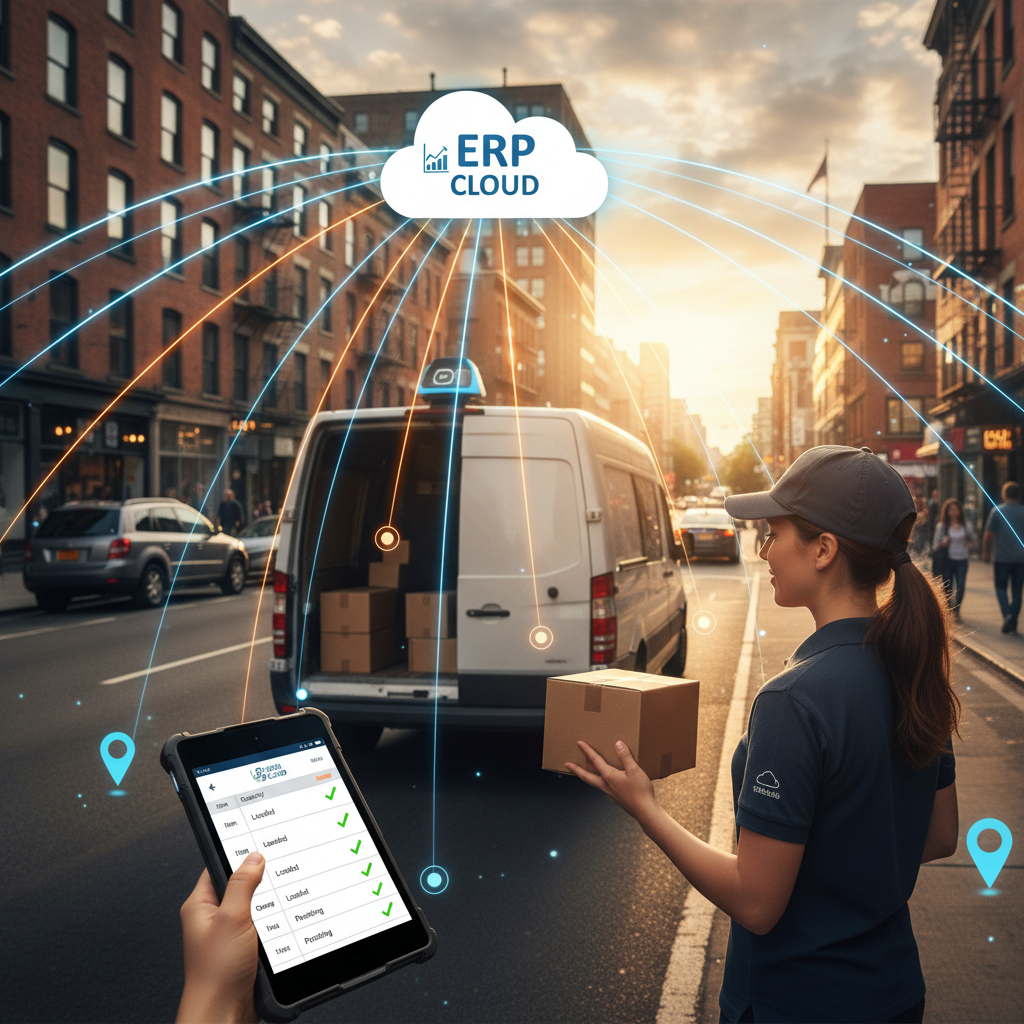
Dynamics Mobile Fleet Control delivers the capabilities that mid-market BC users actually need from "TMS software" — without the integration overhead:
Route planning and optimisation: Multi-stop route calculation from BC orders, respecting time windows and vehicle capacity
Dispatch management: Live dispatch board with GPS tracking of all vehicles
Electronic proof of delivery: Signature, photo, and barcode capture on mobile, synced to BC automatically
Driver management: Driver hours, licence compliance, and performance tracking
Fleet maintenance: Preventive maintenance schedules and reactive work orders managed inside BC
Cost reporting: All fleet costs (fuel, maintenance, labour, tolls) posted to BC cost centres in real time
TMS Software Pricing and the BC-Native Alternative
Enterprise TMS software typically carries significant licence costs — $500–$2,000+ per user per month for full-featured platforms — plus implementation and integration costs that often exceed the software licence. For a 20-vehicle fleet with 5 dispatch/planning users, a standalone TMS can cost $100,000–$300,000 in year one when integration is included.
Dynamics Mobile Fleet Control is licenced as a BC extension — priced per active mobile user (driver/technician), with no separate TMS licence. Implementation projects typically run 4–12 weeks rather than 6–18 months for enterprise TMS.
TMS Software — FAQ
What is a transport management system (TMS)?
A transport management system is software that plans, executes, and optimises the movement of goods — covering freight planning, carrier management, shipment tracking, proof of delivery, and transport cost reporting. Enterprise TMS platforms are built for complex multi-carrier freight networks; for owned fleet operations, fleet management software is typically more appropriate.
What is TMS software used for?
TMS software is used by shippers, 3PLs, and logistics operators to manage freight flows — selecting carriers, booking shipments, tracking deliveries, auditing freight invoices, and reporting transport costs. For companies with owned fleets making their own deliveries, last-mile delivery or fleet management software (like Dynamics Mobile Fleet Control) is usually a better fit than a full TMS.
What is the best transport management software for Business Central?
Dynamics Mobile Fleet Control is the purpose-built fleet and delivery management solution for Business Central — handling route optimisation, dispatch, GPS tracking, ePOD, and fleet maintenance without a separate TMS integration. For complex multi-carrier freight management, third-party TMS tools with BC connectors are available but require custom integration work.
What is the difference between a TMS and fleet management software?
A TMS focuses on freight planning and carrier management — for companies managing multiple carriers or complex freight networks. Fleet management software focuses on owned vehicle operations — dispatch, GPS tracking, driver management, and maintenance. Many mid-market companies searching for "TMS software" actually need fleet management or last-mile delivery software.