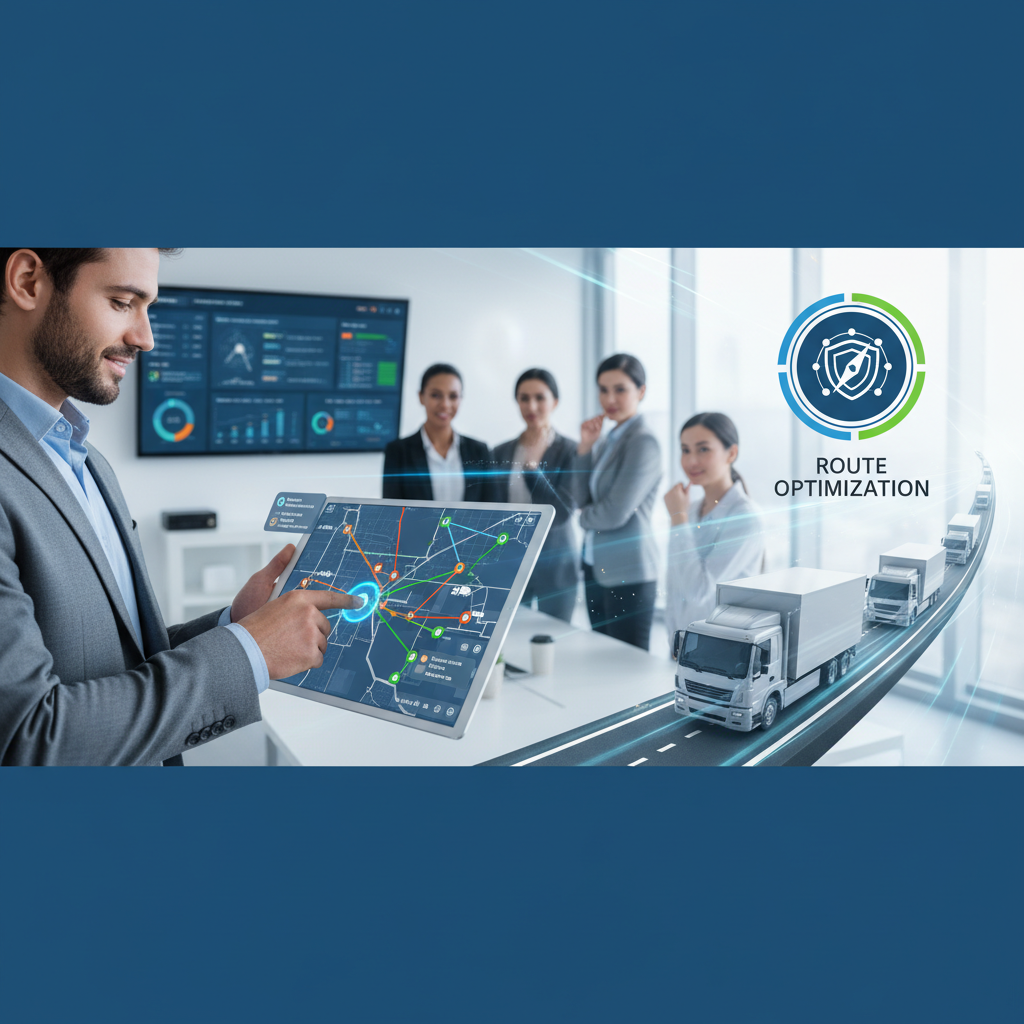
In the complex world of enterprise logistics, inefficient delivery routes are more than just a minor inconvenience; they're a significant drain on resources, a threat to customer satisfaction, and a bottleneck to growth. Manual planning, static routes, and a lack of real-time visibility can lead to spiraling fuel costs, excessive labor hours, delayed deliveries, and frustrated customers. For field operations managers, IT directors, and DSD/FMCG executives, the question isn't just if you should optimize, but critically, how to optimize delivery routes effectively to achieve measurable ROI and gain a competitive edge.
Why Delivery Route Optimization is Critical for Enterprise Success
Strategic delivery route optimization is no longer a luxury but a fundamental requirement for any enterprise aiming for operational excellence. The benefits extend far beyond simply getting from point A to point B faster; they permeate every aspect of your business, driving efficiency, profitability, and customer loyalty.
- Reduce Operational Costs (Fuel, Labor, Vehicle Wear): One of the most immediate and tangible benefits of knowing how to optimize delivery routes is the significant reduction in operational expenses. Shorter, more efficient routes mean less fuel consumption, fewer labor hours per delivery, and reduced wear and tear on your valuable vehicle fleet. This directly impacts your bottom line, freeing up capital for other strategic investments.
- Enhance Customer Satisfaction Through Reliable ETAs and Service: In today's on-demand economy, customers expect transparency and predictability. Optimized routes enable more accurate Estimated Times of Arrival (ETAs), fewer missed appointments, and consistent, high-quality service. This builds trust and loyalty, turning one-time buyers into long-term partners.
- Improve Field Team Productivity and Resource Utilization: Empower your drivers and field technicians with routes that make sense. When routes are logically planned and dynamically adjusted, your teams spend less time navigating and more time serving customers. This boosts morale, reduces stress, and significantly increases overall productivity and resource utilization across your mobile workforce.
- Gain a Competitive Edge with Faster, More Efficient Deliveries: The ability to deliver goods or services more quickly and reliably than competitors is a powerful differentiator. Mastering how to optimize delivery routes allows you to offer premium service levels, expand your delivery radius, and respond more agilely to market demands, positioning your enterprise as a leader.
- Support Sustainability Goals by Minimizing Mileage and Emissions: Beyond the financial gains, route optimization contributes to corporate social responsibility. By minimizing unnecessary mileage, you reduce your carbon footprint and contribute to a greener planet. This resonates with environmentally conscious customers and stakeholders, enhancing your brand reputation.
Common Challenges in Enterprise Route Planning & How to Overcome Them
Even with a clear understanding of the benefits, enterprise-level route planning presents unique complexities. Overcoming these hurdles is key to truly understanding how to optimize delivery routes effectively.
- Managing Dynamic Changes (Traffic, Weather, Cancellations): The real world is unpredictable. Traffic jams, sudden weather shifts, last-minute order changes, or customer cancellations can derail even the best-laid plans. Static route planning simply cannot cope, leading to delays and inefficiencies.
- Limitations of Manual Planning and Static Routes: Relying on spreadsheets, maps, or outdated software for route planning is not only time-consuming but also prone to human error. These methods struggle to process the vast number of variables (delivery windows, vehicle capacities, driver skills) required for truly optimal routes.
- Lack of Real-Time Visibility into Field Operations: Without a clear, real-time view of where your drivers are and their progress, it's impossible to make informed decisions, respond to exceptions, or provide accurate customer updates. This visibility gap hinders proactive management.
- Integrating Disparate Systems and Data Sources: Enterprise operations often involve multiple systems – ERP, CRM, inventory, telematics. A common challenge is integrating these data silos to create a holistic view necessary for intelligent route planning. Without seamless integration, valuable data remains untapped.
- Balancing Service Level Agreements with Cost Efficiency: Meeting strict delivery windows and customer expectations while simultaneously keeping costs down is a constant balancing act. Finding the sweet spot requires sophisticated planning that considers both service quality and economic viability.
Key Strategies for Effective Delivery Route Optimization
Mastering how to optimize delivery routes requires a multi-faceted approach, combining intelligent planning with agile execution. These strategies leverage data and advanced capabilities to transform your logistics.
Leverage Historical and Real-Time Data for Predictive Planning
The foundation of smart route optimization lies in data. Analyze past delivery performance, traffic patterns, and customer demand to predict future needs. Combine this with real-time data feeds (live traffic, weather) to refine routes before dispatch and ensure they are robust against typical disruptions.
Implement Advanced Algorithms (AI/ML) for Optimal Sequencing
Forget manual calculations. Modern route optimization solutions employ sophisticated AI and Machine Learning algorithms to process millions of variables in seconds. These algorithms consider vehicle capacity, delivery windows, driver availability, skill sets, road restrictions, and more, to generate the most efficient sequence of stops.
Enable Dynamic Re-routing Capabilities for In-Day Adjustments
The ability to adapt is crucial. Dynamic re-routing allows dispatchers to adjust routes in real-time in response to unforeseen events – a vehicle breakdown, a sudden priority order, or a customer cancellation. This ensures continuous efficiency and minimizes the impact of disruptions.
Optimize Load Balancing and Vehicle Capacity Utilization
Don't just optimize the path; optimize the payload. Strategies for how to optimize delivery routes must include maximizing the utilization of your vehicle fleet. This means intelligent load balancing to ensure vehicles are filled efficiently, preventing under-utilization or overloading, and reducing the number of trips required.
Establish Clear Communication Channels with Drivers and Customers
Technology facilitates communication. Provide drivers with clear, turn-by-turn navigation and instant updates on route changes. Keep customers informed with accurate ETAs and proactive notifications. Seamless communication reduces uncertainty and enhances the overall service experience for everyone involved.
The Role of Technology in Modern Route Optimization
While strategies are essential, the true power to revolutionize your logistics and truly understand how to optimize delivery routes comes from implementing the right technology. Integrated platforms provide the tools necessary to execute these strategies flawlessly.
- Integrated Mobile Workforce Management Platforms: A unified platform brings together all aspects of field operations – scheduling, dispatch, navigation, proof of delivery, and communication. This eliminates data silos and provides a single source of truth for managing your mobile teams.
- GPS Tracking and Telematics for Real-Time Visibility: GPS tracking offers more than just location data. Telematics systems provide insights into driving behavior, vehicle performance, and real-time progress against planned routes, enabling immediate intervention and performance analysis.
- Seamless Integration with ERP/CRM Systems (e.g., Dynamics 365): For enterprises, integration is paramount. A robust route optimization solution should seamlessly connect with your existing ERP (like Microsoft Dynamics 365 or Business Central) and CRM systems. This ensures orders, customer data, and inventory information flow effortlessly, creating intelligent routes based on accurate, up-to-date business data.
- Automated Scheduling and Dispatching Tools: Automate the tedious and complex process of scheduling and dispatching. These tools can generate optimal routes in minutes, considering all constraints, freeing up human planners to focus on strategic oversight and exception management.
- Analytics and Reporting for Continuous Improvement: Data-driven decision-making is key. Advanced analytics dashboards and reporting tools allow you to monitor KPIs, identify bottlenecks, track performance trends, and continuously refine your route optimization strategies for ongoing efficiency gains.
Measuring the Impact and ROI of Optimized Delivery Routes
For enterprise decision-makers, understanding how to optimize delivery routes isn't complete without the ability to measure the tangible impact and quantify the return on investment. A robust system provides the data needed to prove value and justify further investment.
- Key Performance Indicators (KPIs): Track essential metrics such as on-time delivery rates, cost per delivery, miles driven per delivery, average time at stop, and vehicle utilization. These KPIs provide a clear picture of operational efficiency.
- Quantifying Fuel Consumption and Labor Hour Reductions: Directly measure the savings in fuel costs and driver labor hours. These are often the most significant and easily quantifiable financial benefits, directly impacting your profit margins.
- Assessing Improvements in Customer Satisfaction Scores: Monitor customer feedback, Net Promoter Score (NPS), and customer retention rates. Improved delivery reliability and communication directly translate into higher satisfaction and loyalty.
- Evaluating Scalability and Adaptability to Business Growth: An optimized system should not just work today but scale for tomorrow. Assess how easily the solution adapts to increased order volumes, new service areas, or changes in your business model, ensuring your logistics infrastructure can support growth without additional strain.
- Calculating the Direct Financial Return on Investment: Compile all quantifiable savings (fuel, labor, maintenance) and revenue gains (increased capacity, better customer retention) against the cost of the optimization solution. This provides a clear ROI, demonstrating the financial prudence of your investment.
Why Dynamics Mobile for Enterprise Delivery Route Optimization?
When seeking how to optimize delivery routes at an enterprise scale, you need a solution that is robust, reliable, and deeply integrated with your existing business infrastructure. Dynamics Mobile offers a world-class mobile workforce management platform designed specifically for the complexities of enterprise logistics.
"With Dynamics Mobile, we've seen a measurable reduction in our operational costs and a significant uplift in our on-time delivery rates. The integration with our existing Microsoft Dynamics 365 system was seamless, and our field teams quickly adapted to the intuitive mobile apps."
Our solution is built on Microsoft Dynamics 365 / BC, ensuring seamless integration with your core ERP and CRM systems. This means your delivery routes are optimized using real-time order data, customer information, and inventory levels, eliminating manual data entry and errors.
We understand that connectivity isn't always guaranteed in the field. That's why Dynamics Mobile works fully offline for uninterrupted service, allowing your drivers and field teams to continue operations, capture data, and complete deliveries even in remote areas, with automatic synchronization once connectivity is restored.
With deployments in 20+ countries globally, Dynamics Mobile has a proven track record of delivering tangible results for large-scale enterprise operations across diverse industries. Our platform has consistently demonstrated proven ROI for enterprise operations, helping businesses like yours achieve significant savings in fuel and labor costs, improve delivery efficiency, and enhance customer satisfaction.
From advanced AI-driven route planning and dynamic re-routing to real-time GPS tracking and comprehensive reporting, Dynamics Mobile provides all the tools you need to master how to optimize delivery routes, empower your field teams, and elevate your entire logistics operation.
Ready to revolutionize your delivery operations? Explore how Dynamics Mobile, built on Microsoft Dynamics 365, optimizes routes, reduces costs, and empowers your field teams.