5 Practical Ways AI Warehouse Assistants Accelerate New Worker Ramp-Up
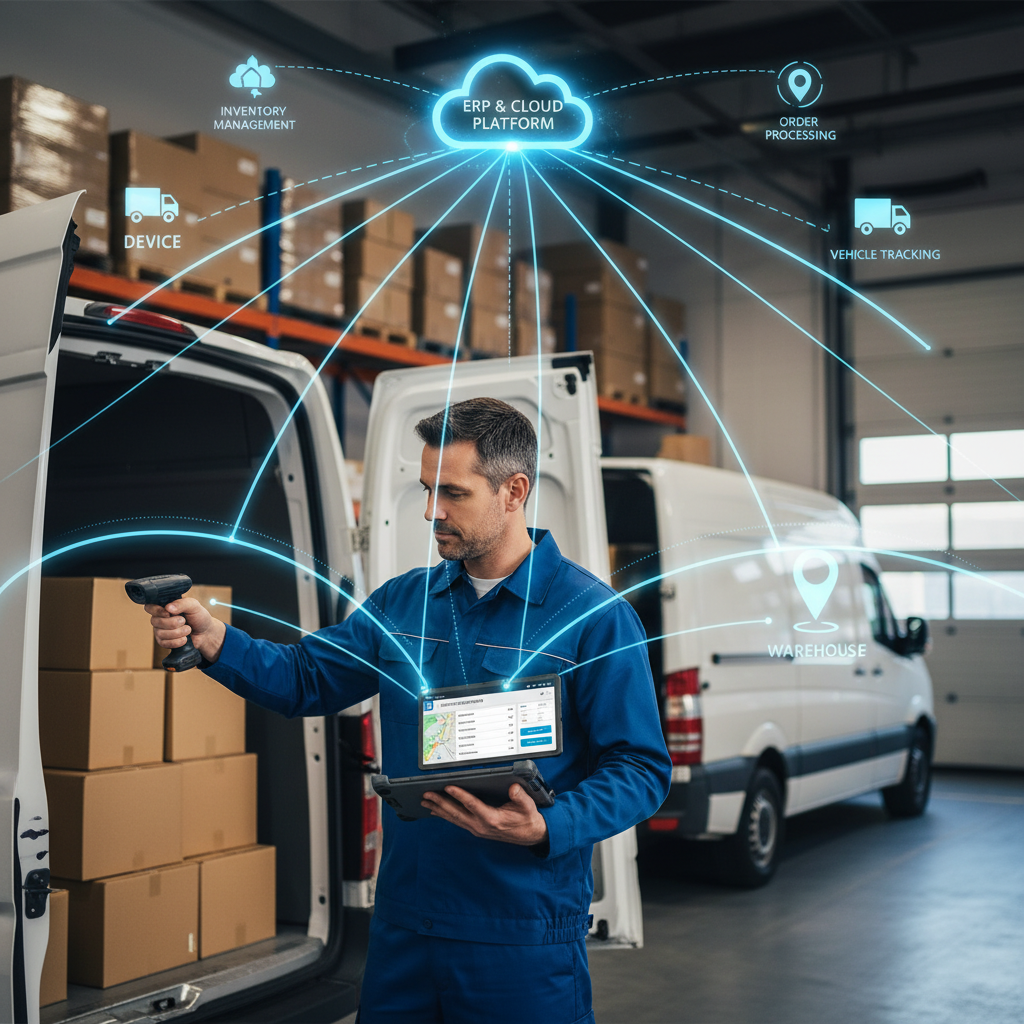
Many warehouses struggle with the twin challenges of high employee turnover and the time-consuming process of bringing new hires up to speed. The learning curve for complex picking, packing, and putaway procedures can be steep, leading to initial errors, reduced productivity, and increased strain on experienced staff and supervisors. In a fast-paced logistics environment, these inefficiencies directly impact order fulfillment, inventory accuracy, and ultimately, customer satisfaction. The good news is that artificial intelligence (AI) is now moving beyond theoretical discussions to offer practical, tangible solutions, particularly through AI-powered warehouse assistants designed to accelerate new worker ramp-up.
1. Personalized, Adaptive Training Paths
Traditional warehouse training often follows a one-size-fits-all approach, which can be inefficient for diverse workforces. AI-powered assistants revolutionize this by offering personalized, adaptive training paths. These systems assess an individual's prior knowledge, learning style, and initial performance to tailor training modules specifically for them.
- Customized Content Delivery: AI can deliver bite-sized, interactive content—such as short videos, 3D simulations, or gamified quizzes—directly to a new worker's mobile device. For instance, if a worker demonstrates proficiency in basic picking but struggles with specific unit-of-measure conversions, the AI will automatically provide additional targeted lessons on that particular skill, perhaps with a visual breakdown of a case-to-individual-item conversion.
- Progress Tracking and Adaptation: The system continuously tracks progress, understanding where a new hire excels and where they need more support. It adapts the difficulty and content, ensuring mastery of fundamental tasks before introducing more complex procedures, reducing frustration and building confidence.
Operational Insight: This approach transforms training from a passive information dump into an engaging, active learning experience, drastically cutting down the time it takes for a new worker to become independently productive.
2. Real-time Task Guidance and Anomaly Detection
One of the most immediate benefits of AI warehouse assistants is their ability to provide real-time task guidance and anomaly detection. This capability acts like an experienced mentor constantly at a new worker's side, preventing errors before they occur.
- Step-by-Step Mobile Instructions: For picking, packing, or putaway tasks, the mobile device (often running a solution like Dynamics Mobile, integrated with your Microsoft Dynamics 365 ERP) displays clear, step-by-step instructions. This might include visual cues, product images, and precise bin locations.
- Automated Verification: Leveraging technologies like computer vision or integrated sensors, the AI can verify correct item selection, quantity, and placement in real-time. For example, if a new picker scans a barcode for an item and then attempts to place an incorrect SKU or an insufficient quantity into the order, the system instantly flags the deviation with an audible or visual alert.
- Error Prevention: This immediate feedback loop prevents costly mistakes from propagating through the supply chain, ensuring inventory accuracy and preventing mis-shipments that can lead to delivery delays and customer dissatisfaction. For DSD or route accounting operations, this means the right product gets on the right truck, every time.
3. Instant Access to Contextual Information
New workers often spend valuable time asking supervisors basic questions or searching for critical information. AI warehouse assistants provide instant access to contextual information, empowering workers to find answers independently and efficiently.
- On-Demand Information Retrieval: A new worker can quickly access product specifications, detailed bin locations, safety data sheets (SDS) for hazardous materials, equipment operating manuals, or even specific customer packing instructions—all directly from their mobile device.
- Reduced Supervisor Burden: This significantly reduces reliance on experienced supervisors for routine queries, freeing them up to focus on more complex problem-solving, strategic planning, or higher-level coaching.
- Consistency and Compliance: By providing a single, consistent source of truth, AI ensures all workers operate with the most up-to-date information, eliminating discrepancies that can arise from verbal instructions and enhancing operational compliance.
4. Proactive Safety and Compliance Coaching
Safety is paramount in any warehouse, and new hires are often at higher risk due to inexperience. AI assistants offer proactive safety and compliance coaching, embedding a culture of safety from day one.
- Real-time Hazard Identification: Using computer vision or sensor data, AI can monitor worker movements and actions, identifying potential safety hazards or non-compliant practices. For instance, if a worker attempts to lift a heavy box with improper posture, the system could deliver a discreet, immediate alert or reminder on their mobile device regarding proper lifting techniques.
- Reinforcing Protocols: Similarly, if a new forklift operator approaches an intersection too quickly or deviates from a designated safety path, the AI can prompt them to slow down or correct their course. This continuous, discreet reinforcement helps new workers internalize safety protocols without feeling constantly scrutinized.
- Reduced Incidents: By preventing unsafe actions before they lead to incidents, AI contributes to a safer working environment, reducing injuries, downtime, and associated costs.
5. Performance Analytics for Targeted Coaching
Effective coaching requires objective data, which AI warehouse assistants excel at providing. They offer performance analytics for targeted coaching, moving beyond subjective observations to data-driven insights.
- Objective Data Collection: AI systems continuously collect data on new worker performance, including task completion times, error rates by product or location, and common operational bottlenecks.
- Identifying Areas for Improvement: This objective data allows warehouse leads and managers to identify specific areas where new hires struggle. For example, the analytics might show that several new workers consistently take longer on specific aisles or make recurring errors with a particular product category.
- Optimizing Training: Managers can then use these insights to conduct highly targeted coaching sessions, adjust task assignments, or even refine the overall onboarding program for future hires, ensuring continuous improvement in ramp-up efficiency and overall workforce productivity.
Integrating AI-powered warehouse assistants is not about replacing human workers, but about augmenting their capabilities, especially for those just starting out. By providing personalized training, real-time guidance, instant information, proactive safety coaching, and data-driven insights, these systems significantly accelerate the journey from novice to proficient, contributing directly to higher productivity, fewer errors, and a safer, more efficient warehouse operation.
Explore how Dynamics Mobile can integrate AI-powered mobile solutions with your Microsoft Dynamics 365 / Business Central environment to accelerate new worker productivity and enhance operational efficiency.