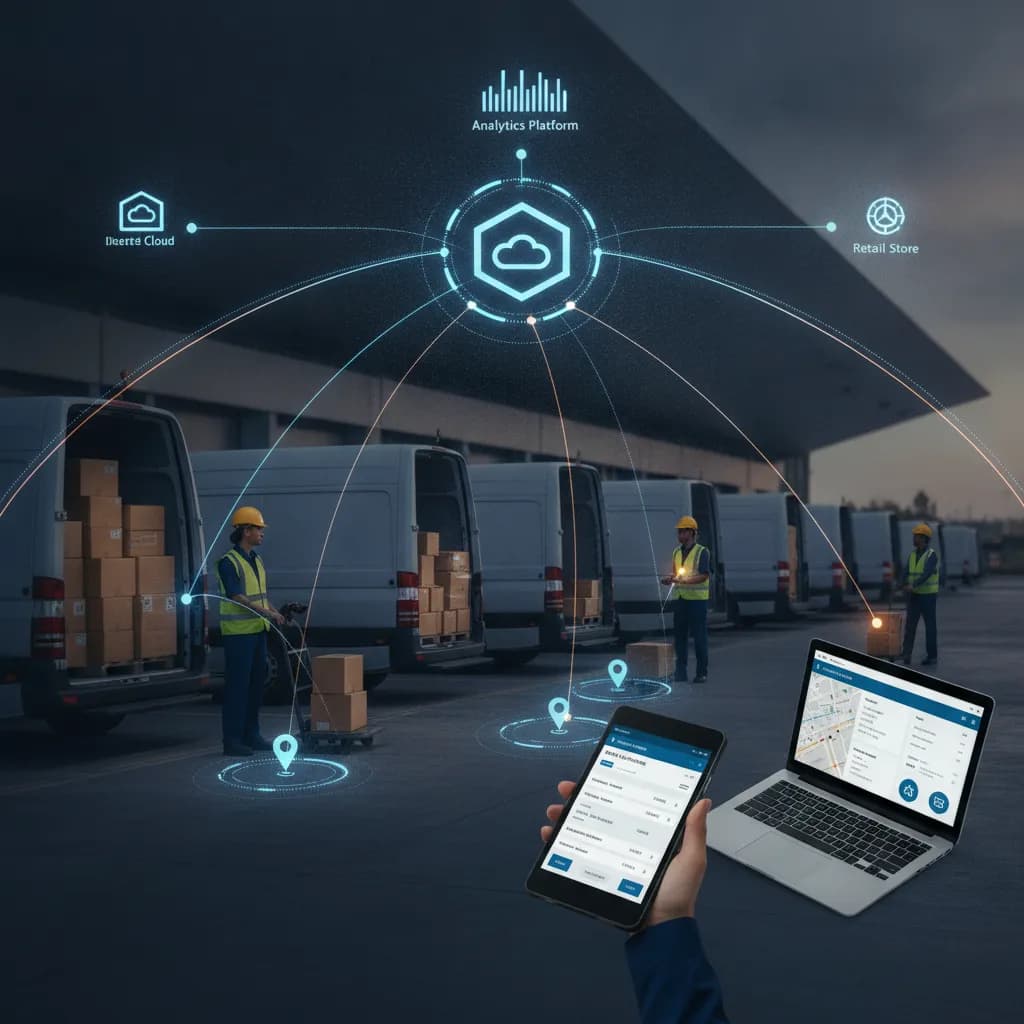
Eliminating Inventory Blind Spots in FMCG Direct Distribution: A Best Practices Guide
For supply chain managers in the Fast-Moving Consumer Goods (FMCG) sector, the challenge of maintaining accurate, real-time inventory visibility across direct distribution channels isn't just a concern – it's a constant battle. From central warehouses to the back of a delivery van, and ultimately to the store shelf, every touchpoint introduces potential for discrepancies. These inventory blind spots don't just lead to minor inconveniences; they trigger a cascade of operational inefficiencies, missed sales opportunities, and significant financial losses. The good news is that with strategic implementation of best practices and modern mobile technology, these blind spots can be systematically eliminated, transforming your direct distribution into a lean, data-driven operation.
The Unique Inventory Challenges of FMCG Direct Distribution
FMCG distribution, particularly Direct Store Delivery (DSD) and van sales, operates under a unique set of pressures that amplify inventory management complexities. Goods are typically:
- High-volume and Fast-moving: Products cycle quickly, demanding precise tracking to avoid stockouts or overstocking.
- Often Perishable: Beverages, snacks, and fresh goods have limited shelf lives, making accurate rotation and expiry tracking critical to minimize waste.
- Diverse SKUs: A single route might carry hundreds of different products, each requiring individual management.
Inventory isn't static; it's constantly in motion across multiple touchpoints: central warehouse, in-transit on delivery vehicles, within the van’s mobile stock, on the store shelf, and even in returns. Navigating demand volatility, promotional cycles, and seasonal peaks further complicates maintaining accurate stock levels, making real-time data indispensable.
Unmasking Operational Blind Spots in the DSD Supply Chain
Operational blind spots are the gaps in your data where inventory status becomes unclear or inaccurate. In DSD, these commonly manifest as:
- Inaccurate Van Stock: Discrepancies between what the system says is on the van and what’s actually there, often due to manual errors, undocumented transfers, or poor loading/unloading procedures.
- Delayed Sales Data: Sales recorded at the point of delivery not immediately updating central inventory, leading to an outdated picture of available stock.
- Inefficient Returns Processing: Returned or damaged goods not being properly documented and removed from active inventory, inflating stock counts.
- Lack of Shelf-Level Visibility: No clear understanding of product availability or facing at the store, leading to missed replenishment opportunities or expired products on display.
The ripple effect of these blind spots is profound. A sales rep might promise an item that's actually out of stock on their van, leading to delivery failures and frustrated customers. Expired products could remain on vans or shelves, resulting in preventable waste. Ultimately, this disconnect between physical inventory and system records in the field undermines order fulfillment, increases operational costs, and erodes customer satisfaction.
Common Mistake: Relying on end-of-day manual reconciliation for van stock. This approach is inherently reactive, prone to errors, and provides no real-time insight, perpetuating blind spots throughout the day.
Best Practices for Achieving End-to-End Inventory Visibility
Achieving true end-to-end inventory visibility requires a multi-faceted approach, integrating process improvements with technology.
Implement Standardized Mobile Data Capture Protocols
Every inventory movement must be digitally recorded at the source. This means:
- Loading: Scan items onto the van from the warehouse.
- Delivery: Scan items off the van at the customer site.
- Sales: Record sales transactions accurately, linking directly to inventory deductions.
- Returns: Document all returns (damaged, expired, overstock) with reason codes.
- Van Transfers: Record any transfers between vans or to other locations.
Establish Real-Time or Near Real-Time Data Synchronization
Data captured in the field is only valuable if it reaches the central system promptly. Implement solutions that allow for immediate or scheduled synchronization, ensuring that central inventory records reflect the current state of stock on every van and at every customer location.
Leverage Automated Inventory Reconciliation and Cycle Counting
For van stock, implement automated reconciliation processes that compare physical counts with system records at the start and end of each route. Regular cycle counts, supported by mobile tools, ensure accuracy at both the warehouse and the van level, identifying discrepancies quickly.
Utilize Predictive Analytics for Enhanced Demand Forecasting
Beyond current stock, anticipate future needs. Integrate historical sales data, promotional calendars, seasonal trends, and even external factors into a predictive analytics model. This enables proactive stock management, optimizing replenishment and minimizing both stockouts and excess inventory.
The Transformative Role of Mobile Technology in DSD Inventory
Purpose-built mobile applications are the cornerstone of modern DSD inventory management. They empower field teams to be data gatherers, not just order takers or delivery drivers.
- Accurate Data Capture: Mobile apps with intuitive interfaces guide field reps through inventory processes, reducing errors.
- Barcode Scanning & RFID: Quick, accurate item identification and quantity verification using device cameras or integrated scanners. This is crucial for managing diverse SKUs and preventing manual input errors.
- GPS & Location Intelligence: Track where inventory is scanned and delivered, providing an audit trail and insights into last-mile execution.
- Offline-First Capabilities: Essential for routes with intermittent or no connectivity. Data is stored locally on the device and automatically synchronized when a connection is re-established, ensuring uninterrupted operations.
These mobile solutions don't operate in a vacuum; they integrate seamlessly with route accounting, sales order processing, and delivery execution workflows, creating a unified operational platform. For instance, Dynamics Mobile is designed specifically to provide these capabilities, enabling field sales and DSD teams to manage inventory with precision, even in challenging environments.
Bridging the Gap: Integrating Field Operations with ERP Systems
The ultimate goal of eliminating inventory blind spots is to achieve a unified, single source of truth for inventory across the entire supply chain, from the central warehouse to the last mile. This requires seamless, bidirectional data flow between your mobile field solutions and your core Enterprise Resource Planning (ERP) system, such as Microsoft Dynamics 365 (Business Central or Finance & Operations).
- Real-time Updates: Sales, deliveries, and returns captured on mobile devices instantly update inventory levels in the ERP.
- Automated Replenishment: Real-time field sales and stock levels can trigger automated replenishment suggestions or purchase orders within the ERP, optimizing warehouse operations.
- Centralized Reporting: Supply chain managers gain actionable insights from integrated operational and financial data, enabling better decision-making on forecasting, procurement, and route planning.
Without this integration, even the best mobile capture system creates another data silo. The power lies in connecting the dots, ensuring that every department operates from the same, accurate inventory picture.
Measuring Impact and Fostering Continuous Improvement
Implementing new inventory visibility practices and technology is only the first step. Continuous improvement is vital to sustain gains and adapt to market changes.
Defining Key Performance Indicators (KPIs)
Track metrics such as:
- Inventory Accuracy: Percentage match between physical and system counts (van, warehouse, store).
- Stockout Rate: Frequency of unavailable products at the point of sale.
- Waste Reduction: Decrease in expired or damaged goods.
- Delivery Efficiency: On-time, in-full delivery rates.
- Order Fill Rate: Percentage of orders fulfilled completely from available stock.
Establishing Regular Audits and Feedback Loops
Conduct periodic audits of inventory processes, both in the warehouse and in the field. Crucially, establish channels for feedback from field teams – they are on the front lines and often have invaluable insights into process bottlenecks or system improvements.
Developing Effective Training and Adoption Strategies
Technology is only as good as its users. Invest in comprehensive training for your mobile workforce, emphasizing not just how to use the tools, but why accurate data capture is critical for their success and the company's bottom line. Ongoing support and refresher training are key to ensuring proficiency and compliance.
Adapting to Evolving Market Demands
The FMCG landscape is dynamic. Regularly review and refine your inventory strategies to accommodate new product introductions, shifts in consumer demand, and regulatory changes.
Eliminating inventory blind spots in FMCG direct distribution is not a one-time project; it's an ongoing commitment to operational excellence. By adopting best practices in mobile data capture, ensuring robust ERP integration, and fostering a culture of continuous improvement, supply chain managers can transform their operations from reactive to proactive, ensuring products are always in the right place at the right time.
Elevate your FMCG direct distribution with Dynamics Mobile. Our enterprise mobile workforce management platform, built on Microsoft Dynamics 365, provides the real-time inventory visibility and operational control you need to eliminate blind spots and drive efficiency across your field sales, DSD, and warehouse operations.