How can I estimate the delivery costs for my last mile delivery service?

If you are running an e-commerce business, managing a local courier company, or handling distribution for a retail brand, you already know that the final leg of the supply chain is notoriously complex. You might frequently find yourself asking: why is final mile logistics so expensive?
The truth is, moving goods from a local transportation hub to the customer's front door often accounts for more than 50% of the total shipping expenditure. Without a clear strategy for last mile delivery cost estimation, your profit margins can quickly evaporate.
Accurately predicting the cost of delivery is not just about keeping the lights on; it is about scaling your operations, remaining competitive, and keeping your customers happy. In this guide, we will break down exactly how to evaluate your expenses, price your services, and optimize your operations for long-term profitability.

Decoding the Core Expenses of Final Mile Logistics
To perform a highly accurate delivery cost analysis, you first need to categorize your expenses. Last mile expenses generally fall into three main buckets: labor, vehicle operations, and technology.
Labor: The Human Element
Your drivers are the face of your company, but they are also your largest expense. Accurately calculating driver labor rates per stop is essential. Paying an hourly rate is standard, but if a driver hits heavy traffic or struggles to find an apartment building, the cost per stop skyrockets.
Actionable Tip: Track the average time it takes to complete a delivery in different zones. Divide your driver’s hourly wage by the average number of stops they complete in an hour to find your baseline labor cost per stop.
Vehicles and Fuel
Whether you lease, own, or use independent contractors with their own cars, vehicle-related expenses are inescapable. This includes lease payments, routine maintenance, commercial insurance, and of course, fuel. Business owners must pay close attention to the impact of fuel surcharges on shipping margins. When gas prices spike, a flat-rate delivery fee can instantly become a losing proposition.
Actionable Tip: Build dynamic fuel surcharges into your customer contracts or adjust your shipping rates quarterly to protect your margins from volatile oil prices.
The Cost of Technology
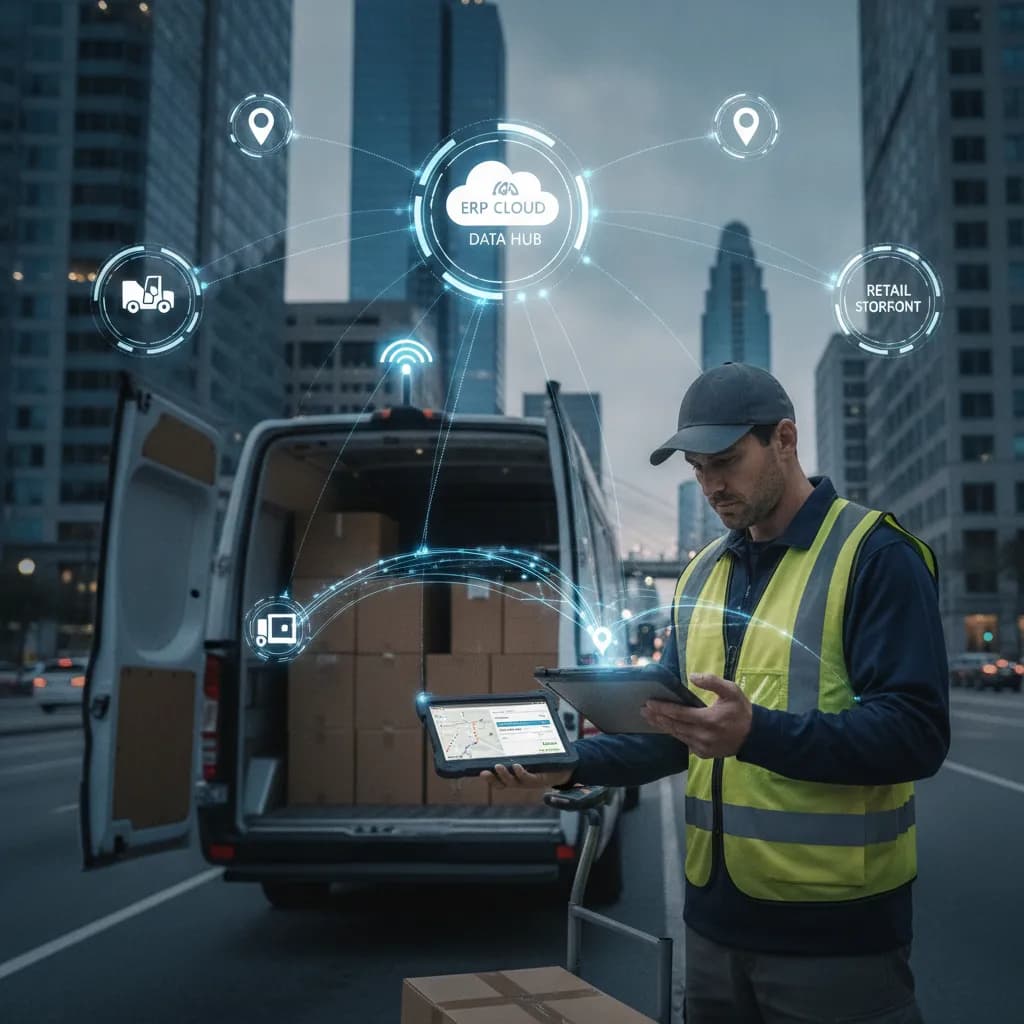
Modern last mile logistics cannot function on pen and paper. However, software comes with a price tag. Business owners must budget for real-time tracking implementation costs, which give customers the "Uber-like" visibility they crave. Additionally, investing in automated dispatching systems for cost control helps assign the right driver to the right route instantly, saving both time and manual administrative labor.
How Geography Shapes Your Costs
Not all delivery routes are created equal. Where you deliver has a massive impact on your bottom line, heavily dictating your shipping cost estimation.
Urban vs Rural Logistics Pricing Factors
Urban deliveries benefit from proximity but suffer from congestion. You might have ten deliveries on a single city block, but parking tickets, traffic, and navigating high-rise building security slow drivers down. Conversely, rural deliveries mean wide-open roads but massive distances between stops, leading to high fuel consumption and vehicle wear-and-tear.
Customer Density and Delivery Route Profitability
The golden rule of local delivery is density. If you can drop off five packages in one neighborhood within fifteen minutes, your average cost per package delivery plummets. If a driver has to drive twenty miles to deliver a single $15 item, you are almost certainly losing money. Understanding customer density allows you to establish minimum order values or zone-based delivery fees.

Calculating Your Average Cost Per Package
Now it is time to crunch the numbers. To get an accurate picture of your operations, you need to consolidate your data.
Gather Total Expenses: Add up all labor, fuel, maintenance, insurance, technology subscriptions, and administrative costs for a specific period (e.g., one month).
Count Total Deliveries: Tally the exact number of successful deliveries made in that same period.
Divide to Find the Average: Divide your total expenses by your total deliveries. This gives you your baseline average cost per package delivery.
If you run an e-commerce store and want to pass some or all of these costs to the customer, you can plug these variables into a shipping price calculator on your website. This ensures that the rate the customer sees at checkout accurately reflects your real-world expenses.
Setting Your Last Mile Pricing
Once you know what a delivery costs you, you can determine what to charge them. Smart last mile pricing relies on a mix of flat rates for dense areas, distance-based pricing for rural zones, and tiered pricing based on order volume. Never guess your pricing; let your data dictate your rates.
Uncovering the Hidden Overhead
When businesses struggle with profitability, it is rarely the obvious costs that take them down. It is the hidden overhead in final mile operations that slowly bleeds a budget dry.
This overhead includes things like packaging materials, warehouse sorting time, customer service hours spent answering "Where is my order?" calls, and the dreaded cost of returns. But the biggest hidden cost of all? Failed deliveries.
Conquering the Failed Delivery
When a driver attempts a delivery but the customer isn't home, the gate is locked, or the address is wrong, you pay for that stop. Then, you pay for it again when the driver tries the next day. Developing strategies for minimizing failed delivery attempts is critical.
Send automated SMS alerts: Give customers a tight delivery window and real-time tracking links so they know when to be home.
Allow alternate delivery locations: Let customers opt to have packages left with a neighbor or at a secure retail locker.
Require address validation: Use software at checkout to ensure the customer didn't accidentally type the wrong zip code.
Strategic Fulfillment: Fleets and Facilities
How you structure your physical operations will ultimately dictate your baseline costs. You have major decisions to make regarding who drives the vans and where the vans start their journey.
In-House Fleet vs Third-Party Logistics Costs
Should you buy your own vans and hire W-2 employees, or should you outsource to a 3PL (Third-Party Logistics) provider? An in-house fleet offers total control over the brand experience and can be cheaper at a massive, highly-dense scale. However, the upfront capital expenditure is massive. On the other hand, utilizing a 3PL converts your fixed costs into variable costs. You only pay for what you ship, which is ideal for businesses with seasonal fluctuations.
If you do outsource, mastering shipping carrier rate negotiation tactics is a must. Don't just accept the sticker price. Leverage your shipping volume, ask for dimensional weight waivers, and negotiate lower residential delivery surcharges.
The Rise of the Micro-Fulfillment Center
Where do your goods sit before they are delivered? Traditional logistics rely on massive warehouses on the outskirts of town. The modern approach utilizes micro-fulfillment centers (MFCs)—small, highly automated storage facilities tucked directly into densely populated urban areas. The micro-fulfillment center impact on distribution expenses is profound. By staging inventory mere miles from the end consumer, you drastically cut down the transit distance, slashing fuel costs and driver hours simultaneously.

Maximizing Efficiency with Technology
You cannot out-work bad routing. If your drivers are zig-zagging across town or backtracking, your costs will remain artificially high. This is where advanced software steps in to save the day.
The Power of Route Optimization
Modern routing software uses algorithms to account for traffic, weather, driver shift times, delivery windows, and vehicle capacity to create the most efficient path possible. If you are hesitant about the software subscription fee, conduct a quick route optimization software roi analysis. If a $200/month software saves your fleet 15 hours of labor and 50 gallons of fuel per week, the software pays for itself in a matter of days.
Sustainability Meets Profitability
Efficiency isn't just about saving money; it is about corporate responsibility. Consumers increasingly care about the environmental impact of their online shopping habits. Fortunately, optimizing your operations naturally leads to carbon footprint reduction and delivery efficiency. Fewer miles driven means fewer emissions. Consolidating orders, utilizing electric delivery vehicles for short urban routes, and eliminating failed delivery attempts all contribute to a greener operation and a healthier bottom line.
The Bottom Line
Effective last mile delivery cost estimation is not a one-and-done exercise; it is a continuous process of measurement and refinement. The market fluctuates, customer expectations evolve, and fuel prices rise and fall.
By actively monitoring your average cost per package, understanding the variables of urban and rural geography, utilizing automated tech, and strategically minimizing failed deliveries, you can transform your logistics from a costly burden into a competitive advantage. Take control of your data today, stop guessing your expenses, and start driving your delivery operations toward sustainable profitability.