Practical Guide: Mastering Last-Mile Delivery Exceptions in the Field
In the complex world of last-mile logistics, every delivery is a race against time and unforeseen circumstances. Whether it's a DSD route, a field service visit, or a direct shipment to a customer, the journey from warehouse to doorstep is fraught with potential disruptions. These aren't just minor inconveniences; they are costly, erode customer trust, and can significantly impact your operational efficiency and bottom line. The key isn't to eliminate exceptions entirely – that's a pipe dream – but to build a robust system that anticipates, manages, and learns from them.
The Unavoidable Reality: Why Last-Mile Delivery Exceptions Matter
Last-mile delivery is often the most expensive and volatile part of the supply chain. It's where your brand makes its final impression, and where operational plans meet real-world chaos. Exceptions are simply deviations from the planned delivery workflow. Understanding their prevalence and impact is the first step toward mastering them.
Common Last-Mile Delivery Exceptions:
- Customer Not Present: The most frequent culprit. No one to receive the goods, leading to re-delivery attempts or returns.
- Access Issues: Gated communities, locked loading docks, no parking, incorrect gate codes, or even unexpected road closures.
- Damaged Goods: Items damaged in transit or discovered upon delivery, requiring immediate documentation and resolution.
- Incorrect Items/Quantities: Discrepancies between the order and what's delivered, often stemming from warehouse picking errors or misloads.
- Vehicle Problems: Mechanical breakdowns, flat tires, or minor accidents that delay a route.
- Recipient Refusal: Customer refuses delivery due to various reasons (e.g., changed mind, order arrived too late, incorrect item).
- Payment Issues: For DSD or van sales, issues with on-site payment processing or insufficient funds.
Impact of Exceptions:
Each exception carries a ripple effect:
- Increased Costs: Re-delivery fees, fuel for extra trips, driver overtime, administrative overhead for resolution. For a DSD operation, a single return can wipe out the profit margin for an entire case.
- Delayed Deliveries: Impacts subsequent stops, leading to a domino effect across the route and potentially missed service windows.
- Customer Dissatisfaction: Broken promises, frustration, and a negative perception of your brand, leading to churn.
- Compliance Risks: Especially in regulated industries (e.g., pharmaceuticals, age-restricted goods), mishandled exceptions can lead to regulatory fines.
- Inventory Discrepancies: Returns and re-deliveries complicate real-time inventory visibility, impacting future sales and warehouse planning.
"Ignoring delivery exceptions is like trying to plug a leaky dam with a single finger. You need a comprehensive system to manage the inevitable and turn potential failures into opportunities for improvement."
Building Resilience: Proactive Strategies to Minimize Exceptions
The best way to handle an exception is to prevent it from happening. Proactive measures, often rooted in robust data management and smart technology, significantly reduce the frequency and severity of issues.
1. Accurate Data Management: The Foundation
- Master Data Hygiene: Ensure customer addresses, contact numbers, delivery instructions, and specific access requirements are meticulously maintained in your ERP (e.g., Microsoft Dynamics 365 Business Central or Finance & Operations). Outdated or incorrect data is a primary source of exceptions.
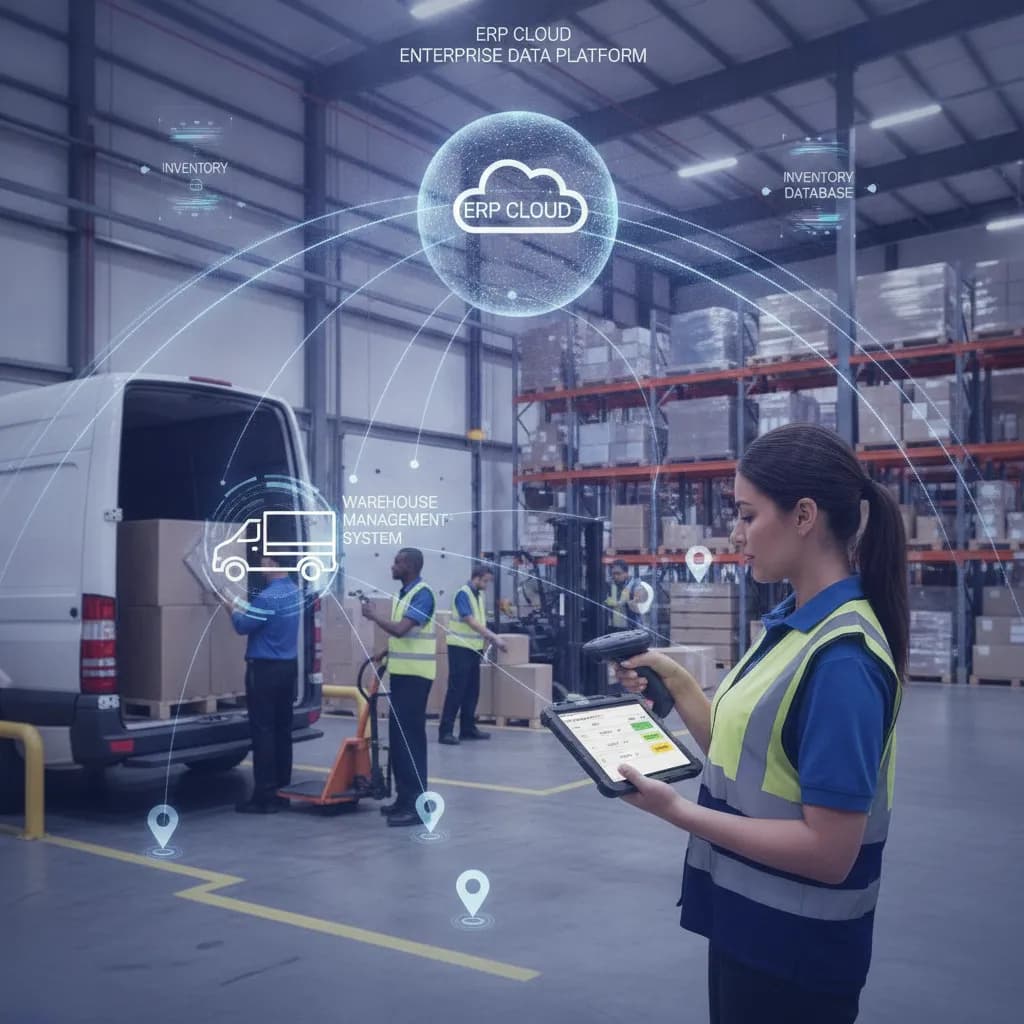
- Order Accuracy: Implement strict picking and packing protocols in the warehouse to minimize incorrect items or quantities. Integrate warehouse mobility solutions to validate every item loaded onto a delivery vehicle.
2. Pre-Delivery Communication: Setting Expectations
- Automated Notifications: Send SMS or email alerts to customers with estimated delivery windows, driver tracking links, and contact information. This empowers customers and reduces 'not present' scenarios.
- Customer Portal: Offer a self-service portal where customers can update delivery preferences, provide specific instructions, or reschedule deliveries within defined parameters. This is particularly useful for B2B clients in wholesale distribution.
3. Optimized Routing and Scheduling: Smart Planning
- Intelligent Route Optimization: Leverage advanced algorithms to create efficient routes that consider traffic, time windows, vehicle capacity, and driver skill sets. This reduces delays and helps drivers stay on schedule, minimizing late arrivals that can trigger exceptions.
- Dynamic Scheduling: Adapt to changes in real-time. If a driver reports a delay, the system should be able to recalculate subsequent stops or alert the dispatcher for intervention.
4. Driver Training and Empowerment: Your Front Line
- Comprehensive Training: Equip field teams (delivery drivers, DSD reps, field service technicians) with the knowledge to handle common scenarios. For example, what's the protocol if a customer isn't home? How to document a damaged product?
- Soft Skills: Train drivers in customer service and de-escalation techniques. A polite, informed driver can often resolve minor issues on the spot.
5. Vehicle Maintenance and Readiness: Operational Reliability
- Preventative Maintenance: Regular checks and servicing minimize vehicle breakdowns, which can derail an entire route.
- Equipment Checks: Ensure all necessary delivery equipment (hand trucks, ramps, payment terminals for van sales) is functional and present before departure.
The Dispatcher's Command Center: Real-time Monitoring and Intervention
Even with proactive measures, exceptions will occur. This is where the dispatcher, armed with real-time visibility and communication tools, becomes indispensable.
Role of the Dispatcher: The Central Hub
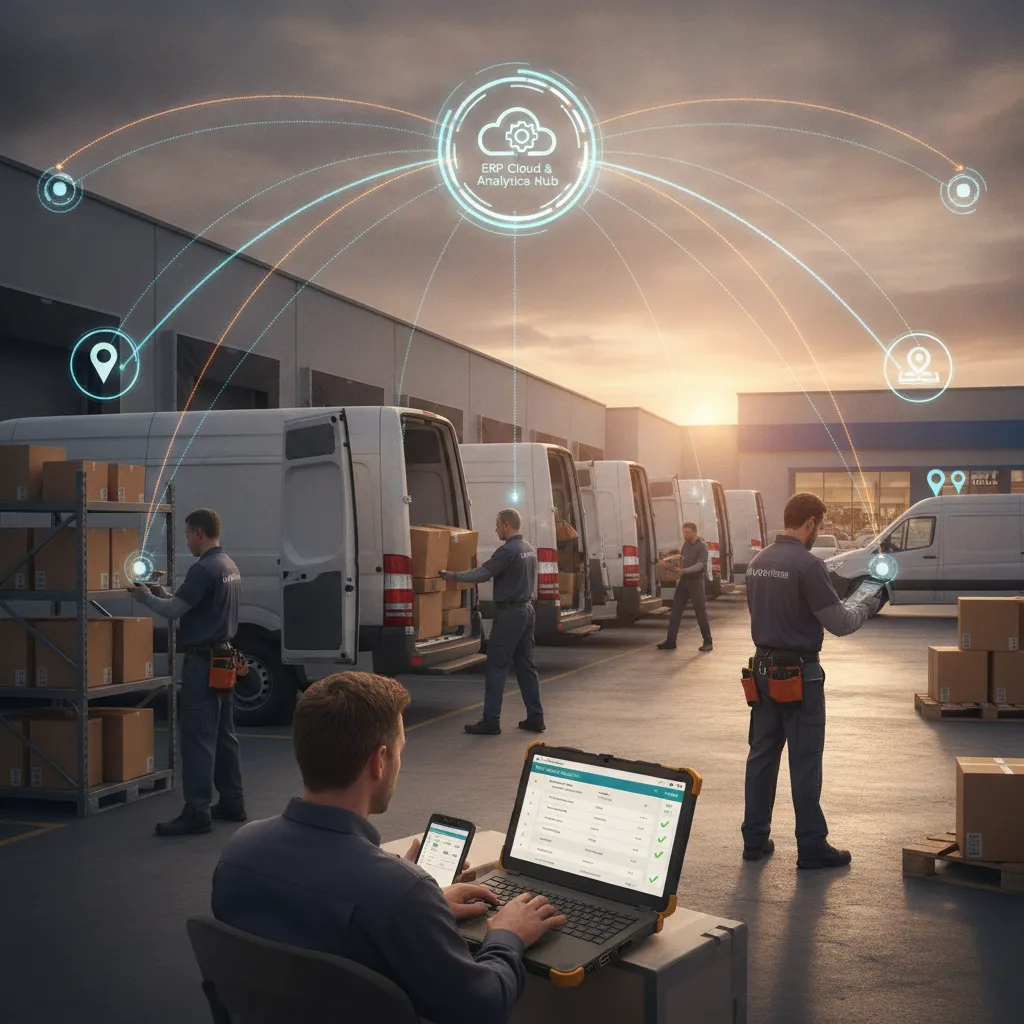
The dispatcher acts as the nerve center, monitoring the entire mobile workforce, communicating with drivers and customers, and making critical decisions to keep operations flowing. They bridge the gap between planned routes and real-world execution.
Essential Tools for Dispatchers:
- GPS Tracking and Geofencing: Real-time location of every vehicle, enabling dispatchers to see exact progress and potential delays. Geofencing can trigger alerts for arrivals/departures, or if a vehicle deviates from its assigned route.
- Real-time Status Updates: Drivers mark stops as complete, delayed, or exception-reported directly from their mobile device. This provides an instant overview of the entire operation.
- Integrated Communication Channels: Direct chat, voice calls, or even video calls between dispatcher and driver, or dispatcher and customer, are crucial for swift resolution.
Scenario-Based Decision Making: Practical Examples
- Customer Not Present: Dispatcher receives an alert from the driver. They immediately attempt to contact the customer, confirm a new delivery time, or instruct the driver on a secure drop-off protocol (e.g., leave with neighbor, return to depot).
- Vehicle Breakdown: Driver reports an issue. Dispatcher quickly identifies the nearest available driver/vehicle, re-assigns pending deliveries, and arranges for roadside assistance, minimizing overall route disruption.
- Incorrect Item: Driver discovers a discrepancy. Dispatcher consults the ERP to verify the original order, authorizes a partial delivery, or arranges for a pick-up and re-delivery of the correct item.
Seamlessly integrating dispatcher tools with your Microsoft Dynamics 365 ERP ensures that resource allocation, inventory adjustments, and customer service notes are immediately updated, preventing data silos.
Empowering the Field: Mobile Tools for On-the-Spot Resolution
The mobile workforce is your eyes and ears on the ground. Equipping them with powerful, intuitive mobile applications is critical for effective exception handling.
Mobile Application Capabilities:
A robust mobile solution, like Dynamics Mobile, provides field teams with the necessary tools to document and resolve issues:
- Rich Proof of Delivery (PoD): Capture photos of delivered goods (especially for unattended deliveries), electronic signatures, timestamps, and geo-coordinates. This is invaluable for dispute resolution.
- Detailed Notes and Comments: Allow drivers to add specific notes about the delivery or the exception, providing context that a simple status update cannot.
- Barcode Scanning: Verify items against the manifest at the point of delivery, immediately flagging discrepancies for DSD or van sales operations.
Guided Workflows for Exception Handling:
- Step-by-Step Protocols: The mobile app can guide drivers through predefined processes for common exceptions. For example, a 'customer not home' protocol might involve: 1. Attempt phone call. 2. Leave door tag. 3. Take photo of delivery location. 4. Mark as 'attempted delivery'.
- Customizable Forms: For damaged goods, the app can present a form to capture details, allow photo uploads, and initiate a return process, ensuring operational compliance.
Offline Capabilities: Ensuring Continuity
In areas with poor network coverage, offline-first mobile execution is non-negotiable. Drivers can continue their routes, capture data, and process exceptions. All data automatically syncs with the back office (and ERP) once connectivity is restored.
Real-time Communication with Dispatch:
Instant messaging and incident reporting directly from the field allow drivers to quickly alert dispatch to issues, request assistance, or clarify instructions, fostering agile decision-making.
Access to Relevant Customer and Order History:
Empower drivers with immediate access to customer notes, past order history, or special delivery instructions. This allows for informed decisions on-site, improving first-time resolution rates.
Closing the Loop: Data, Analytics, and Continuous Improvement
Handling exceptions isn't just about immediate fixes; it's about learning and evolving. The data generated from every exception is a goldmine for operational improvement.
Capturing Comprehensive Exception Data:
Ensure your mobile solution and ERP integration capture detailed information on:
- Type of exception (e.g., 'customer not present', 'damaged').
- Root cause (e.g., 'incorrect address in ERP', 'driver error', 'vehicle malfunction').
- Resolution method (e.g., 're-delivery scheduled', 'returned to depot', 'left with neighbor').
- Time to resolution and associated costs.
Operational Analytics: Identifying Patterns and Root Causes
By analyzing this data, operations managers can:
- Identify recurring exception types. Are 'customer not present' rates higher on specific routes or days?
- Pinpoint root causes. Is poor address data in the ERP a consistent issue? Are certain drivers experiencing more vehicle issues?
- Measure the true cost of exceptions and their impact on ROI.
Feedback Loops: Refining Processes
Use insights from exception data to:
- Refine Routes: Adjust route planning to avoid problem areas or schedules.
- Update Customer Profiles: Add specific delivery instructions to prevent future access issues.
- Improve Training Programs: Address common driver mistakes or knowledge gaps.
- Enhance Warehouse Processes: If incorrect items are a frequent issue, review picking and packing procedures.
ERP Reconciliation: Accurate Back-Office Reflection
Every field activity, including exceptions and their resolutions, must be accurately reflected in your Microsoft Dynamics 365 ERP. This ensures correct billing, inventory adjustments, and financial reporting. A mobile workforce management platform that seamlessly integrates with your ERP is crucial for this.
The Role of AI in Predicting and Preventing Exceptions:
Looking forward, AI and machine learning are poised to revolutionize exception management. By analyzing historical data, AI can:
- Predict Potential Exceptions: Flag high-risk deliveries based on customer history, location data, or weather forecasts.
- Suggest Preventative Actions: Recommend pre-delivery communications or alternative routing based on predicted issues.
- Automate Corrective Actions: In some cases, AI could even initiate re-routing or customer notifications autonomously, under dispatcher supervision.
Mastering last-mile delivery exceptions isn't about avoiding every bump in the road; it's about building a resilient, intelligent system that can navigate them efficiently. By combining proactive planning, real-time dispatch capabilities, empowered mobile teams, and a commitment to data-driven continuous improvement, enterprises can transform exceptions from costly headaches into valuable insights that drive operational excellence.
Explore how Dynamics Mobile empowers your field operations with robust tools for managing delivery workflows and handling exceptions, seamlessly integrating with your Microsoft Dynamics 365 ERP.