5 Strategic Imperatives for FMCG CEOs: Leveraging Operational Visibility for Competitive Advantage
In the fast-paced world of Fast-Moving Consumer Goods (FMCG), the difference between market leadership and lagging behind often hinges on one critical factor: operational visibility. For CEOs, this isn't merely about tracking metrics; it's about transforming raw, real-time data from the field, warehouse, and distribution network into strategic foresight. Without a clear, unvarnished view of daily operations—from shelf stock to delivery routes—decisions are based on outdated assumptions, opportunities are missed, and competitive advantage erodes. The imperative is clear: embrace holistic operational visibility not as a cost, but as the cornerstone of sustainable growth and market dominance.
1. From Blind Spots to Shelf Dominance: Real-time Inventory & Merchandising Visibility
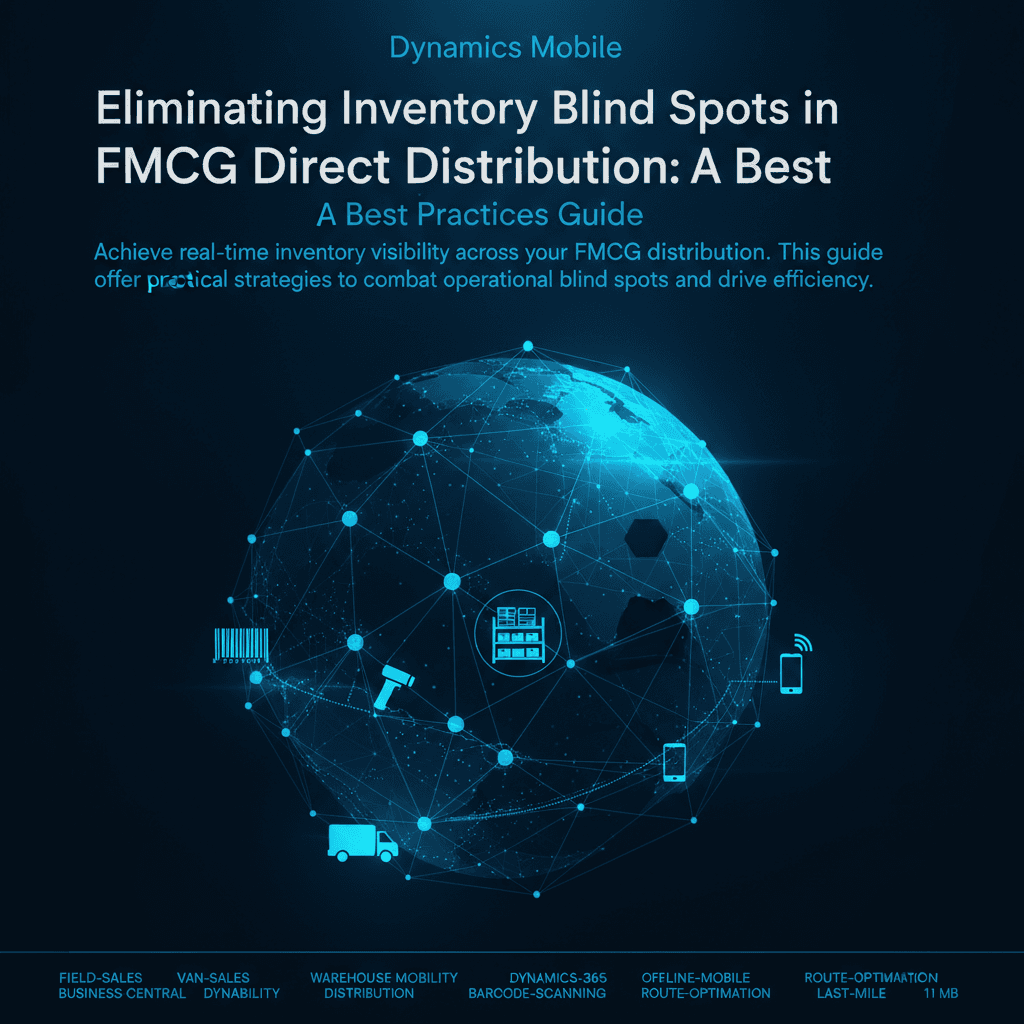
For FMCG companies, particularly those relying on Direct-Store-Delivery (DSD), the path from warehouse to consumer shelf is fraught with potential blind spots. Stockouts mean lost sales, while overstocking ties up crucial working capital and risks spoilage. CEOs need to understand the true, real-time inventory picture across their entire DSD chain.
Eliminating stockouts and overstocking across the entire DSD chain (warehouse, truck, shelf)
- The Challenge: Traditional systems often provide delayed inventory reports, leaving decision-makers blind to stock levels on individual trucks or at specific retail locations until it's too late.
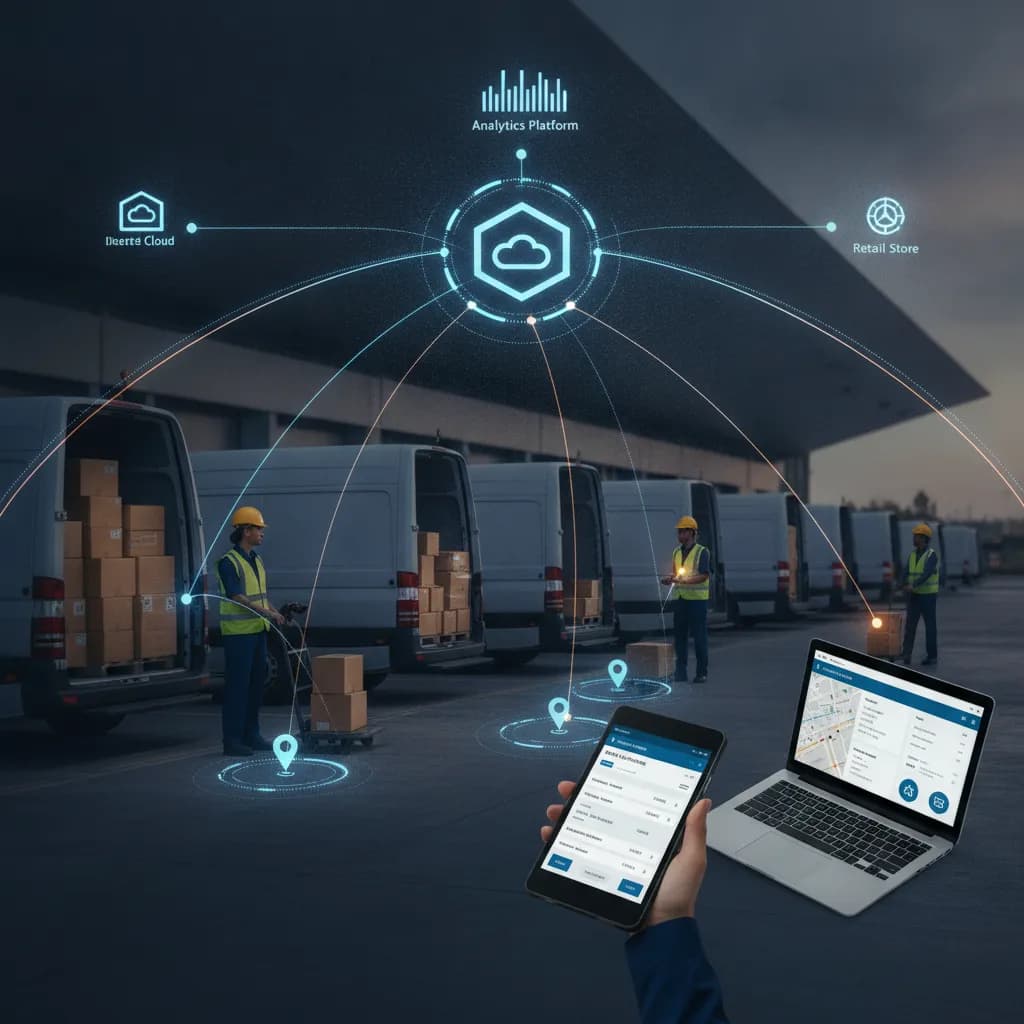
- The Solution: Mobile workforce management platforms enable DSD drivers and field sales reps to capture inventory data at the point of delivery and sale. This means immediate updates on what’s actually on the truck, what’s left in the store backroom, and what’s selling on the shelf.
- Operational Example: A DSD driver uses their mobile device to scan products being unloaded and then conducts a quick shelf count, instantly updating the central ERP (e.g., Microsoft Dynamics 365 Business Central or Finance & Operations) with precise stock levels and flagging potential replenishment needs for the next visit.
Optimizing planogram compliance and promotional execution at the point of sale
- The Challenge: Even the best marketing campaigns fail if products aren’t displayed correctly or promotions aren't executed as planned. Verifying compliance across thousands of retail locations manually is impossible.
- The Solution: Field teams equipped with mobile devices can capture photos, fill out digital checklists, and report on planogram adherence and promotional material presence. AI-assisted image recognition can even automate some of these checks.
- Operational Impact: Ensures every promotional dollar is working effectively, drives consistent brand presentation, and provides immediate feedback on campaign effectiveness.
Quantifying the impact on sales velocity, waste reduction, and working capital
Real-time inventory and merchandising visibility directly translates to reduced waste from expired products, optimized working capital through leaner stock levels, and a measurable boost in sales velocity by ensuring products are always available and perfectly presented.
Bridging inventory data from ERP systems to real-time field execution
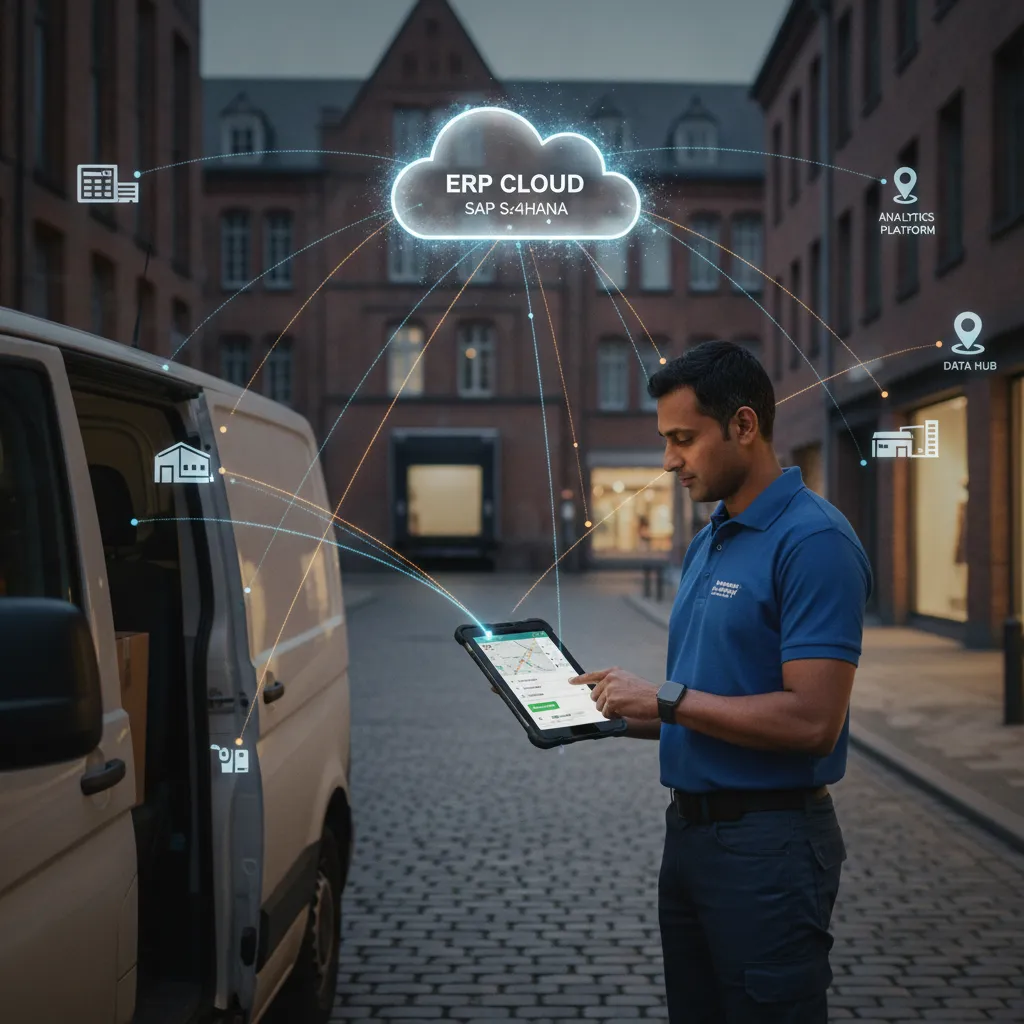
The power of this visibility is amplified when integrated with core ERP systems. Dynamics Mobile, for instance, connects seamlessly with Microsoft Dynamics 365, ensuring that inventory movements captured by field teams immediately update central stock records, enabling accurate forecasting and procurement planning.
2. Agile Distribution: Dynamic Route Optimization & Last-Mile Execution Intelligence
The last mile is often the most expensive and complex part of the FMCG supply chain. CEOs must move beyond static, historical routing to embrace dynamic, intelligent distribution that responds to real-world conditions.
Moving beyond static routes to real-time, AI-assisted route adjustments based on live conditions
- The Challenge: Fixed routes can't account for unexpected traffic, road closures, or urgent delivery requests, leading to delays, missed windows, and frustrated customers.
- The Solution: Advanced route optimization engines leverage real-time traffic data, weather forecasts, and AI algorithms to dynamically adjust routes throughout the day. This allows for immediate re-sequencing of stops or re-assignment of deliveries to optimize efficiency.
- Operational Example: A delivery driver encounters an unexpected highway closure. The mobile application instantly recalculates the optimal route, notifies subsequent customers of revised ETAs, and suggests the most efficient way to complete the remaining deliveries.
Improving delivery success rates, on-time performance, and customer satisfaction
- The Challenge: Late or missed deliveries damage customer relationships and lead to costly redeliveries.
- The Solution: Real-time tracking and dynamic routing significantly improve on-time performance. When issues arise, immediate visibility allows for proactive communication and rapid problem resolution.
Reducing fuel costs, vehicle wear, and driver idle time through optimized sequencing and load balancing
Optimized routes aren't just about speed; they're about efficiency. By minimizing mileage, avoiding congestion, and balancing loads, companies can achieve significant reductions in operational costs, extending vehicle lifespan and maximizing driver productivity.
Gaining immediate visibility into delivery exceptions, proof-of-delivery (POD), and return logistics
Digital proof-of-delivery (POD) captured on mobile devices—including signatures, photos, and geo-stamps—provides undeniable evidence of delivery and condition. This immediate visibility into exceptions (e.g., damaged goods, refused deliveries) streamlines dispute resolution and informs return logistics processes, all seamlessly integrated back into the ERP via platforms like Dynamics Mobile.
3. Empowering the Front Line: Proactive Field Sales & DSD Performance Management
Your field sales and DSD teams are the face of your brand. CEOs need more than just end-of-month sales reports; they require real-time insights into individual and team performance to drive continuous improvement and ensure strategic alignment.
Monitoring sales team productivity, order fill rates, and returns in real-time against targets
- The Challenge: Lagging sales data makes it difficult to identify underperforming territories or reps in time to intervene effectively.
- The Solution: Mobile sales applications provide field reps with instant access to customer history, product catalogs, and pricing. Managers gain real-time dashboards showing order volumes, average order values, fill rates, and returns against set targets.
- Operational Example: A sales manager reviews their team's real-time dashboard and notices a particular rep consistently has lower order values in a specific region. They can immediately reach out, provide targeted coaching, or reallocate resources before it significantly impacts quarterly results.
Identifying top performers and areas for targeted coaching and training based on objective data
- The Challenge: Performance reviews can be subjective without granular, real-time data.
- The Solution: Objective data on visit frequency, order conversion rates, average order size, and product mix allows for precise identification of top performers and specific areas where other reps might need training or support.
Ensuring operational compliance with sales policies, pricing, and promotional guidelines at every stop
Consistency is key in FMCG. Real-time visibility ensures that pricing is accurate, promotions are applied correctly, and sales policies are adhered to across the entire field force, protecting margins and brand integrity.
Connecting sales targets from the ERP with actual field execution data for accurate forecasting
By integrating mobile field sales data with ERP sales targets, CEOs gain a holistic view that enhances forecasting accuracy. This connection, facilitated by platforms like Dynamics Mobile, ensures that strategic sales goals are directly linked to the daily activities and outcomes of the field force, providing a clear picture of progress and potential gaps.
4. Customer-Centric Operations: Elevating Experience Through Delivery Transparency
In today's competitive landscape, delivery is no longer just a logistical function; it's a critical touchpoint for customer experience. CEOs must prioritize transparency to build loyalty and differentiate their brand.
Providing accurate estimated times of arrival (ETAs) and proactive communication to customers
- The Challenge: Customers expect to know when their order will arrive. Vague or inaccurate ETAs lead to frustration and lost productivity for the receiving party.
- The Solution: Integrating real-time vehicle tracking with customer communication portals allows for precise, dynamic ETAs. Automated notifications can keep customers informed of delivery progress, delays, or early arrivals.
- Operational Example: A retail store manager receives an SMS notification that their beverage delivery is 30 minutes away, allowing them to prepare the receiving dock and staff, minimizing waiting time and improving efficiency for both parties.
Rapidly resolving delivery issues and managing customer expectations with real-time information
- The Challenge: When a delivery issue occurs (e.g., damaged goods, unexpected delay), lack of immediate information can escalate customer dissatisfaction.
- The Solution: Field teams can instantly report issues via their mobile devices, complete with photos and notes. This data is immediately accessible to customer service, enabling rapid, informed responses and proactive problem-solving.
Utilizing delivery feedback and service data to continuously improve service quality and build loyalty
Every delivery is an opportunity to gather feedback. Mobile platforms can incorporate customer surveys or rating systems at the point of delivery, providing invaluable insights into service quality and identifying areas for improvement, directly contributing to long-term customer loyalty.
Understanding the direct link between operational transparency and enhanced brand reputation
Proactive communication and reliable delivery build trust. When customers feel informed and valued, it directly enhances the brand's reputation for reliability and customer focus. This transparency transforms a transactional delivery into a positive brand interaction.
5. Strategic Foresight: Data-Driven Decision-Making for Market Leadership
The ultimate goal of operational visibility for a CEO is not just to manage daily tasks, but to unlock strategic insights that drive long-term market leadership. This requires aggregating granular operational data into actionable intelligence.
Aggregating granular operational data for strategic market analysis, trend identification, and competitive benchmarking
- The Challenge: Disparate data sources make it difficult to get a holistic view of market dynamics and competitive positioning.
- The Solution: A unified mobile workforce management platform collects and centralizes data from every operational touchpoint – sales, delivery, inventory, service. This rich dataset can then be analyzed to identify market trends, assess competitive performance in specific regions, and benchmark against industry standards.
- Operational Example: By analyzing DSD sales data across different demographics and regions, a CEO might identify an emerging preference for a new product category, informing a strategic decision to invest in R&D or acquire a smaller brand.
Informing new product launches, market expansion strategies, and supply chain resilience initiatives
- The Challenge: Strategic decisions around new products or market entry are risky without robust, real-world data.
- The Solution: Operational data provides empirical evidence of market demand, logistical feasibility, and potential challenges, significantly de-risking strategic investments.
Leveraging predictive analytics for more accurate demand forecasting and optimal resource allocation
Moving beyond reactive decision-making, CEOs can utilize historical operational data combined with external factors to build predictive models. These models forecast demand with greater accuracy, optimize inventory levels, and ensure that resources – from vehicles to personnel – are allocated most efficiently.
Transforming raw operational data into actionable, C-suite level insights for long-term growth
The true value of operational visibility lies in its ability to transform mountains of raw data into concise, actionable insights that directly support C-suite strategic objectives. This isn't just about reporting; it's about providing the intelligence needed to pivot, innovate, and lead the market.
Achieving this level of strategic operational visibility requires robust, integrated technology. Explore how platforms like Dynamics Mobile, built on Microsoft Dynamics 365, can provide the real-time data and mobile capabilities your FMCG enterprise needs to gain a decisive competitive edge.