DSD Digital Transformation: A GM's Checklist for Food Distribution
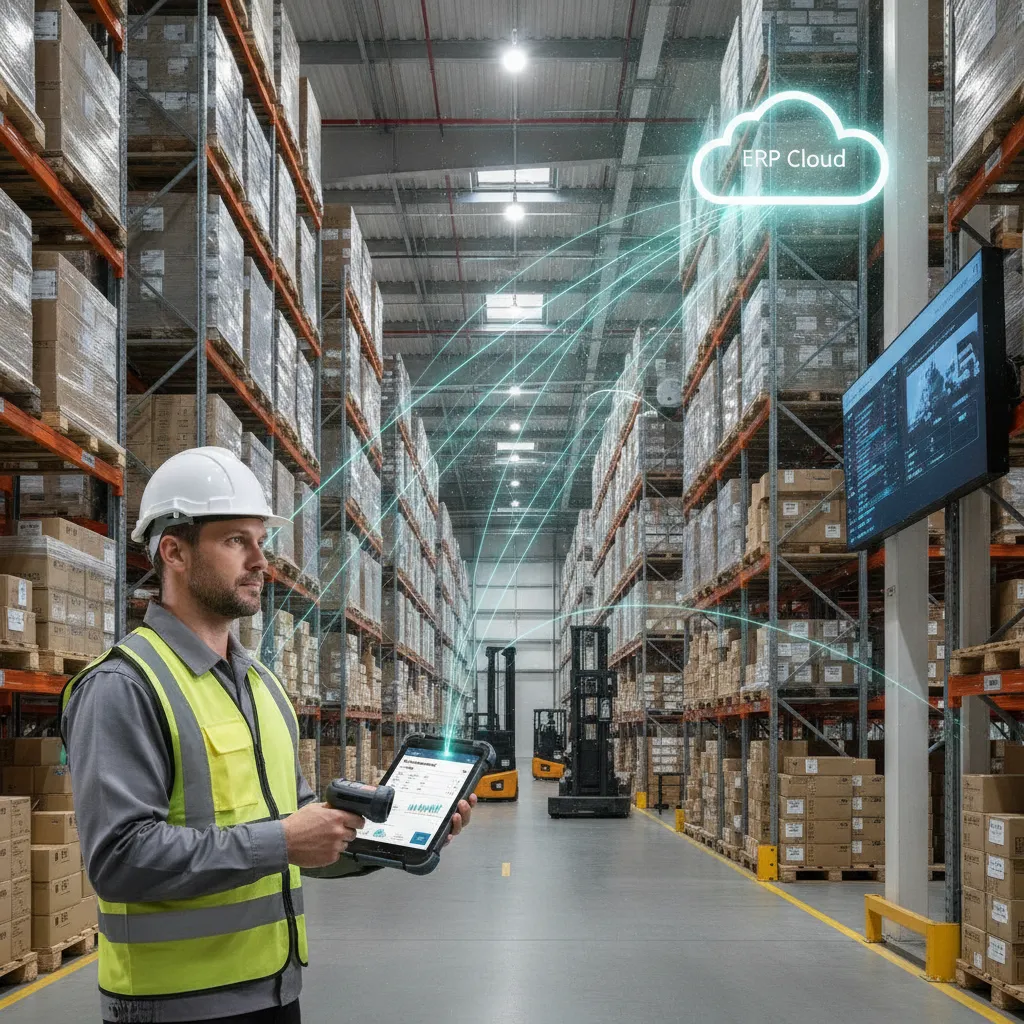
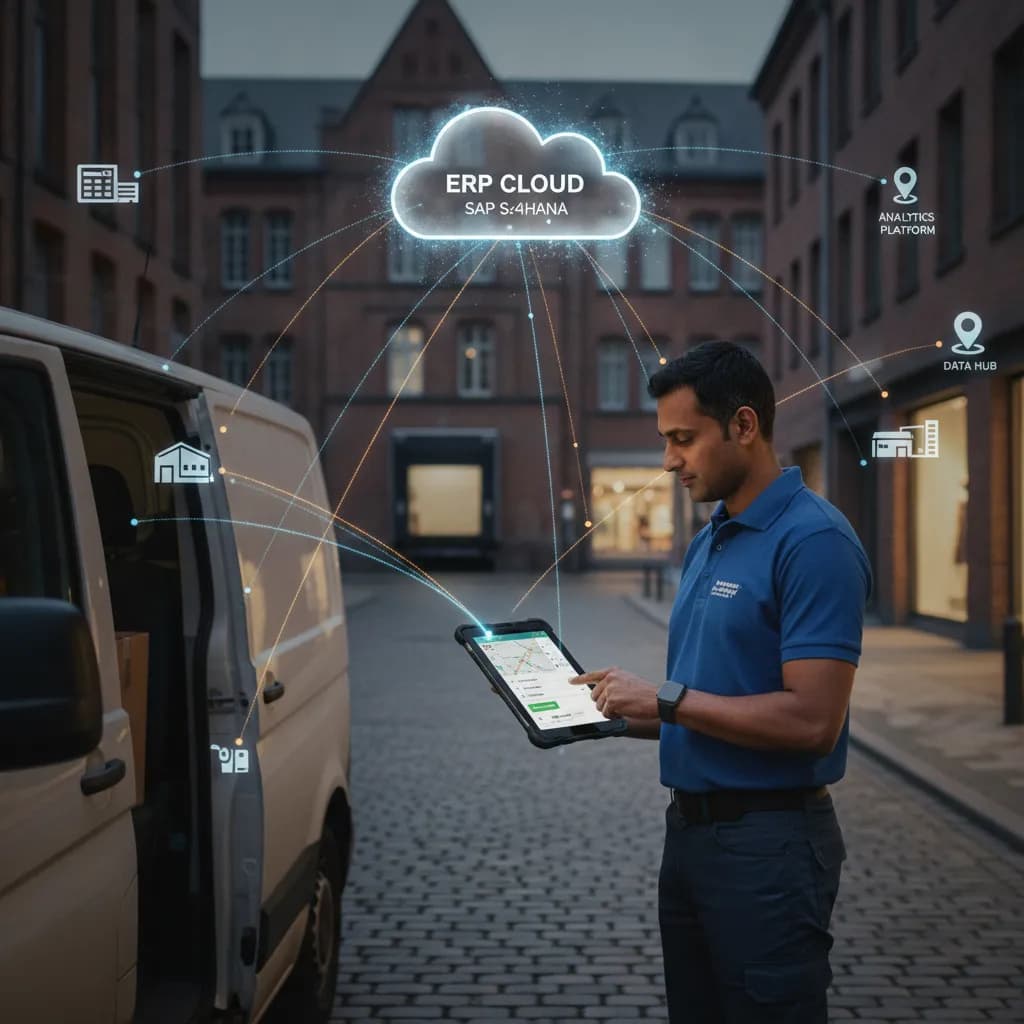
For General Managers in the demanding world of food distribution, the complexities of Direct Store Delivery (DSD) often feel like a constant balancing act. Thin margins, perishable goods, tight delivery windows, and a dispersed mobile workforce can make efficiency seem like an elusive dream. Manual processes, data silos, and a lack of real-time visibility aren't just inconveniences; they directly impact profitability, customer satisfaction, and your competitive edge. Digital transformation isn't just about adopting new tech; it's about fundamentally rethinking how you execute DSD to drive real operational improvements.
1. Evaluate Your Current DSD Process Bottlenecks
Before you can transform, you must understand what needs transforming. This initial step is less about technology and more about forensic process analysis.
- Map existing DSD workflows: Trace every step from order placement to delivery and final settlement. Who touches what, when, and how?
- Identify manual touchpoints and data entry redundancies: Paper manifests, handwritten invoices, and manual data keying are prime candidates for errors and delays.
- Pinpoint common causes of delivery delays, errors, and customer complaints: Is it mispicks at the warehouse, traffic, incorrect addresses, or inefficient routing?
- Assess current driver productivity, route adherence, and compliance with delivery windows: Are drivers hitting their targets? Are they taking optimal routes?
- Quantify the costs associated with inefficiencies: This includes fuel, labor (especially overtime), spoilage, returns, administrative overhead, and lost sales due to poor service. A clear ROI picture starts here.
Practical Insight: Don't just look at the obvious. Interview drivers, warehouse staff, and customer service reps. Their ground-level insights often reveal the most impactful bottlenecks.
2. Digitize Route Planning and Optimization
Moving beyond static, experience-based routes is a cornerstone of DSD digital transformation. Modern route optimization isn't just about finding the shortest path; it's about finding the most efficient path under a multitude of constraints.
- Incorporate dynamic variables: Move beyond static routes to factor in real-time traffic, fluctuating delivery windows, specific vehicle capacities, driver skill sets, and customer preferences.
- Implement intelligent optimization software: Utilize systems that can build optimal routes based on complex constraints like time, cost, customer priority, and even product temperature requirements for food items.
- Ensure real-time dispatch and adjustment capabilities: Route plans must be easily dispatchable to drivers' mobile devices and allow for quick adjustments due to unforeseen events (e.g., road closures, urgent orders, vehicle breakdowns).
- Focus on measurable outcomes: Prioritize reducing miles driven, fuel consumption, driver overtime, and vehicle wear and tear.
- Integrate with ERP systems: A seamless connection with your ERP (e.g., Microsoft Dynamics 365 Business Central or Finance & Operations) is crucial for automatic order import, delivery scheduling, and accurate inventory allocation.
3. Empower Your Drivers with Mobile Tools
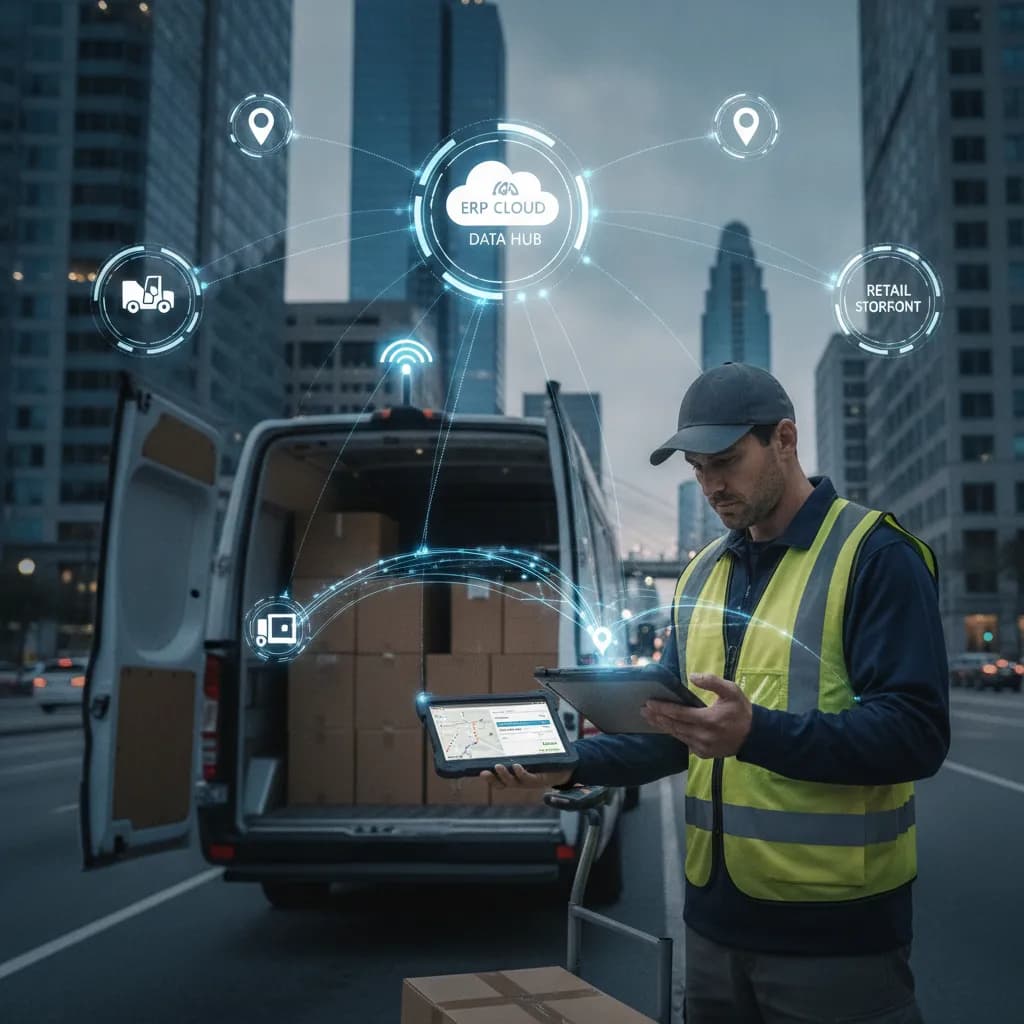
Your drivers are the frontline of your operation. Equipping them with the right technology transforms them from mere deliverers into mobile operational hubs.
- Provide rugged, offline-first mobile devices: Ensure devices can withstand the rigors of field use and operate seamlessly even without continuous network connectivity.
- Offer intuitive mobile applications for guided workflows: From pre-trip vehicle inspections and precise load verification to guided delivery sequences and post-trip reconciliation, a good app simplifies complex tasks.
- Ensure access to real-time information: Drivers need instant access to customer order details, pricing, promotions, past purchase history, and delivery notes.
- Facilitate seamless communication: Enable direct messaging or calls between drivers, dispatch, sales teams, and even customer service for immediate issue resolution.
- Support van sales capabilities: For many food distributors, van sales are critical. The mobile solution should allow drivers to adjust orders, add new items, or even create new sales on the fly directly from their device. A platform like Dynamics Mobile excels at providing these comprehensive, offline-capable mobile tools.
4. Achieve Real-Time Inventory and Order Accuracy
In food distribution, inventory accuracy is paramount to minimize spoilage, reduce waste, and ensure customer satisfaction.
- Implement mobile solutions for accurate van inventory tracking: Drivers should be able to track what they loaded, what they delivered, and what remains on the truck, with real-time reconciliation.
- Enable digital management of returns, credits, and damaged goods: Process these exceptions digitally at the point of delivery, capturing details and photos immediately.
- Reduce discrepancies between physical inventory and system records: This minimizes shrinkage, optimizes stock rotation, and reduces write-offs.
- Ensure real-time updates to central ERP: Critical for accurate stock visibility across the entire supply chain, preventing overselling or stockouts. This is where robust integration with systems like Microsoft Dynamics 365 becomes invaluable.
- Provide tools for drivers to conduct physical counts: Allow for ad-hoc or scheduled inventory counts directly from their mobile device to maintain accuracy.
5. Streamline Proof of Delivery and Payment Collection
The final mile isn't just about dropping off goods; it's about completing the transaction efficiently and accurately.
- Transition to digital Proof of Delivery (POD): Replace paper manifests with electronic signatures, timestamped photo capture (e.g., verifying product placement or condition), and digital notes.
- Integrate mobile payment processing: Allow drivers to accept credit cards, checks (with mobile check capture), or record cash payments directly on-site, accelerating your cash flow.
- Automate invoice generation and delivery reconciliation: Immediately generate and send invoices post-delivery, significantly reducing administrative burden and speeding up the billing cycle.
- Ensure compliance with customer-specific requirements: Some customers require specific documentation or delivery protocols; your digital system should easily accommodate these.
- Reduce administrative errors: Eliminate the manual handling, scanning, and filing of paper documents, which are prone to loss and human error.
6. Leverage Data for Continuous Improvement
Digital transformation isn't a one-time project; it's an ongoing journey fueled by data. The real power lies in using the information you collect to make smarter decisions.
- Establish key performance indicators (KPIs) for DSD operations: Track metrics like on-time delivery rates, route adherence, sales per stop, average delivery time, return rates, and fuel efficiency.
- Utilize operational analytics dashboards: Visualize performance trends, identify bottlenecks, pinpoint top-performing drivers or routes, and highlight areas needing immediate attention.
- Analyze route efficiency and driver performance: Use data to refine route optimization algorithms, provide targeted driver training, and incentivize performance.
- Uncover customer buying patterns and product placement insights: Understand what sells best where, and use this to inform sales strategies and optimize product loading.
- Foster a culture of data-driven decision-making: Encourage managers and even drivers to understand and act on the data, moving away from gut feelings to informed strategies.
Implementing this checklist requires a strategic approach and the right technology partner. The benefits for a General Manager in food distribution are clear: reduced operational costs, improved customer satisfaction, increased sales efficiency, and a more agile, data-driven operation. Digital transformation for DSD isn't just about staying competitive; it's about building a foundation for sustainable growth.
Ready to transform your DSD operations? Explore how Dynamics Mobile's enterprise mobile workforce management platform, built on Microsoft Dynamics 365, can help you implement these checklist items and drive measurable ROI.